US nuclear fusion reactor fires high-frequency radio waves to unlock 24/7 power
Physicists in California have validated a radio-wave technology that could keep commercial fusion power plants...
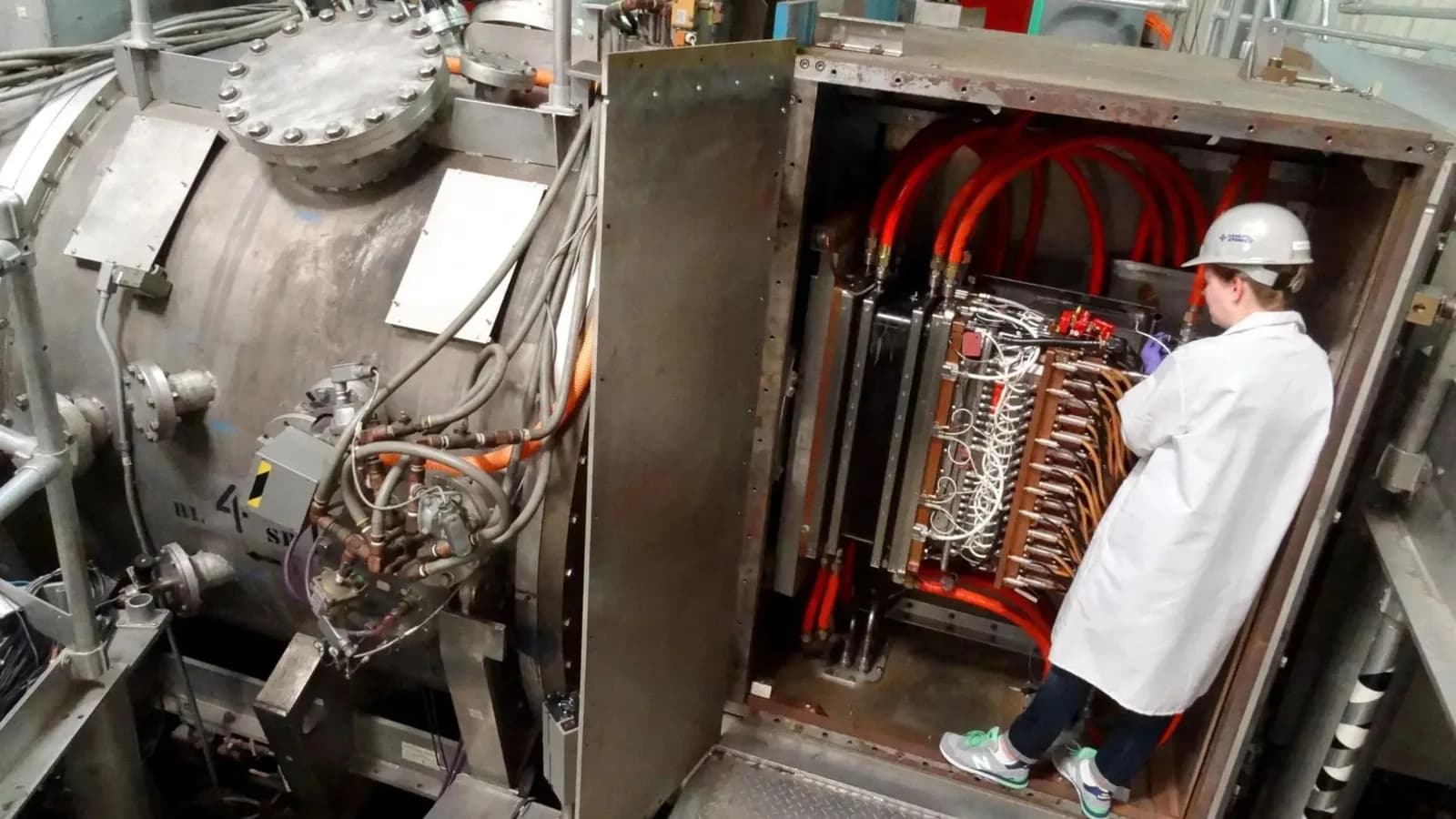
Physicists in California have validated a radio-wave technology that could keep commercial fusion power plants running around the clock. Results published in Physical Review Letters show the first successful test of “helicon current drive” inside a hot fusion plasma.
Researchers at the DIII-D National Fusion Facility used a purpose-built antenna. They beamed high-frequency radio waves directly into ionized gas. This produces an internal electric current that keeps the reaction stable.
“Helicon current drive is an attractive solution for driving current to sustain steady-state tokamak operation in reactor conditions,” said the researchers in a new study.
“Dedicated DIII-D experiments have been conducted with a MW-level helicon system and successfully demonstrated core power deposition and current drive with helicon waves launched via a traveling wave antenna.”
Comparing current drive alternatives
This milestone comes as developers worldwide hit a wall with rival designs. Tokamaks in China and France use a method called lower hybrid drive. However, that system stops working when fuel density reaches commercial levels.
An alternative approach chosen for Britain’s planned STEP power plant uses microwave beams. While simple to install, those beams consume far too much power to be commercially viable.
Helicon waves offer a middle way, delivering energy deep into the fuel efficiently. Yet the concept nearly disappeared from history. Physicists first trialed the mechanism in the 1980s under the label “fast wave drive.” But every run failed.
Mathematical models have explanations for this. The waves would slip right through the fuel unless the plasma reached immense, reactor-grade temperatures and pressures. Lacking such machines, the fusion community shelved the idea for decades.
Providing the missing link
Modern engineering has finally caught up with the theory. Modern hardware at the DIII-D facility allowed engineers to reproduce near-reactor conditions. They combined this with an advanced “comb line” antenna. It launches the radio signal at an exact angle across the magnetic field. High-precision instruments confirmed that the fuel absorbed the beam, generating the target current deep within the plasma core.
Finding an alternative current source is essential if fusion is to feed an electrical grid. Most test reactors drive their current using a massive magnetic coil at the center of the chamber. This coil acts like a giant transformer.
Because transformers require a continuously shifting magnetic field to generate electricity, the system inevitably runs out of charging capacity. Reactors must stop and reset every few minutes. The constant cycling between burning heat and sudden cooling severely fatigues the reactor walls.
A naturally occurring phenomenon called the bootstrap current supplies part of this flow. Even so, fuel at the mid-radius zone still requires external support. Helicon drive provides that missing link, though considerable engineering remains. The recent runs verified the core physics at modest power levels and during low-confinement modes.
Engineers must now build significantly more powerful wave generators to prove the system can hold up during full-power operations. If it succeeds, it could turn pulsed fusion prototypes into steady-state power stations.
Get the latest news delivered to your inbox.
Related articles