Giant underwater ‘chimneys’ found by Chinese scientists could change submarine detection
Chinese researchers have discovered how energy generated by surface winds can travel thousands of feet...
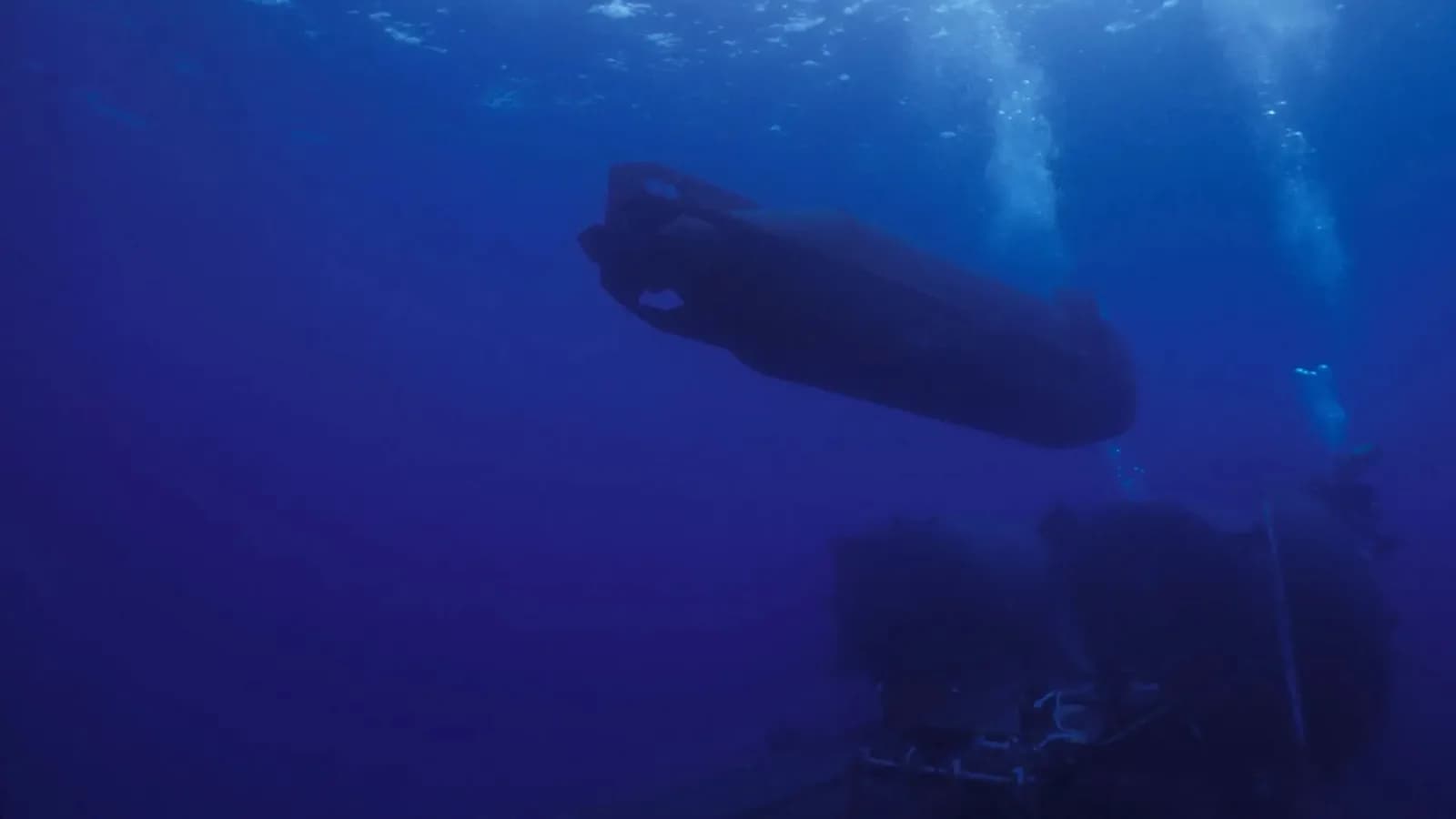
Chinese researchers have discovered how energy generated by surface winds can travel thousands of feet into the deep ocean, identifying underwater energy pathways they call “inertial chimneys.” The findings could improve understanding of deep-sea conditions and support underwater detection and communication systems.
The study, led by scientists from the Institute of Oceanology of the Chinese Academy of Sciences, analyzed two years of measurements from an underwater sensor network off Japan’s east coast. The researchers found that rotating ocean currents can help funnel wind-driven energy toward the seabed, challenging the idea that deep-ocean waters remain largely isolated from surface activity.
“The result shows that the deep sea is not a stagnant body of water,” the scientists said. “This work links the sea-surface wind field, the upper ocean and the deep-ocean sea floor into a continuous energy pathway.”
Tracking energy beneath the ocean surface
The research examined data from 46 seabed monitoring stations spread across an area measuring approximately 373 miles by 373 miles in the Kuroshio Extension region.
The stations used inverted echo sounders fitted with near-bottom pressure and current sensors. These instruments recorded the time taken for acoustic signals to travel between the seabed and the ocean surface and return. They also measured bottom pressure and currents close to the seafloor.
The monitoring array was originally deployed between 2004 and 2006 as part of the Kuroshio Extension System Study, funded by the U.S. National Science Foundation. Researchers from the University of Rhode Island, Woods Hole Oceanographic Institution, and the University of Hawaii operated the network.
How rotating currents create inertial chimneys
The scientists focused on near-inertial internal waves, underwater oscillations generated when surface winds set upper ocean waters into motion. Earth’s rotation influences these waves, allowing them to carry energy through the ocean’s different water layers.
Normally, the ocean’s warm upper waters and colder deep waters limit vertical exchange. However, these waves can transport energy across the boundary.
The researchers found that anticyclonic eddies, which rotate clockwise in the Northern Hemisphere, can strengthen this downward energy transfer. Their rotation reduces the influence of Earth’s rotation on the waves, drawing energy inward and directing it toward deeper waters.
The concentrated pathways formed through this process were named “inertial chimneys.”
Measuring the energy reaching the seabed
The analysis revealed that 68 percent of near-inertial wave energy near the seabed comes from waves traveling downward from the upper ocean. The remaining 32 percent originates from local currents near the ocean floor.
“The partitioning between transmitted and locally generated energy provides valuable constraints for parameterizing mixing processes in numerical ocean models and for evaluating global ocean energy budget closure within climate simulations,” the scientists wrote in their paper.
Implications for underwater communication
The findings could also help improve underwater acoustic forecasting. The researchers explained that storms at the surface can influence conditions thousands of feet below, continuously changing deep-ocean temperature and salinity.
“These variations are difficult to capture through sporadic ship-based observations, pointing to the need for long-term, continuous, full-depth in situ observations,” they said.
Temperature and salinity changes directly affect how sound travels underwater, including its propagation paths and transmission loss.
“Integrating these data with acoustic propagation models can support assessments of sound-channel structure and propagation conditions, as well as underwater acoustic environment forecasting, helping to provide environmental support for underwater detection and communication.”
The study was published in the peer-reviewed journal Deep Sea Research Part I: Oceanographic Research Papers.
Source: https://interestingengineering.com/science/underwater-chimneys-for-submarine-detection
Get the latest news delivered to your inbox.
Related articles