1,200-mile EV range: Chinese firm’s new lithium air EV battery offers 5x energy density
Chinese battery giant CATL is reportedly exploring a new type of air-breathing battery known as...
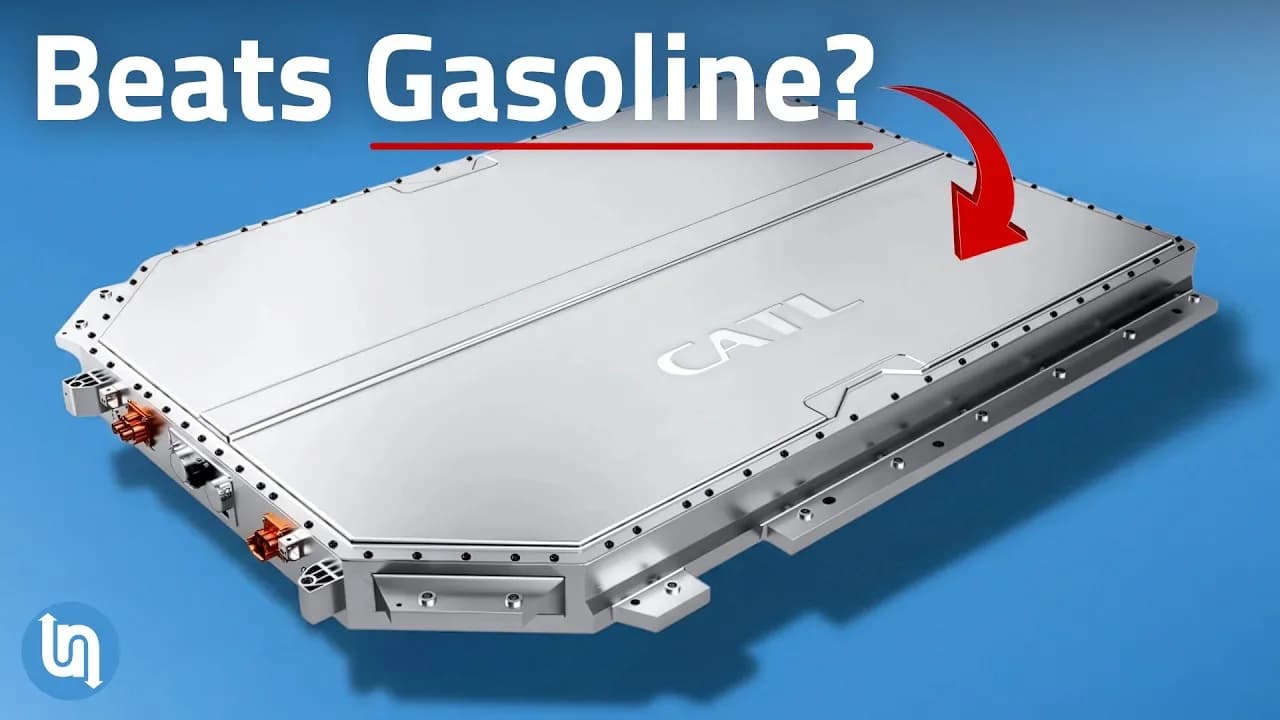
Chinese battery giant CATL is reportedly exploring a new type of air-breathing battery known as a lithium-air battery, which could, in theory, deliver over 1,243 miles (2,000 km) of range for electric vehicles (EVs).
What’s more, these so-called lithium-air batteries could deliver at least five times the energy density of solid-state batteries. All this without adding extra weight to the technology and, critically, the EV.
However, it is not all gravy. It turns out that lithium-air batteries are exceptionally good at storing energy (at least on paper). But, it turns out, they are very difficult to make rechargeable, durable, and practical.
For the uninitiated, the simplest way to understand it is to think of a lithium-air battery as a rechargeable battery that works a little like a combustion engine. It draws oxygen from the atmosphere to help release energy, rather than carrying all its reactive materials internally.
Batteries that breathe
By contrast, a conventional lithium-ion battery has two electrodes containing materials that store and release energy. Everything it needs is essentially contained within the battery.
A lithium-air battery, on the other hand, does something very different. They essentially use oxygen from the surrounding atmosphere as one of its reactants. During discharge, lithium metal reacts electrochemically with oxygen in the air to produce lithium peroxide (Li₂O₂) and release electrical energy.
This provides the free electrons to power the EV’s motors and systems during operation. When charging, electrical energy forces the reaction to reverse, breaking down the lithium peroxide, releasing oxygen and restoring the lithium metal.
The big advantage of this is that you don’t have to carry the oxygen reactant around inside the battery from the start. And that’s where the technology’s enormous energy density of 3,505 watt-hours per kilogram (Wh/kg) figure comes from.
Critically, that’s a theoretical figure based on its chemistry and oxygen mass. It doesn’t necessarily translate into the battery’s actual performance.
To put that into context, a typical conventional lithium-ion cell has an energy density of around 200–300 Wh/kg. Advanced solid-state batteries come in at 350–500 Wh/kg.
Still experimental, CATL explains
So, quite an improvement, at least in theory. One major problem with it is that the technology has a tendency to “clog itself up.” The produced lithium peroxide is a solid substance that accumulates within the battery’s porous electrode.
You can liken it to a sponge that gradually fills with a solid deposit. Eventually, oxygen struggles to penetrate the electrode, reactions become more difficult, and usable capacity falls.
This is supposed to be reversed during charging, but the process isn’t 100 percent effective. Another issue is that air isn’t just pure oxygen; it contains other gases like water and carbon dioxide.
Both of these can interfere with the battery chemistry, producing “contaminant” products that are hard to remove. So, to work at peak efficiency over time, such a battery would likely need some form of air filtration system built in too.
CATLisn’t claiming the new technology will revolutionize the industry just yet. It remains, at present, a long-term exploratory research project. In other words, CATL is interested enough to research it, but it hasn’t established that the technology can be commercialized.
At least, not yet.
Get the latest news delivered to your inbox.
Related articles