22-year run ends: NASA’s 3,200-pound Swift telescope crashes back to Earth after failed rescue
NASA’s Swift space telescope has fallen back to Earth, ending a 22-year mission that was...
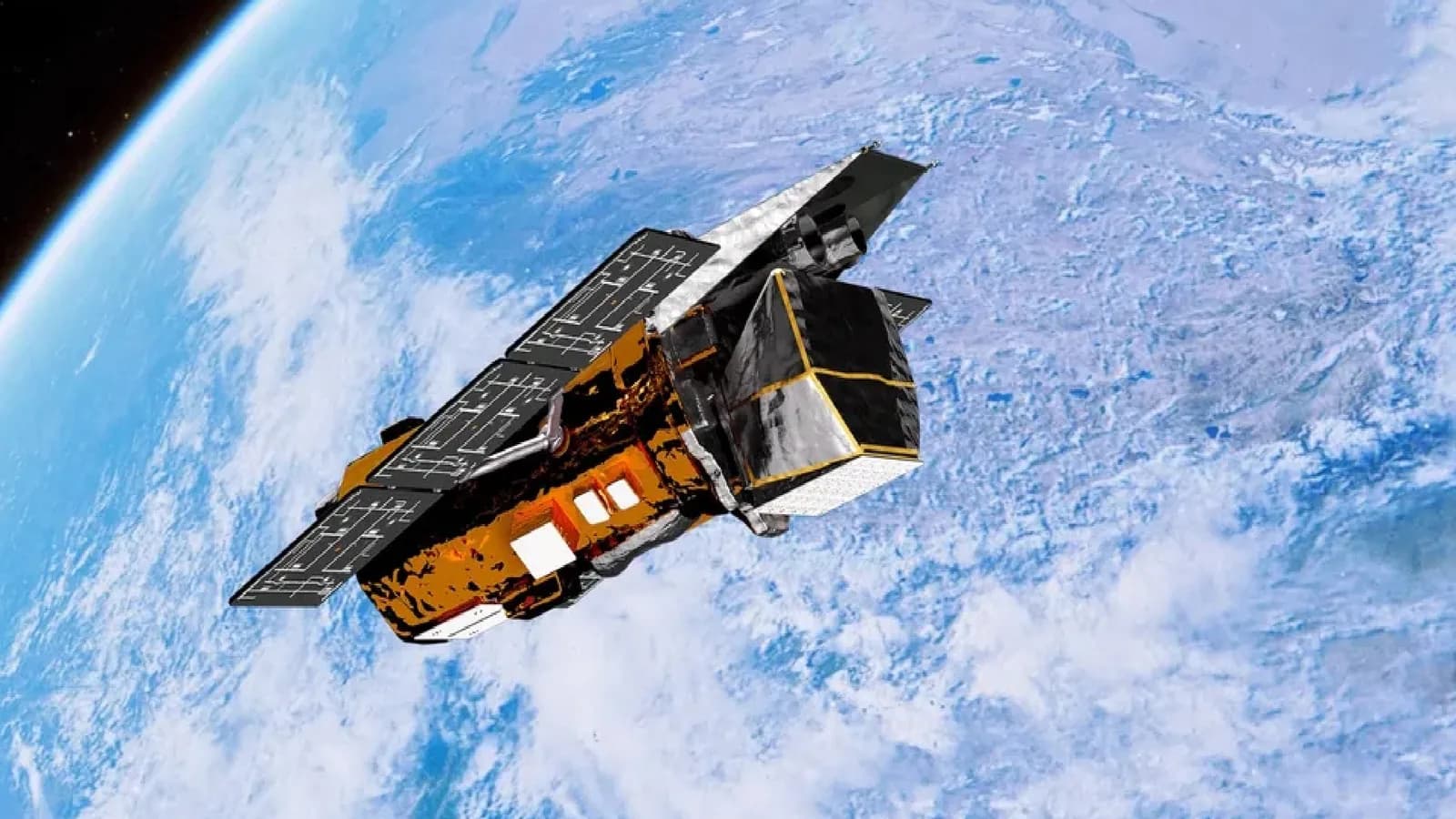
NASA’s Swift space telescope has fallen back to Earth, ending a 22-year mission that was supposed to last two years. The observatory reentered the atmosphere uncontrolled on Nov. 4, just three months after a private rescue spacecraft was meant to lift it into a higher, life-extending orbit.
Fiery end over Sumatra
Satellite tracker Jonathan McDowell, citing U.S. Space Force data, put the 3,200-pound (1,450-kilogram) spacecraft’s reentry at 7:39 a.m. EST (1239 GMT) over northern Sumatra. NASA had predicted most of the minibus-sized observatory would burn up, with the odds of surviving pieces injuring anyone on Earth at 1 in 2,100.
Videos on social media appear to show the fiery reentry, though they have not been independently verified.
Likely reentry of @NASA's #Swift observatory over Sumatra & Malaysia at 12:39 UTC today. https://t.co/yLCfhics3U
— Mario Billiani (@starbase) November 4, 2026
Built to chase bursts
Swift launched in November 2004 on a two-year mission to study gamma-ray bursts, the most powerful explosions in the universe. Its name was not an acronym but a nod to its agility.
Swift had to detect and locate a burst, alert other observatories, and swing its instruments around to image the spot before the afterglow faded. That typically took about a minute, said principal investigator S. Bradley Cenko of NASA’s Goddard Space Flight Center.
It also studied distant supernovae, feeding black holes and asteroids and comets in our own solar system. Over its life, it observed more than 2,000 gamma-ray bursts and 1,400 supernovae. Swift made its final science observation Oct. 20. In 2018, it was renamed the Neil Gehrels Swift Observatory after its first principal investigator, who died the previous year.
NASA announced the end of the mission in an Oct. 23 statement. Swift delivered “an incredible, lasting return on investment for the nation,” said Shawn Domagal-Goldman, director of NASA’s Astrophysics Division, in that statement. He noted it was designed for a two-year primary mission but was productive for more than 10 times as long.
Rescue mission falls short
Swift had no onboard thrusters to counter the atmospheric drag that pulled it down from the day it launched, and the decay accelerated as it sank lower. In September 2025, NASA awarded Arizona-based Katalyst Space a $30 million contract to build, launch, and operate a robotic spacecraft to boost it to a higher orbit.
Katalyst launched its refrigerator-sized, three-armed LINK servicing spacecraft on July 3 and targeted an August capture. Propulsion-system problems and trouble with the reaction wheels that hold its orientation ruined the plan, and LINK itself crashed back to Earth on Sept. 25.
NASA still called the effort worthwhile. Domagal-Goldman called it a “high-risk, high-reward mission” that advanced U.S. spacecraft servicing technology and tested how satellites are operated to extend their time in low Earth orbit.
Not an unusual fall
Swift’s reentry was not unusual. A 2025 report found at least three large objects, such as dead satellites or spent rocket bodies, fall to Earth daily on average. That number is likely to rise as more megaconstellations are built.
Swift’s data contributed to roughly 7,000 scientific papers, and heightened solar activity accelerated its descent, according to earlier reporting.
Get the latest news delivered to your inbox.
Related articles