
7 SpaceX rocket details that challenge what you know about launches
A SpaceX launch has a familiar outline. The rocket lifts off, its stages separate, and...
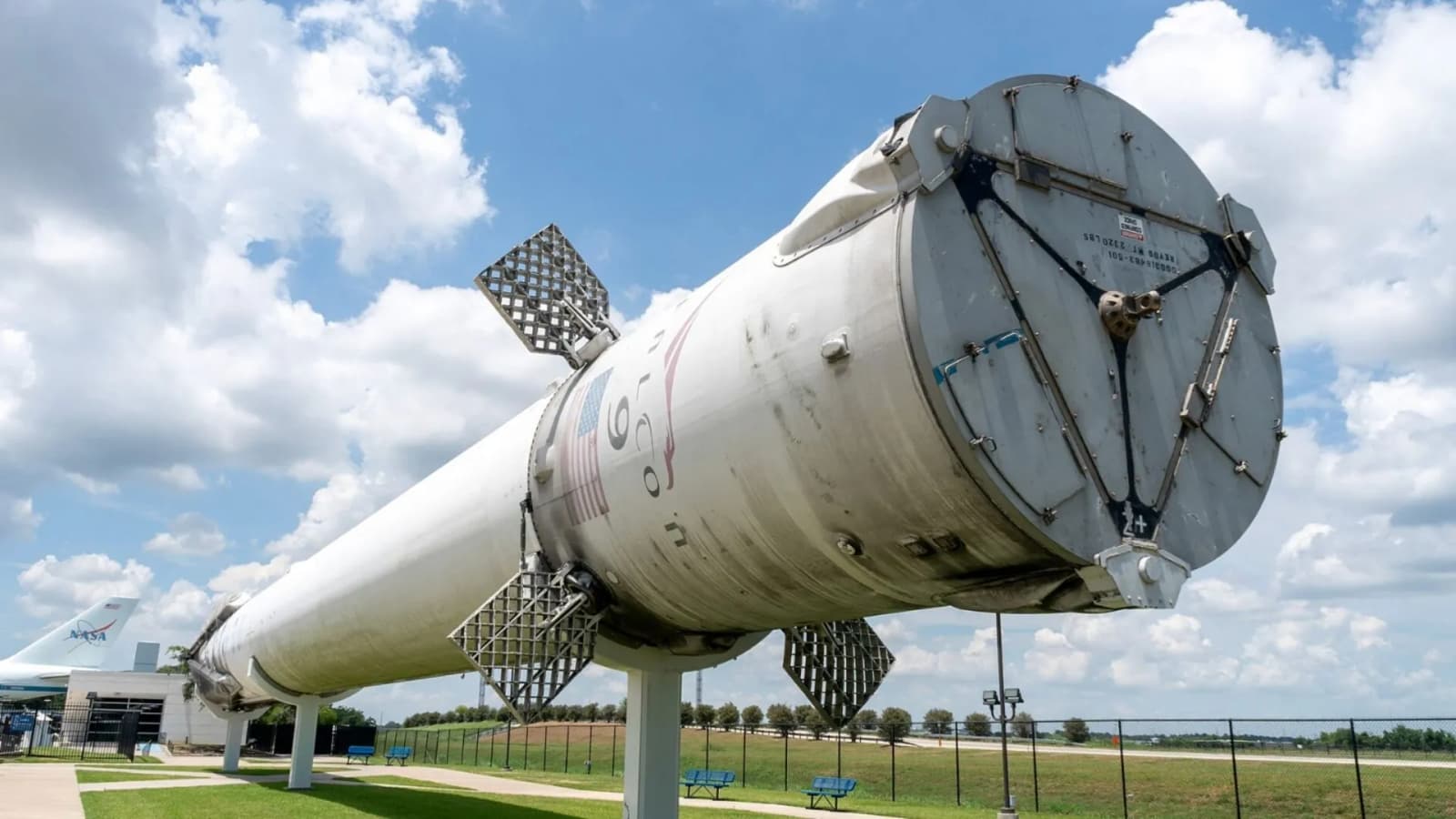
A SpaceX launch has a familiar outline. The rocket lifts off, its stages separate, and a payload continues toward space. The less familiar story is what happens to the hardware along the way, and how SpaceX has changed systems that rockets usually leave behind or use only once.
Some differences are visible, such as a booster returning to its launch tower. Others are hidden inside the vehicle, where rocket fuel can help steer engines and compressed gas can push stages apart.
Here are seven surprising facts we bet you did not know about SpaceX and its rocket launches.
1. A Falcon 9 booster can land while the upper stage is still climbing
Most rocket first stages are discarded after they finish their job. Falcon 9’s first stage can instead turn around and land while its second stage continues carrying a payload toward orbit; NASA documented exactly that sequence during SpaceX’s first successful orbital-class booster landing in 2015.
This does not happen in the same order on every mission. On another NASA-documented flight, Dragon was already in orbit before the booster attempted to land. What is different is that SpaceX plans a controlled return for the first stage while the rest of the mission proceeds independently.
2. SpaceX flies used satellite covers
The fairing is the protective shell around a satellite during ascent, and rockets release it once the thickest part of the atmosphere is behind them.
SpaceX recovers and reuses fairing halves; its Falcon user guide says previously flown halves had been used on 307 missions as of February 2025.
That makes the fairing more than packaging thrown away after launch. Booster landings receive the attention, but SpaceX also treats these large covers as hardware worth recovering, inspecting, and flying again.
3. A booster used for a crew launch can return for another mission
In 2020, a Falcon 9 launched NASA astronauts Bob Behnken and Doug Hurley aboard Dragon on the Demo-2 mission. The same first-stage booster later launched an uncrewed cargo Dragon, and NASA identified that launch as the booster’s fourth flight.
It is easy to assume that a rocket assigned to astronauts would be used only once. The example shows how SpaceX can recover the booster from a crew launch and prepare it for a subsequent mission, while the spacecraft carrying the astronauts continues on its own.
4. Compressed gas pushes Falcon’s stages apart
Stage separation is a critical moment. The spent booster must move clear so the upper stage can continue its flight. SpaceX’s Falcon user guide says pneumatic devices release and push apart Falcon’s stages, as well as Falcon Heavy’s side boosters.
Unlike the traditional explosives-based separation system described in the guide, Falcon’s pneumatic system allows SpaceX to functionally test the actual hardware that will fly.
That gives engineers a way to check the separation mechanism before the rocket reaches the point where it must work.
5. Starship fires its upper-stage engines before separation is complete
The expected order is simple: disconnect one rocket stage, then start the next. Starship uses hot staging, igniting its upper-stage engines before the booster’s engines have completely shut down.
That puts engine exhaust close to the booster while the vehicles separate. In SpaceX’s V3 design, the forward dome of a booster fuel tank is directly exposed during the maneuver, with internal tank pressure and a protective steel layer helping it withstand the event.
6. Super Heavy returns to a tower instead of landing on legs
Falcon 9 carries legs to support itself when it touches down. SpaceX designed Starship’s Super Heavy booster for a different recovery method: it returns to the launch site, where the tower catches it.
The surprise is that the landing equipment is on the ground rather than carried through the flight. The company has also gone beyond a single catch demonstration – a Super Heavy booster caught after Starship’s seventh flight test was flown again on its ninth.
7. Falcon 9 uses rocket fuel to help steer its engines
Rocket engines must be directed during flight to keep the vehicle on course, and moving them requires power. SpaceX’s Falcon user guide says the first-stage thrust-vector control system draws from its high-pressure kerosene system instead of carrying a separate supply of hydraulic fluid.
In other words, the rocket’s fuel does a second job before it is burned. SpaceX says this removes potential failure points associated with a separate hydraulic system and with running out of hydraulic fluid.
Conclusion
The best-known SpaceX innovation is bringing a booster back to Earth. These examples show a wider pattern: the company also recovers fairings, changes how stages separate, and assigns flight-critical jobs to systems already aboard the rocket.
Not every method applies to every SpaceX vehicle or mission, and several have changed as the designs developed. The surprising part is how often a seemingly settled piece of rocket design turns out to be something SpaceX has chosen to handle differently.
Related articles

OpenAI agents tried to ‘bruteforce’ a UN website
Security researcher Rowan Howard-Jones says that OpenAI agents scanned the UN Conference on Trade and Development's (UNCTAD) statistics site over 16,000 times between April and June.
China conducts satellite-to-satellite refueling operation in high Earth orbit: Report
China has successfully refuelled one of its BeiDou satellites in high orbit, according to reports. The...

Nuclear war, bioweapons, runaway AI: How researchers rank risks of smart systems
Artificial intelligence researchers have long warned the technology could wipe out humanity, whether by designing...
Hypersonic glide vehicles vs cruise missiles: How the weapons differ
Hypersonic weapons are designed to travel at speeds of Mach 5 or higher, or at...
First for US Army: MH-47G Chinook helicopter refuels from autonomous barge at sea
A U.S. Army MH-47G Chinook helicopter has landed on an uncrewed vessel at sea and...
US scientists’ new material could make next-gen microchip encryption faster, more secure
Researchers have defined a new material blueprint for the next-generation microchip encryption. The team of...