Autonomous aircraft team up to search for missing person in major aviation milestone
A plane searched for a missing person while a helicopter prepared to carry out an...
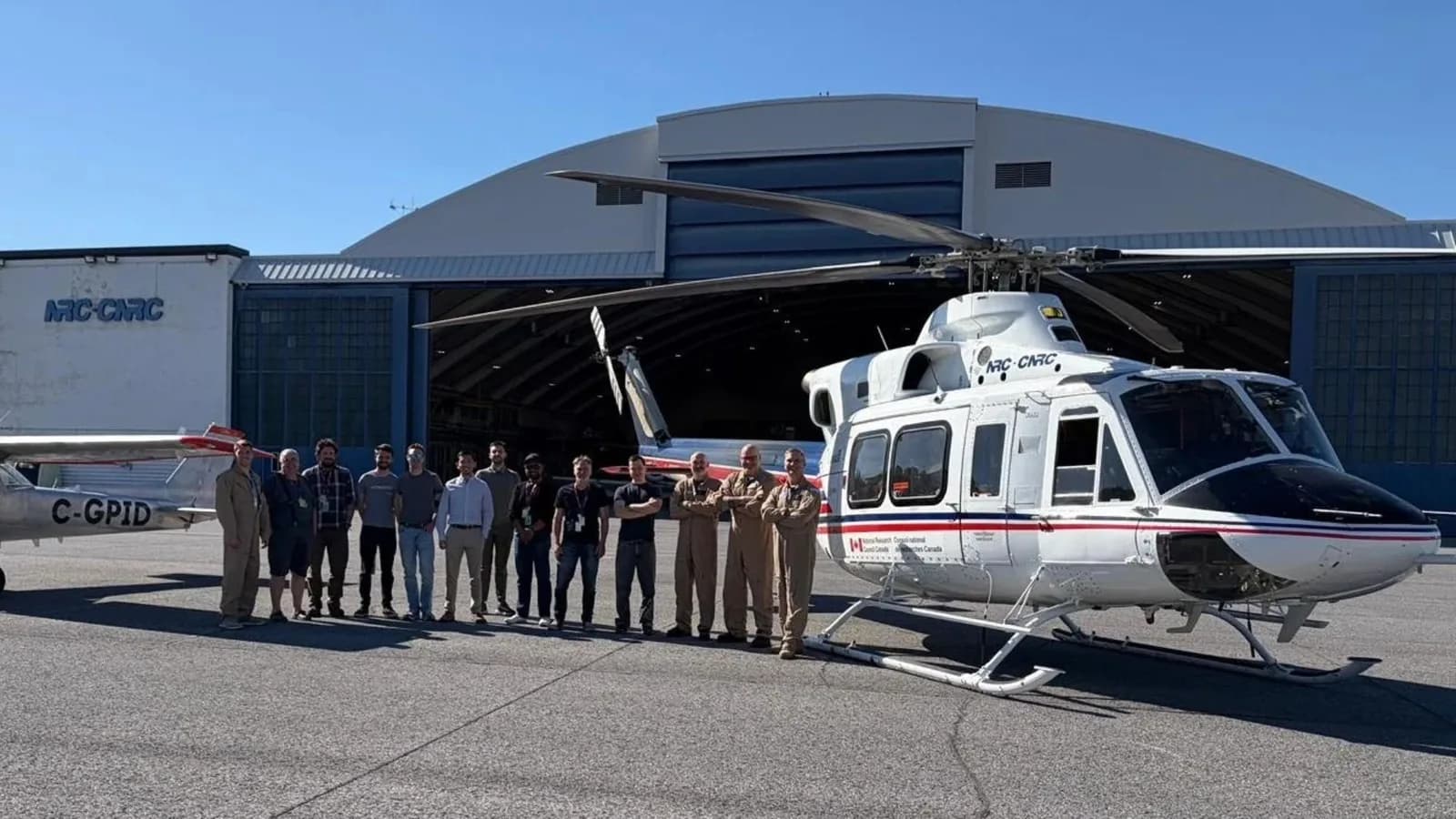
A plane searched for a missing person while a helicopter prepared to carry out an evacuation. Above and alongside them, virtual drones joined a coordinated rescue exercise, with one human directing the entire autonomous team.
The demonstration took place near Ottawa in May 2026 and brought together a Ribbit-operated Cessna 150, a Bell 412EP helicopter operated by the National Research Council of Canada (NRC), and multiple simulated drones.
Ribbit announced the results on October 27, highlighting how different aircraft could divide tasks and work toward a shared objective.
Safety pilots remained aboard both physical aircraft, but the flights were executed autonomously.
The exercise tested coordination at both the mission level, where tasks and objectives are managed, and the platform level, where individual aircraft carry out their flights.
Search and evacuation duties divided
During the mock mission, the Cessna flew search patterns to locate a missing person. It updated and modified its flight plan using a common operating picture, so its movements reflected information shared across the team.
After the person was located, the helicopter performed a casualty evacuation. The airplane remained overhead, continuing to provide situational awareness while the helicopter carried out its part of the exercise.
Virtual drones added further complexity to the search effort. These simulated aircraft flew alongside the real helicopter and airplane, expanding the number of assets involved without requiring additional physical drones.
The division of responsibilities demonstrated how fixed-wing and rotary-wing aircraft could contribute different capabilities to the same operation while remaining under shared human direction.
Ribbit claims specific autonomy first
According to Ribbit, the demonstration marked the first time a helicopter, airplane, and virtual aircraft accomplished a shared goal through mission and platform autonomy commanded by a single human.
That claim concerns the particular combination of aircraft and autonomy demonstrated, rather than autonomous search and rescue broadly.
“By combining research with technology, we successfully demonstrated autonomous aircraft working together toward a shared mission. This collaboration highlights the power of Canadian innovation in advancing next-generation aviation capabilities,” said Derek Gowanlock, program director for Aurora Shield at the NRC.
The trial combined Ribbit’s fixed-wing autonomy work with the NRC’s rotary-wing capabilities through the council’s new Drone Innovation Hub.
Partnership targets broader operational missions
The demonstration follows more than three years of collaboration between Ribbit and the NRC.
During that period, Ribbit has been contracted to test autonomous technology for priority missions spanning joint operations, tactical aviation, and public safety.
Those applications make aircraft coordination, alongside autonomous flight itself, an important area of development.
In this exercise, the search aircraft continued supporting the mission after locating the person, rather than ending its role when the helicopter took over.
“Today’s milestone was accomplished with impeccable speed and coordination between government and industry. I am extremely proud of what our teams have achieved, and look forward to continuing our work with NRC and DND/CAF,” said Ribbit CEO Carl Pigeon.
His statement pointed to further collaboration, although the announcement provided no timetable for subsequent trials or operational deployment.
Related articles