Bidirectional charging could let electric trucks sell stored power to the grid
A TUM-led project found electric trucks can feed stored power to a depot, other vehicles,...
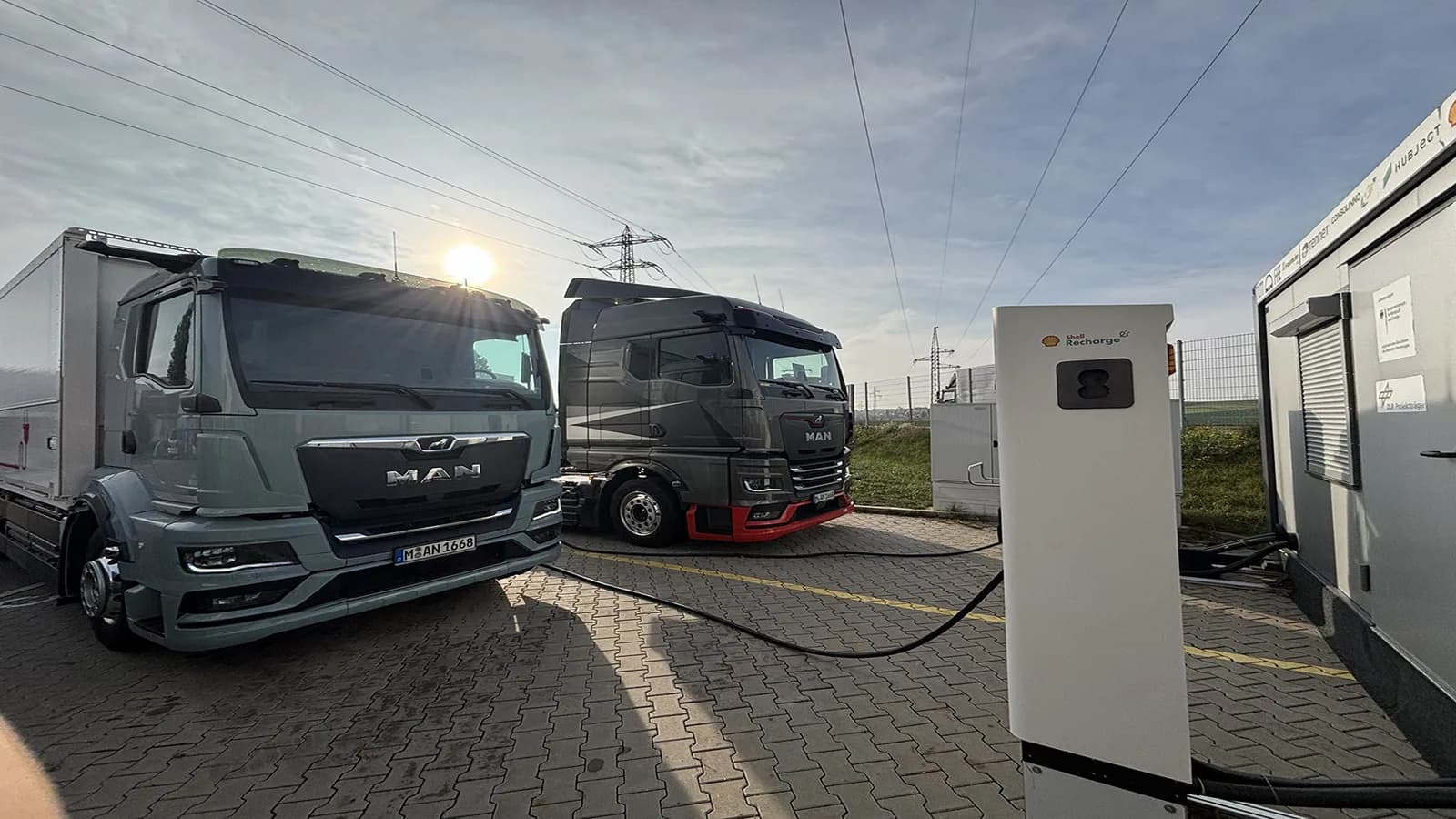
A TUM-led project found electric trucks can feed stored power to a depot, other vehicles, and the grid.
A research consortium led by the Technical University of Munich (TUM) says electric trucks can store electricity and sell it back to the grid, which the team estimates could cut a freight company’s energy costs by about 10 percent. The German project, called SPIRIT-E, ended in October after three years, and the partners presented results Oct. 30.
In tests, a MAN eTGX truck with 480 kilowatt-hours of usable battery capacity fed power back through a bidirectional charger at up to 350 kilowatts, TUM said. Bidirectional means the station moves electricity both ways, into the truck and out of it. Shell’s charging unit SBRS supplied the charger, and the grid operator TenneT was also a partner.
Germany’s federal economy and energy ministry funded the project. The partners say the larger obstacles now lie in grid connections and economic conditions, not in the trucks or chargers.
How the trucks were tested
The trials ran at the Schmid freight company near Regensburg. TUM said the truck charged other vehicles from its battery, helped power the company’s premises and fed electricity into the public network. The partners also built a reservation system for charging stations and software that schedules truck charging at a depot, MAN said.
In a simulated electricity market, the trucks bought power when prices were low and sold it when prices rose, TUM said. The researchers said this could give carriers an extra revenue stream. Using stored power at the depot looks most promising, the university said, for instance by charging from surplus solar power during the day and covering short spikes in demand, which can be costly.
A separate TUM analysis drew on driving data from six German fleets covering 2.15 million kilometers. It found that linking a depot to the grid and electricity market cut fleet costs by an average of 1.7 cents per kilometer, and by 6.1 cents with bidirectional charging.
Limits and what comes next
The electricity trading ran only in a test environment. The roughly 10 percent savings figure comes from internal project calculations, MAN said, and the company added that savings could reach 20 percent under optimal conditions. Neither press release cites a peer-reviewed paper. MAN said the approach suits trucks that return to a depot regularly and drive under 100,000 kilometers a year.
Practical hurdles remain as well. TUM said many depots lack the grid connection capacity to charge a large truck fleet. It also said there are no uniform standards for selling stored power, and many providers use systems that don’t work together. How to divide revenue among carriers, manufacturers and electricity marketers is still undecided.
MAN is working to bring bidirectional charging into series production, Georg Grüneißl, the company’s head of product strategy, said. Markus Lienkamp, who heads TUM’s Chair of Automotive Technology, said the next task is to standardize and scale the tested solutions and turn them into business models.
Source: https://interestingengineering.com/energy/bidirectional-charging-electric-trucks
Get the latest news delivered to your inbox.
Related articles