US Navy equips two 9,700-ton next-gen destroyers with eight GE warship engines
GE Aerospace has received orders to supply eight marine gas turbines for two future U.S....
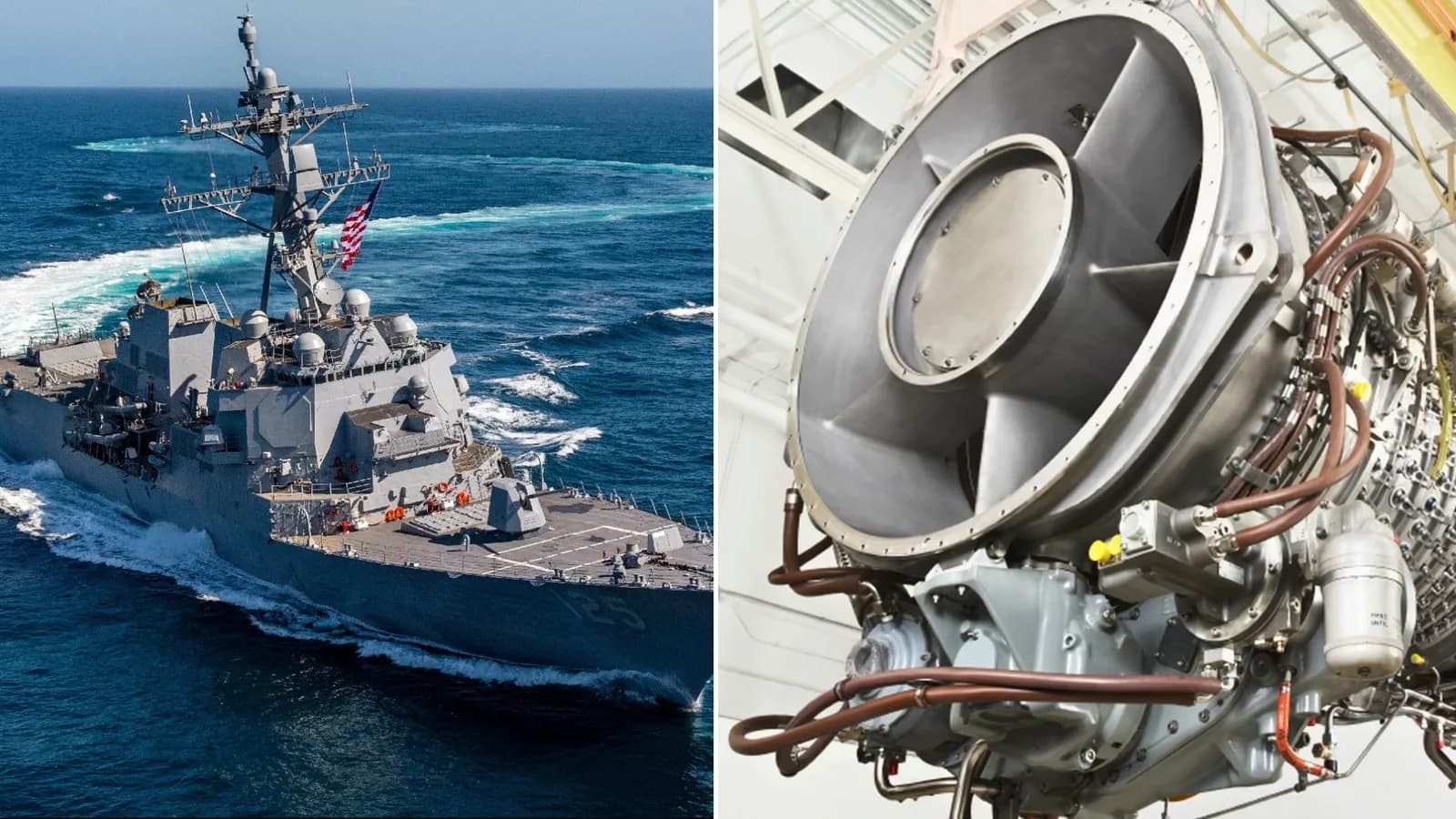
GE Aerospace has received orders to supply eight marine gas turbines for two future U.S. Navy Arleigh Burke-class guided-missile destroyers, extending a propulsion partnership spanning more than five decades. The engines will power the future USS Ray Mabus (DDG 147) and USS Robert R. Ingram (DDG 149), both part of the Navy’s Flight III destroyer program.
Each ship will use four LM2500 gas turbines, giving GE another production order for an engine that has powered every active Arleigh Burke-class destroyer. The company announced the latest orders on November 2, 2026, but has not yet disclosed their value or delivery schedule.
The order also shows the continued role of gas turbine propulsion in the Navy’s surface fleet, even as newer destroyers receive major upgrades to their radar, combat systems, and onboard electrical infrastructure.
Four gas turbines drive each destroyer
The LM2500 is an aeroderivative gas turbine, meaning it draws on technology originally developed for aircraft engines and adapts it for marine propulsion. The design is based on GE’s CF-6 aircraft engine family and has been modified over decades of naval service.
Inside the turbine, air passes through a multistage compressor, where it is pressurized before entering a combustion chamber. Fuel is injected and burned, producing hot, expanding gases that drive turbine stages. One turbine section powers the compressor, while a separate free power turbine converts the energy in the exhaust gases into mechanical output for the ship’s propulsion system.
The arrangement offers a high power output relative to the engine’s size and weight, making it suitable for large warships that need to move quickly while carrying substantial weapons and sensor systems.
On Arleigh Burke-class destroyers, the four LM2500 engines operate in a combined gas-and-gas (COGAG) configuration. Two engines feed each of the ship’s two propulsion shafts through reduction gearing. Together, the turbines produce approximately 100,000 shaft horsepower, allowing the destroyers to reach speeds exceeding 30 knots.
The arrangement also gives the Navy flexibility to run different engine combinations depending on the vessel’s speed and power requirements.
Flight III brings major upgrades to the destroyer
The two ships receiving the latest engines belong to the Flight III configuration, the newest major upgrade to the Arleigh Burke class. While retaining the basic destroyer design, Flight III introduces substantial improvements to its sensors and combat systems.
One of the most important additions is the AN/SPY-6(V)1 Air and Missile Defense Radar. Its four fixed radar arrays are designed to improve the ship’s ability to detect and track aircraft, cruise missiles, and ballistic missile threats.
These upgrades also create additional demands on the ship’s electrical and cooling systems. The Navy has introduced changes to the Flight III electrical plant, including new gas turbine generators, power conversion equipment, and upgraded cooling infrastructure to support the radar and associated electronics.
The LM2500 engines, however, serve a separate purpose: they provide the mechanical power that drives the ship through the water. Their continued use alongside the upgraded combat systems reflects the Navy’s approach of modernizing the destroyer’s capabilities without replacing its established propulsion architecture.
More than five decades of naval service
The LM2500 first entered naval service in 1969 aboard the U.S. Navy’s G.T.S. Admiral William M. Callaghan. Since then, GE has developed multiple versions of the engine, including the LM2500+, LM2500+G4, and other variants with improvements to output, materials, and internal components.
According to GE Aerospace, the U.S. Navy has taken delivery of more than 700 LM2500 turbines for surface combatants, including frigates and destroyers. The company also reports a reliability rate of 99 percent for its marine gas turbines, based on its operational experience.
As of April 2026, 75 Arleigh Burke-class destroyers were active, all using LM2500 engines for propulsion. The latest orders will extend the engine’s presence as the Navy continues building the class, with demand for the program projected by GE to continue through 2056.
The longevity of the LM2500 highlights an important aspect of naval engineering. A propulsion system does not necessarily need an entirely new design to remain relevant. Instead, incremental improvements, established maintenance practices, and a long-running supply chain can keep an engine in service across generations of warships.
Source: https://interestingengineering.com/military/ge-aerospace-eight-engines-us-navy-destroyers
Get the latest news delivered to your inbox.
Related articles