South Korean court strikes down blanket ban on foreigners' political activity after complaint by two Mongolian students
The Constitutional Court ruled 6-3 that the Immigration Act ban excessively restricts freedom of expression; the National Assembly must revise the law by the end of 2028.
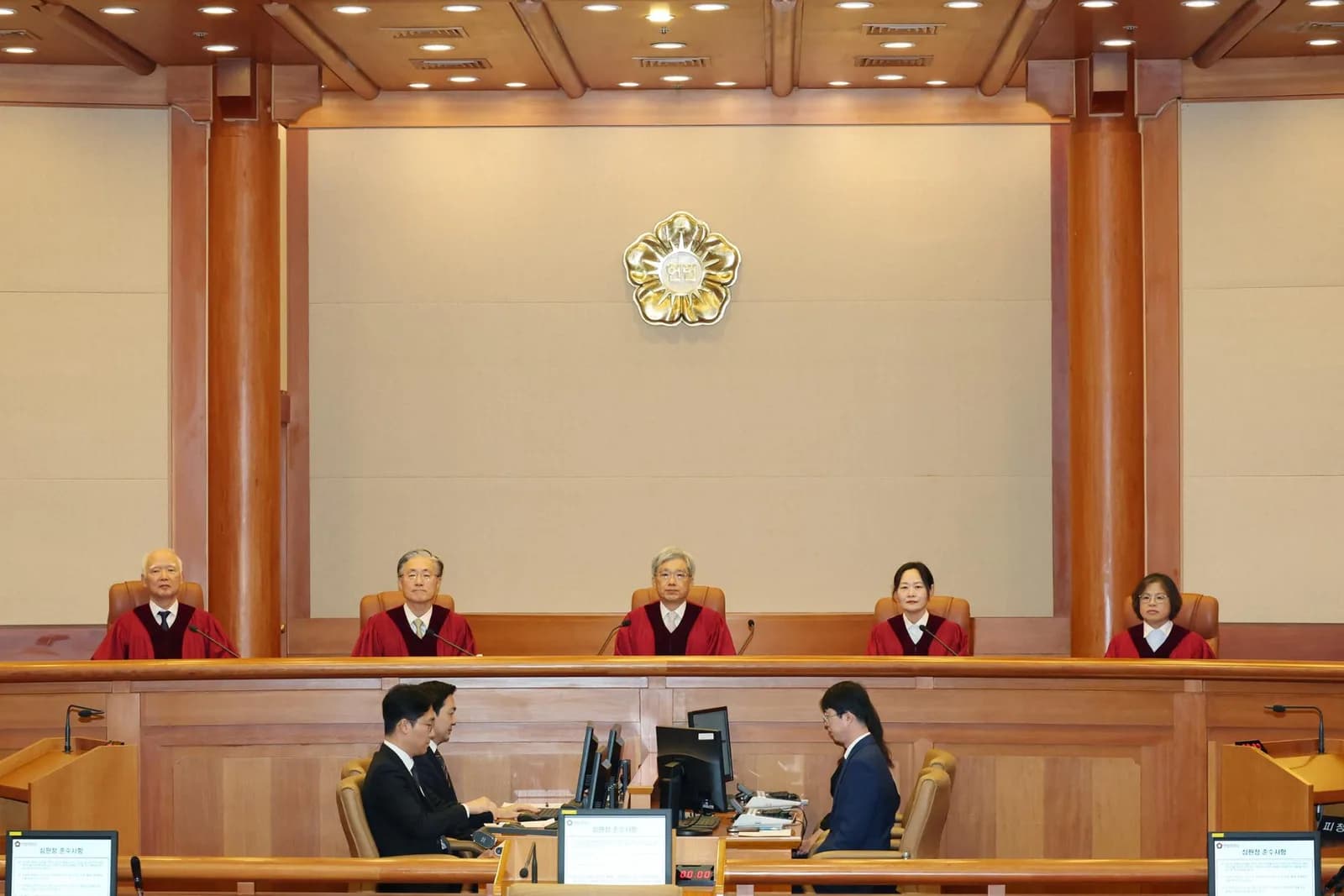
South Korea's Constitutional Court ruled 6-3 on 26 November that Article 17(2) of the Immigration Act, which imposes a blanket ban on political activity by foreign nationals, does not conform to the Constitution. The case was brought in 2021 by two Mongolian citizens who were studying in the country on student visas.
How the case began
According to Yonhap, The Korea Times and The Korea Herald, the two Mongolian students planned to urge prospective candidates in the 2022 presidential election to adopt policies against discrimination toward foreign residents in Korea. After learning that such advocacy could breach the Immigration Act's ban on political activity, they filed a constitutional complaint in July 2021, arguing that the provision's vague and sweeping wording discouraged foreigners from expressing their views.
What the court said
The majority found that not every activity that could count as political poses a threat to the sovereignty of the Korean people or to national security and public order. The court noted that freedom of expression, unlike voting and other political rights, is a constitutional right that applies to citizens and foreign nationals alike. Because violators can face deportation, it said, the ban has a chilling effect that leads many foreigners to give up planned activities. Three justices dissented, finding the provision constitutional.
Does the ruling take effect immediately?
No. To avoid a legal vacuum, the provision remains in force until the National Assembly revises it, with a deadline of 31 December 2028; if the law is not amended by then, the provision will lose its effect. Separate restrictions on election campaigning, party activity and political donations by foreign nationals, set out in other laws, are not affected. The court pointed to Germany's approach, which allows political activity by foreigners in principle while listing prohibited acts in law, as one option.
On X, Mongolian users shared the news under the line "two Mongolian students' fight has changed Korean law".
Sources: Yonhap, The Korea Times, The Korea Herald, Aju Press
Get the latest news delivered to your inbox.
Related articles