
‘Breakthrough’ perovskite-silicon tandem solar cell hits 34% efficiency, record-level voltage
A new solar cell has achieved an independently certified open-circuit voltage of 2.014 volts. That...
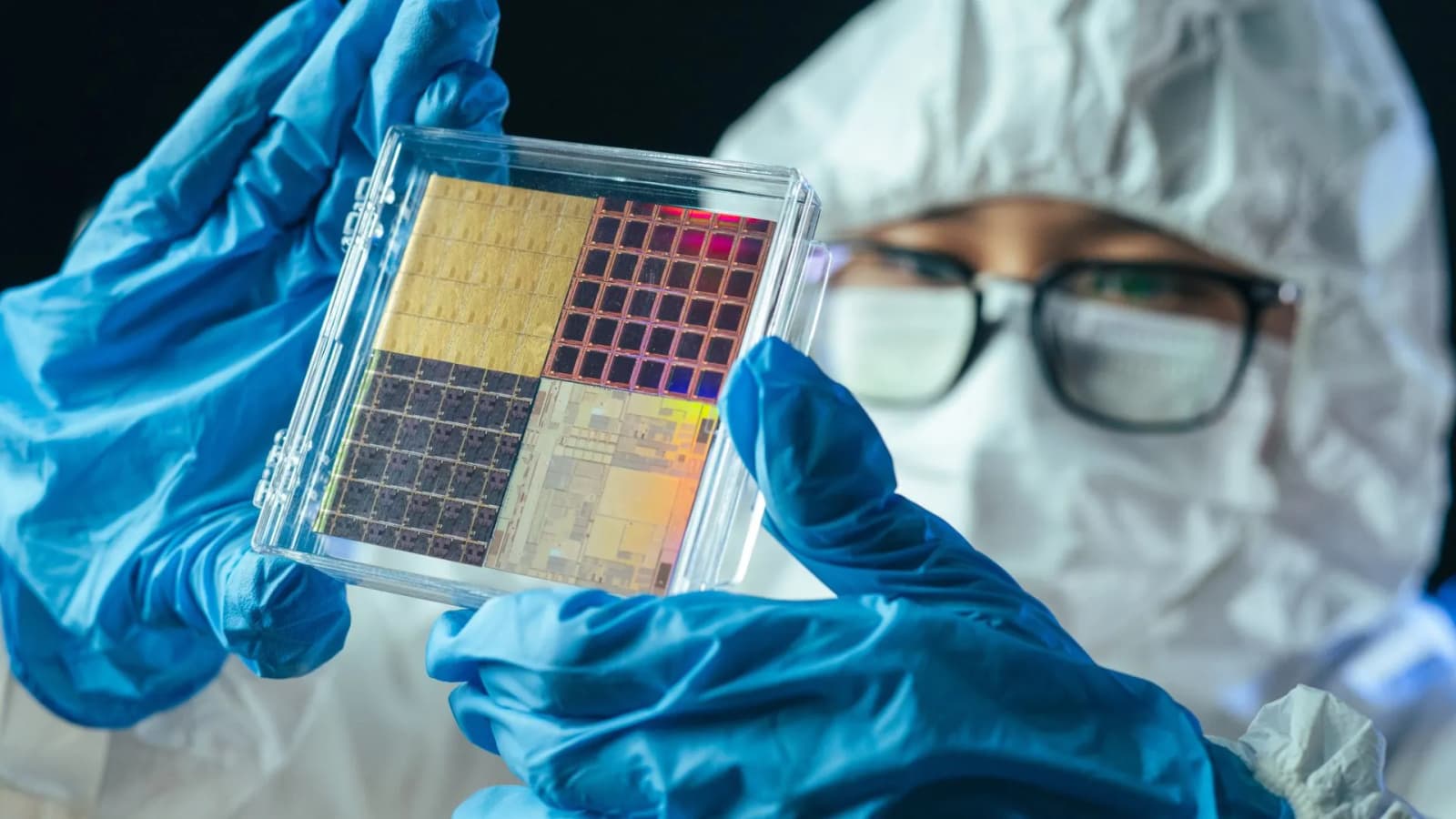
A new solar cell has achieved an independently certified open-circuit voltage of 2.014 volts. That is among the highest figures ever reported for this type of device. The device also reached a laboratory power conversion efficiency of 34.0%, with certified testing confirming a steady-state efficiency of 33.5%. It has been developed by scientists at Soochow University and LONGi Central R&D Institute.
Tandem solar cells stack a perovskite top layer over a standard silicon base to capture more sunlight than regular panels. Yet engineers have long hit a wall when trying to scale up performance.
The rough surface of textured silicon makes it hard to grow smooth perovskite layers. In addition to this, electric charges frequently become trapped and lost at the buried interface where holes must exit the cell. This energy loss is known as non-radiative recombination.
Past attempts to fix this flaw created a frustrating dilemma. Treating the interface cut down on lost charges, but it also formed an insulating barrier that slowed electrical flow.
Nanoscale engineering with interfacial design
The research team solved this trade-off by engineering an ultra-thin scaffold. Rather than applying a flat insulating layer, they placed separate monoclinic zirconia (ZrO2) nanoparticles between the cell’s conductive oxide and a molecular monolayer.
This speckled layout works in two ways. First, the nanoparticles adjust the surface energy, allowing the liquid perovskite solution to spread out evenly. This produces dense, void-free films with larger crystal grains.
“Second, the discrete nanoparticles form nanoscale localized contacts at the interface,” said the researchers in a press release. “The zirconia regions provide field-effect passivation that suppresses non-radiative recombination, while the exposed monolayer pathways preserve efficient hole extraction.”
Zirconia also has a high dielectric constant, which shields the cell from electrical fluctuations and prevents charge build-up. Chemical tests showed the nanoparticles formed strong Zr–O–P bonds with the monolayer, creating a dual-anchoring network that holds the interface firmly together.
Performance verification for project outlook
The team ran multiple tests to verify how the cell performed under the hood. Microscopic checks showed smooth electrical currents across the entire treated surface. Time-resolved measurements confirmed that charge carriers survived nearly twice as long, rising from 1.46 to 2.81 microseconds.
The champion cell posted a 34.0% efficiency with an open-circuit voltage of 1.997 V, a current density of 20.36 mA cm-2, and a fill factor of 83.62%.
Crucially, the device did not degrade quickly. When kept under continuous simulated sunlight at room temperature for 2,000 hours, encapsulated cells retained 84% of their starting efficiency.
The project was co-led by Prof. Jiang Liu, Prof. Xiaohong Zhang, and Dr. Hongbo Mo at Soochow University, along with Dr. Bo He at LONGi, with Huimin Zhang and Qingshui Zheng contributing equally as first authors.
“The results show that a carefully patterned insulating interface can improve perovskite film growth and suppress recombination without blocking charge extraction,” concluded the press release. “This nanoscale interface design provides a practical strategy for developing more efficient and durable perovskite/silicon tandem solar cells.”
Related articles
World’s first zero-degradation elastocaloric cooling device maintains 1 million operational cycles
Researchers from the Hong Kong University of Science and Technology (HKUST) have unveiled the world’s...

Beijing to Shanghai in 30 minutes: China ready to test its Supersonic TMS-10 plane
China is moving its next-gen supersonic passenger aircraft research into a more demanding phase, with...

MARTAC expands US drone boat production with 100 more Devil Rays per year
MARTAC partners with SŌLACE Boats to increase production of its Devil Ray autonomous vessels by...
Why promising battery materials break down when researchers build real cells
A battery material can look impressive in a laboratory and still fail when turned into...

China showcases Type 99B tank in live-fire drills after 2025 parade debut
China has released footage of live-fire drills of its Type 99B main battle tank roughly...
Sentinel ICBM explained: Inside America’s next-generation nuclear missile
For more than five decades, the U.S. land-based nuclear deterrent has relied on the LGM-30...