
China unveils world’s first humanoid built around a domestic electronic architecture
China has unveiled what it describes as the world’s first embodied AI robot equipped with...
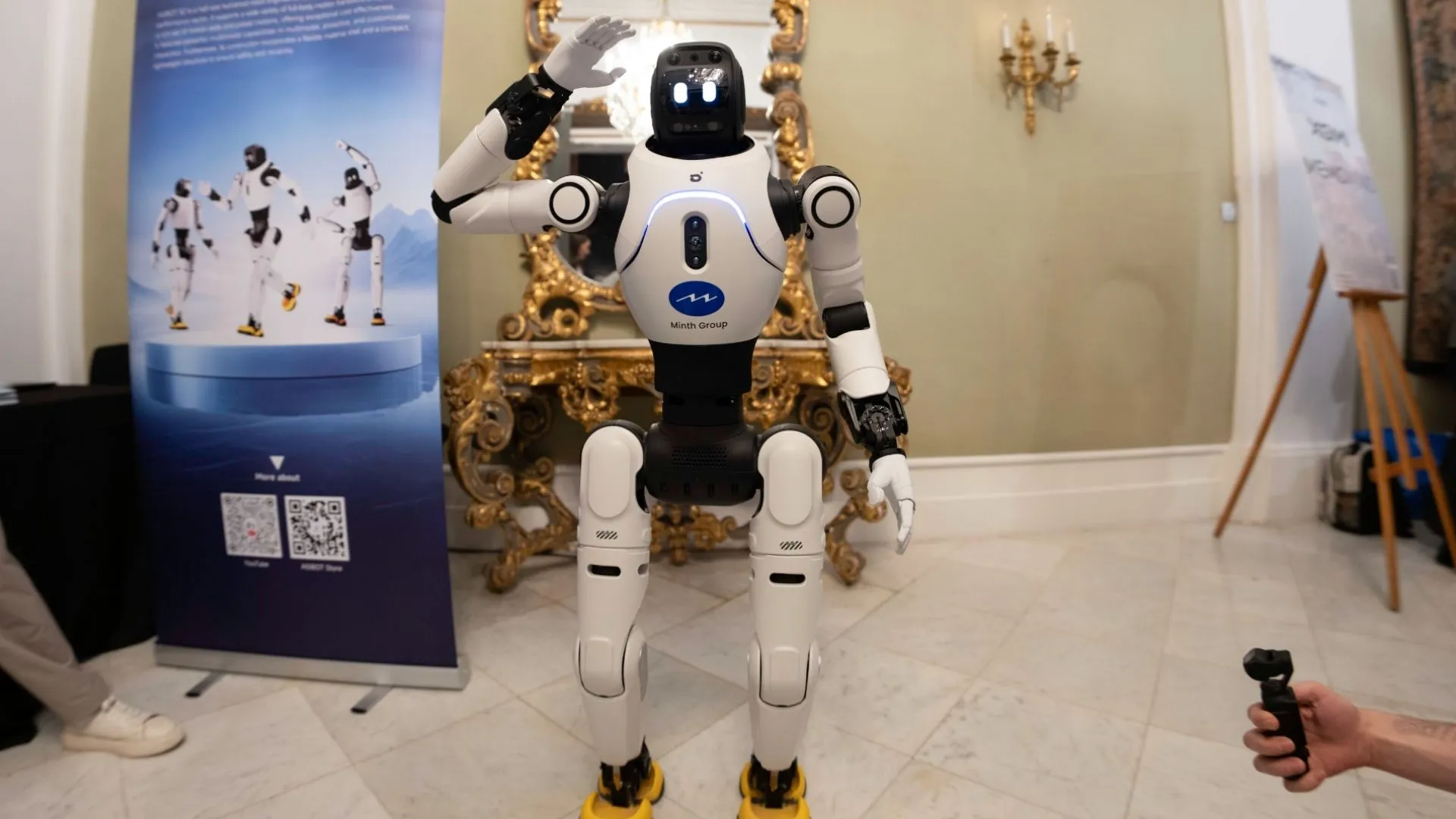
China has unveiled what it describes as the world’s first embodied AI robot equipped with a fully domestically developed electronic architecture. The robot was presented Monday in Yichang, Hubei Province, according to CCTV News.
The architecture connects the robot’s AI decision-making with its physical actions. Its developers say the system offers a domestic alternative to foreign technologies used in this critical layer of robotics.
The unveiling comes as China seeks greater control over the systems beneath its growing robotics industry. Developers also reported that the robot maintained safe operation during tests involving damaged joints, cyberattacks and implanted viruses.
The system between thought and movement
An electronic architecture brings together a robot’s operating system, networking, software tools, computing chips and control functions. It determines how decisions made by AI are translated into instructions that the machine can carry out.
The developers say their architecture allows control functions and AI computing to operate separately while remaining integrated. They describe it as a domestic foundation extending from AI decision-making to physical execution.
“What AI ‘thinks’ is one thing, and what a robot ‘does’ is another. In between, there must be a reliable, secure and controllable underlying system. The electronic architecture is that system,” Li Qingdu, executive dean of the Institute of Machine Intelligence at the University of Shanghai for Science and Technology, told the Global Times.
Li said the development reflects a broader shift in China’s robotics industry: from making individual components domestically to developing the underlying architecture that connects them. The announcement did not identify the robot’s manufacturer or provide detailed technical specifications.
Safety under simulated failures
Testing personnel evaluated the robot under conditions that included joint damage, cyberattacks, and virus implantation, according to the report. It said robots using conventional electronic architectures suffered circuit failures, sudden shutdowns or loss of control under those conditions.
The new robot reportedly continued operating safely. The reported results point to the architecture’s ability to respond quickly, isolate faults, and protect the system when something goes wrong, though the account did not provide test methods or independent verification.
Those capabilities matter when robots work near people. Li pointed to concerns raised at robot competitions about possible collisions, arguing that the underlying system must keep a robot within physical and operational safety limits even when it encounters a fault or attack.
A broader push for domestic control
The robot’s electronic architecture is part of China’s effort to build more of its robotics technology at home. According to the developers, it provides an option that could replace foreign solutions for the systems connecting AI computing and machine control.
“Localization here is not simply about replacing suppliers across the industrial chain. It is also about gaining autonomous control over the underlying systems of robots,” Li said.
China’s Ministry of Industry and Information Technology called for a secure and reliable industrial and supply chain system by 2027 in a guideline released in 2023.
A draft outline of the country’s 15th Five-Year Plan, covering 2026 to 2030, also identifies robotics as an emerging industry for accelerated development.
Related articles

Firefox just got a redesign with round tabs, new themes, and Compact Mode
Firefox will look a little different the next time you launch it - more bubbly, with some new pops of color.

Polaroid’s new instant camera has four creative shooting modes you can experiment with
Polaroid announced a new instant camera that lets photographers get more creative and experimental with their shots than just changing the aperture or shutter speed.

Fairphone’s next repairable wireless earbuds will launch on October 14th
Following leaks revealing a major redesign earlier this month and an official teaser posted to X yesterday, Fairphone has shared some exclusive details with The Verge about the first follow-up to its…

Anthropic warns of ‘catastrophic’ AI risks in its own IPO filing
As Anthropic gears up for its greatly anticipated public debut, a preview of the company's IPO filing reportedly details its mounting losses, leadership proposals to retain power, and how its AI…
Aviation-grade carbon-ceramic brakes survive 1,832°F, weigh 75% lighter than steel
A brake disc the size of a car wheel that can withstand temperatures above 1,832°F...

Texas A&M students build 6-pound drone that carries cargo twice its own weight
A team of Texas A&M University students built a drone light enough to carry more...