
Chinese automaker files dual-chamber battery design that submerges cells in cooling liquid
Cooling battery cells directly in liquid creates an engineering challenge: keeping that liquid away from...
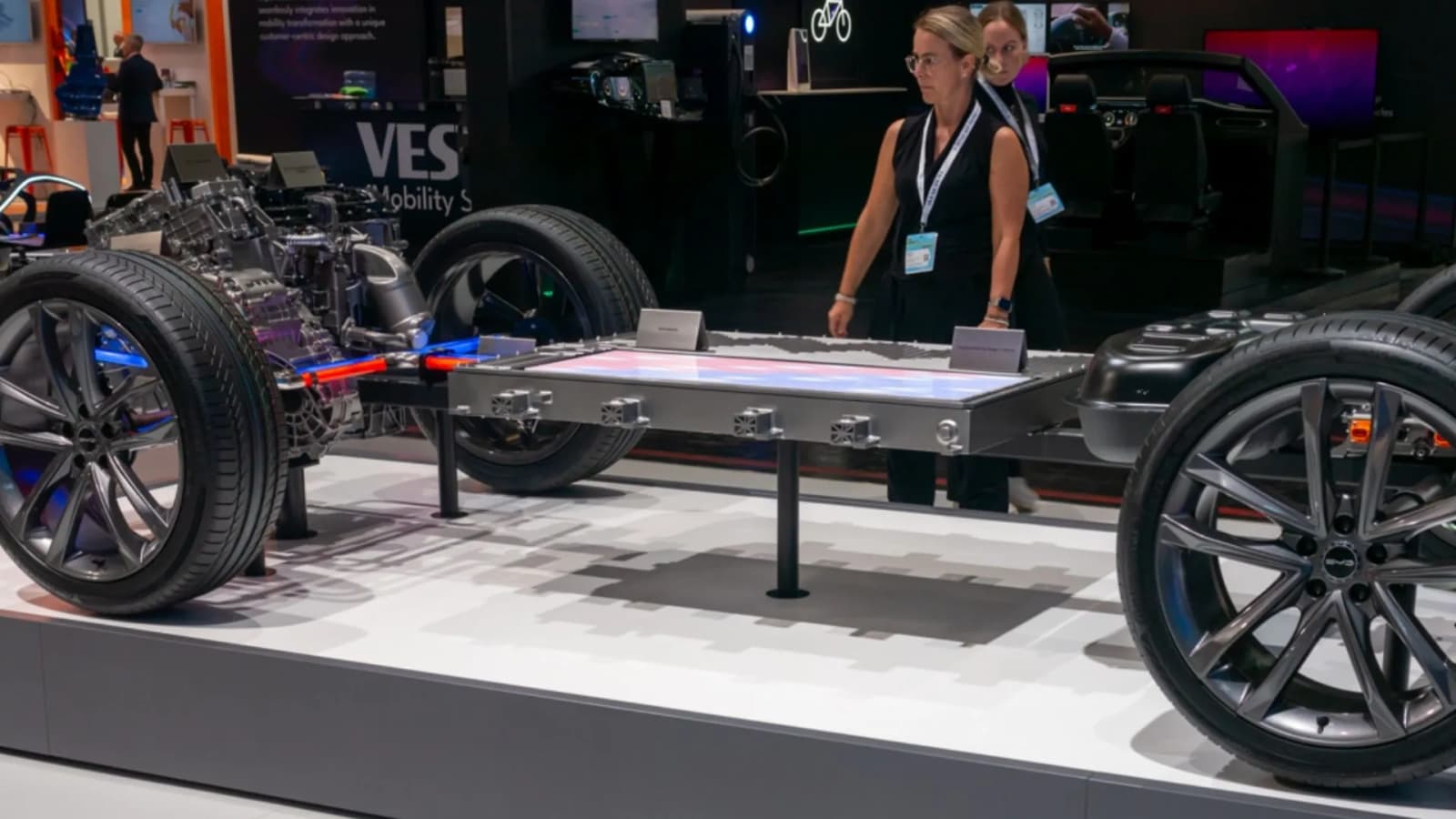
Cooling battery cells directly in liquid creates an engineering challenge: keeping that liquid away from electrical equipment.
BYD has filed a patent application for a two-chamber cabinet that separates submerged battery modules from electronics and routes their connections through the upper part of the liquid-filled compartment.
The China National Intellectual Property Administration published the application, numbered CN 122868832 A, on October 5, 2026.
Filed in March 2025, it describes battery cabinets and energy storage equipment that use dielectric fluid to absorb heat directly from the modules.
The design places electrical equipment in a dry upper chamber and battery modules in a wet lower chamber.
Its focus is the boundary between those spaces, where connections must pass through without allowing cooling liquid to reach components intended to remain dry.
Bringing cooling liquid directly to the cells
Many battery systems remove heat through an indirect cooling arrangement. Liquid circulates inside aluminum cold plates positioned against battery modules, drawing heat through the cell casing and materials between the cells and plates.
Immersion cooling changes that heat-transfer route. Battery modules sit directly in a non-conductive fluid, allowing heat to pass from their wetted surfaces into the surrounding liquid.
This shortens the thermal path, but containing the fluid becomes part of the cabinet’s design. Electrical equipment and connection points that are not intended for immersion still require protection from the liquid.
BYD’s application specifies dielectric cooling fluids, including hydrocarbon- or ester-based formulations. These fluids provide electrical insulation while cooling the submerged modules.
Moving connections higher to reduce pressure
The proposed cabinet divides the battery and its electrical equipment into two isolated compartments. The lower chamber holds the immersed modules, while the upper chamber houses electrical components outside the liquid volume.
Electrical and signal connections pass through the upper portion of the wet chamber before entering the dry compartment. The arrangement avoids routing those connections through the floor or deeper sections of the liquid-filled chamber.
That positioning matters because hydrostatic pressure increases with depth. A sealing interface near the top experiences less liquid pressure than one farther down, reducing the pressure acting on the boundary between compartments.
The design therefore combines an insulating fluid with a physical separation between cooling and electrical equipment.
The cabinet’s layout addresses how connections cross that separation while keeping sensitive components outside the main liquid volume.
A storage cabinet awaiting commercial plans
The application covers battery cabinets and energy storage equipment. It does not identify a passenger-vehicle application, so the filing does not establish that BYD intends to use this arrangement in an electric car.
Existing systems use different cooling layouts. BYD’s MC Cube-T specifies liquid cooling, while CATL’s EnerOne and EnerC storage systems use cooling plates outside their battery modules. CATL’s Qilin vehicle battery places a liquid-cooling plate between adjacent cells.
BYD’s filing instead places the modules inside the cooling fluid itself. The application remains under substantive examination, and the company has not announced commercial production plans for the proposed cabinet.
Related articles

Samsung Wallet now unlocks some GM cars
Users of some Samsung devices in the US and Canada can now lock, unlock, and start select GM vehicles using a digital key stored in their Samsung Wallet.

Jaguar’s first EV looks just like its divisive concept car
The Type 01, Jaguar's most important and divisive car in years, has arrived.
Modular tire design aims to cut waste and monitor road conditions with built-in sensors
Researchers at Universidad Carlos III de Madrid (UC3M) have designed and tested a modular tire...

Tesla’s Model 3 and Model Y can be a backup battery for your house
Some Tesla Model 3 and Model Y owners can use their EV battery to keep the lights on longer during a power outage, now that Tesla's expanding the Powershare Home Backup feature.

Hyundai CEO says only a ‘level playing field’ can minimize damage from China
There's been a lot of doom and gloom from the auto industry lately when the subject of China comes up.
Toyota’s $50M US battery center targets EVs, hybrids and longer-lasting batteries
Toyota has opened a nearly $50 million battery research center in Michigan that will test...