Cobalt-free battery reaches 278.6 Wh/kg at -4°F with a four-element cathode design
Researchers at the Institute of Metal Research, part of the Chinese Academy of Sciences, picked...
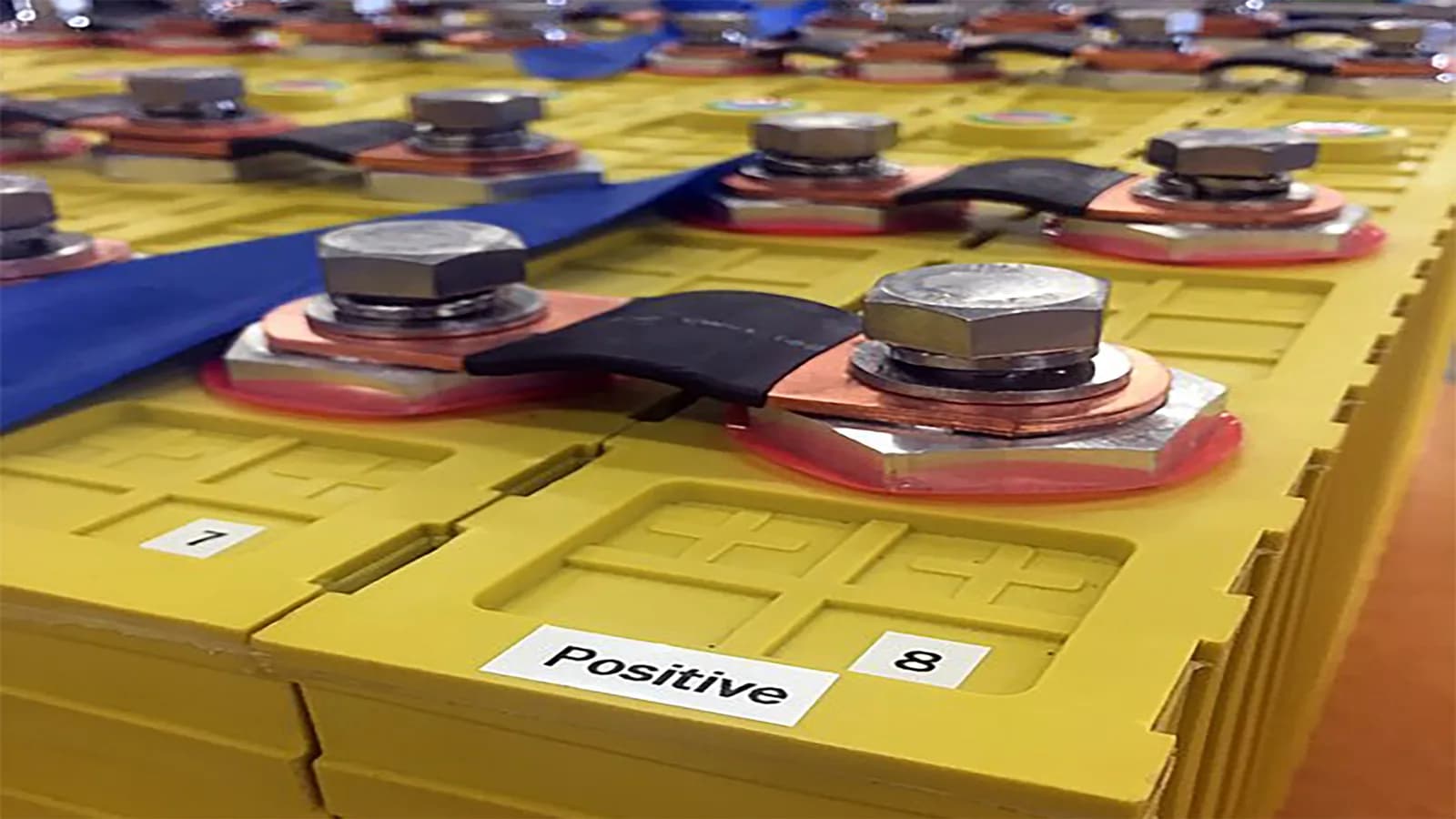
Researchers at the Institute of Metal Research, part of the Chinese Academy of Sciences, picked dopants by two measurable properties to design a cobalt-free, nickel-rich lithium-ion cathode, according to a Nature Synthesis paper and an academy release. They report high capacity at fast discharge and at minus 4 degrees Fahrenheit (minus 20 degrees Celsius).
A cathode is a battery’s positive electrode, which takes in and releases lithium ions as the cell charges and discharges. Removing cobalt lowers cost and raises capacity, the release said, but it also slows lithium-ion movement and destabilizes the crystal structure, including its oxygen framework.
Doping, or adding small amounts of other elements, is a common fix, but the release said dopants are usually chosen by experience and repeated testing. The team, led by professors Feng Li, Hui-Ming Cheng and Chunyang Wang, instead used two descriptors: how concentrated an ion’s charge is (ionic charge density) and metal-oxygen bond strength.
Picking dopants with two descriptors
The team gave each descriptor a job. Magnesium and calcium have low ionic charge density, which the release said weakens electrostatic constraints on the lithium ions moving through the material. Titanium and zirconium form strong metal-oxygen bonds, which the release said reinforce the oxygen framework, the lattice of oxygen atoms that holds the metal ions in place.
The resulting cathode was tested at high discharge rates and in the cold. The release said it improved rate performance and structural stability together. The paper’s abstract reports a specific capacity, the charge stored per gram of material, of 130.9 milliamp-hours per gram at 25 C. A C rate compares current with capacity, so 25 C means a full discharge in 1/25 of an hour, about 2.4 minutes. The cathode kept 82.4 percent of its capacity after 350 cycles at 10 C. At minus 4 degrees Fahrenheit it delivered 112.2 milliamp-hours per gram at 1 C.
Pouch-cell result and open questions
The release also reported a 5.74-ampere-hour pouch cell, a battery sealed in a flexible foil case, that reached 278.6 watt-hours per kilogram at minus 20 degrees Celsius. It said multimodal characterization, meaning several analysis techniques used together, showed faster lithium-ion transport and fewer harmful phase changes.
The pouch-cell figure comes only from the release, which doesn’t give its discharge rate or say whether the 350-cycle test used a coin cell or a pouch cell. The release also gives no comparison cathode, no dopant amounts and no cost figures. The release calls the approach a new design paradigm, but it describes results for one four-dopant composition, so how well the descriptors guide other choices isn’t shown there.
Other labs are also dropping cobalt, including Caltech’s lithium iron phosphate cathode and McGill-led disordered rock-salt cathodes that need neither cobalt nor nickel. Another Chinese Academy of Sciences team reported a single-use lithium-metal battery that kept 447 watt-hours per kilogram at minus 40 degrees Fahrenheit.
The study appeared Oct. 1 in Nature Synthesis.
Get the latest news delivered to your inbox.
Related articles