
Compact supercritical CO2 system taps turbine waste heat for up to 50% more power
A Denver startup has emerged from stealth with an $8 million funding round to commercialize...
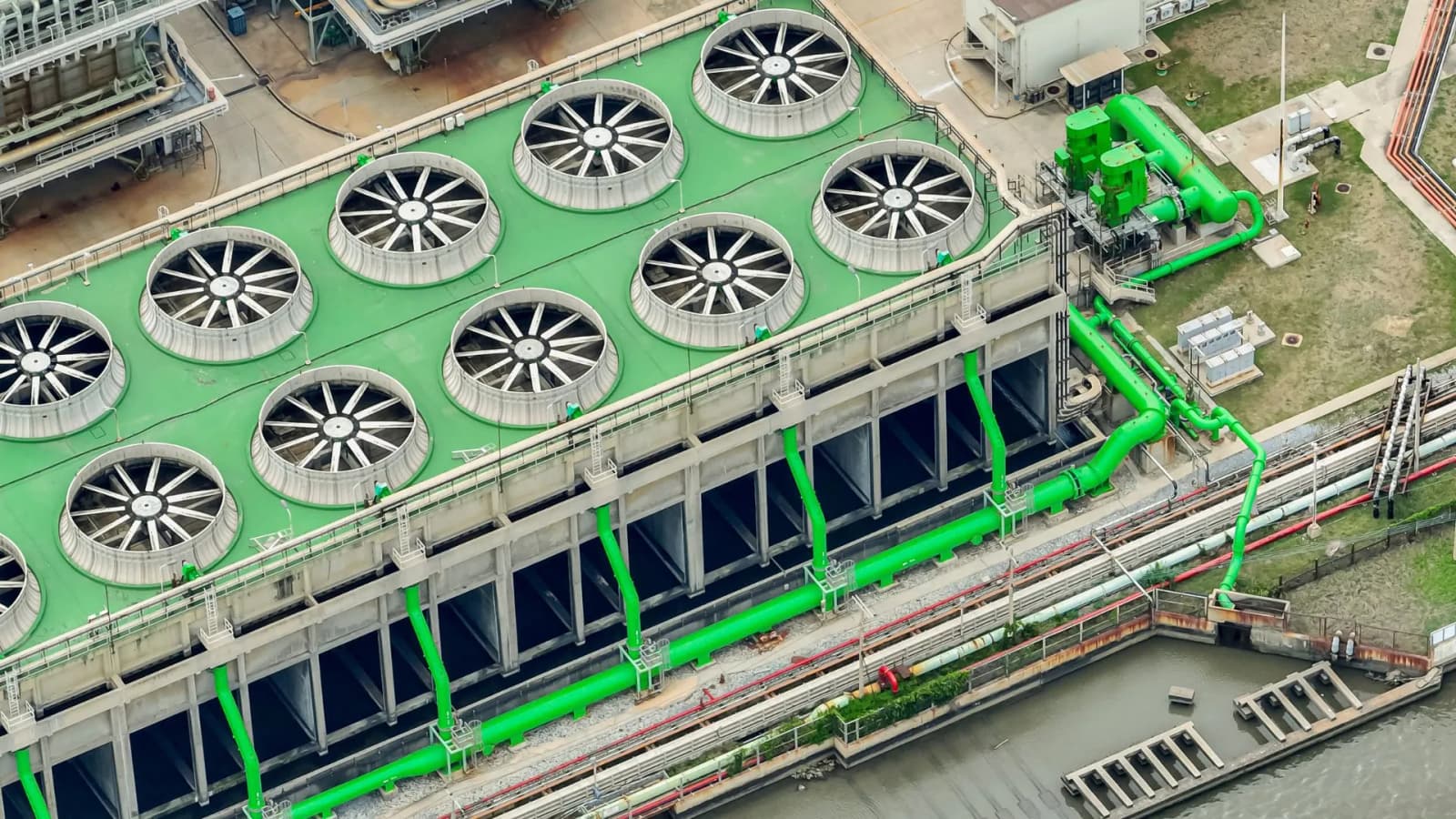
A Denver startup has emerged from stealth with an $8 million funding round to commercialize supercritical carbon dioxide power systems that can turn gas turbine waste heat into additional electricity.
American Supercritical says its factory-built sCO2 power block can be installed at a gas turbine’s exhaust, where it captures heat that would otherwise be wasted and converts it into power. The company claims the system can increase a turbine installation’s power output by up to 50% without burning additional fuel.
The technology is initially aimed at simple-cycle gas turbines, which generate electricity directly from hot combustion gases but release substantial amounts of remaining heat through their exhaust. American Supercritical says roughly 140 GW of these turbines operate in the US.
Instead of replacing the turbines, the company’s system is designed to add a secondary power cycle. It does not require modifications to the existing turbine and, according to the company, can be installed without re-permitting the turbine itself.
Carbon dioxide replaces steam
Conventional combined-cycle plants capture gas turbine exhaust heat to produce steam, which then drives a second turbine to generate additional electricity. American Supercritical wants to perform that job using CO2 held above its critical temperature and pressure.
In this supercritical state, CO2 has properties of both a liquid and a gas. Its high density allows power-generation equipment such as turbines and heat exchangers to be considerably more compact than comparable steam-cycle equipment.
American Supercritical says its system occupies about one-tenth the space of a steam system. The smaller footprint could make waste-heat recovery practical at sites where installing conventional steam equipment would be difficult.
“Our first goal is to make wasteful simple cycle gas turbine installations obsolete,” said Simon Shuham, co-founder and CEO. “Our sCO2 power block converts any gas turbine into a combined cycle plant. We upgrade turbines running today instead of replacing them.”
The company estimates that converting the existing US fleet could avoid about 20 million tons of carbon dioxide emissions annually while providing gigawatts of additional generating capacity.
Waste heat becomes power
The company is targeting a growing market for gas-fired generation as data centers, manufacturing and electrification increase electricity demand. Smaller simple-cycle turbines can be deployed relatively quickly but generally sacrifice efficiency compared with combined-cycle plants.
“Compressed timelines pushed operators toward simple cycle turbines. Wasting fuel was never the goal,” said Matt Carlson, co-founder and CTO.
American Supercritical says its technology could eventually extend beyond gas turbines. The same sCO2 platform could recover or convert heat from small modular nuclear reactors, geothermal plants, concentrated solar facilities and industrial processes.
The company has opened a 25,000-square-foot facility in Denver for testing and low-volume production. Its team includes engineers with experience at Sandia National Laboratories, Kairos Power, Echogen, Blue Origin and Southwest Research Institute.
The $8 million pre-seed round was led by Silent Ventures, with participation from Riot Ventures, Harpoon, Reveille VC, Hillwood, Mana Ventures, Climate Capital, Alumni Ventures, and angel investors.
Source: https://interestingengineering.com/innovation/supercritical-co2-gas-turbine-waste-heat-power
Related articles

Meta ditches the camera on its newest smart glasses
Walking around Meta Connect 2026, everyone's sporting smart glasses in all sorts of shapes, colors, and sizes. It's a marked difference here, a tech bubble where "pervert glasses" are not a concern.

Muse is coming to Meta smart glasses
Just a couple of weeks after launching Muse, Meta announced that it's "working on" bringing the agent to its smart glasses, including the new glasses it unveiled at Meta Connect.

Meta’s next VR device isn’t a headset — it’s glasses
Meta is launching new VR hardware: a pair of glasses.

Meta Connect 2026: The 7 biggest announcements
Meta announced a slate of new wearables during its annual Meta Connect showcase on Wednesday.

Meta is making a standalone Muse AI gadget
Meta is building a dedicated hardware device for its new Muse AI agent.

New turbojet-powered autonomous aircraft packs modular nose for rapid payload swaps
AEVEX Corp. has revealed a new autonomous aircraft designed to bring jet propulsion and modular...