
F-35 jets could get 40-kilowatt cooling boost to handle future tech upgrades
Honeywell Aerospace has introduced an upgrade designed to give the F-35 fighter jet more cooling...
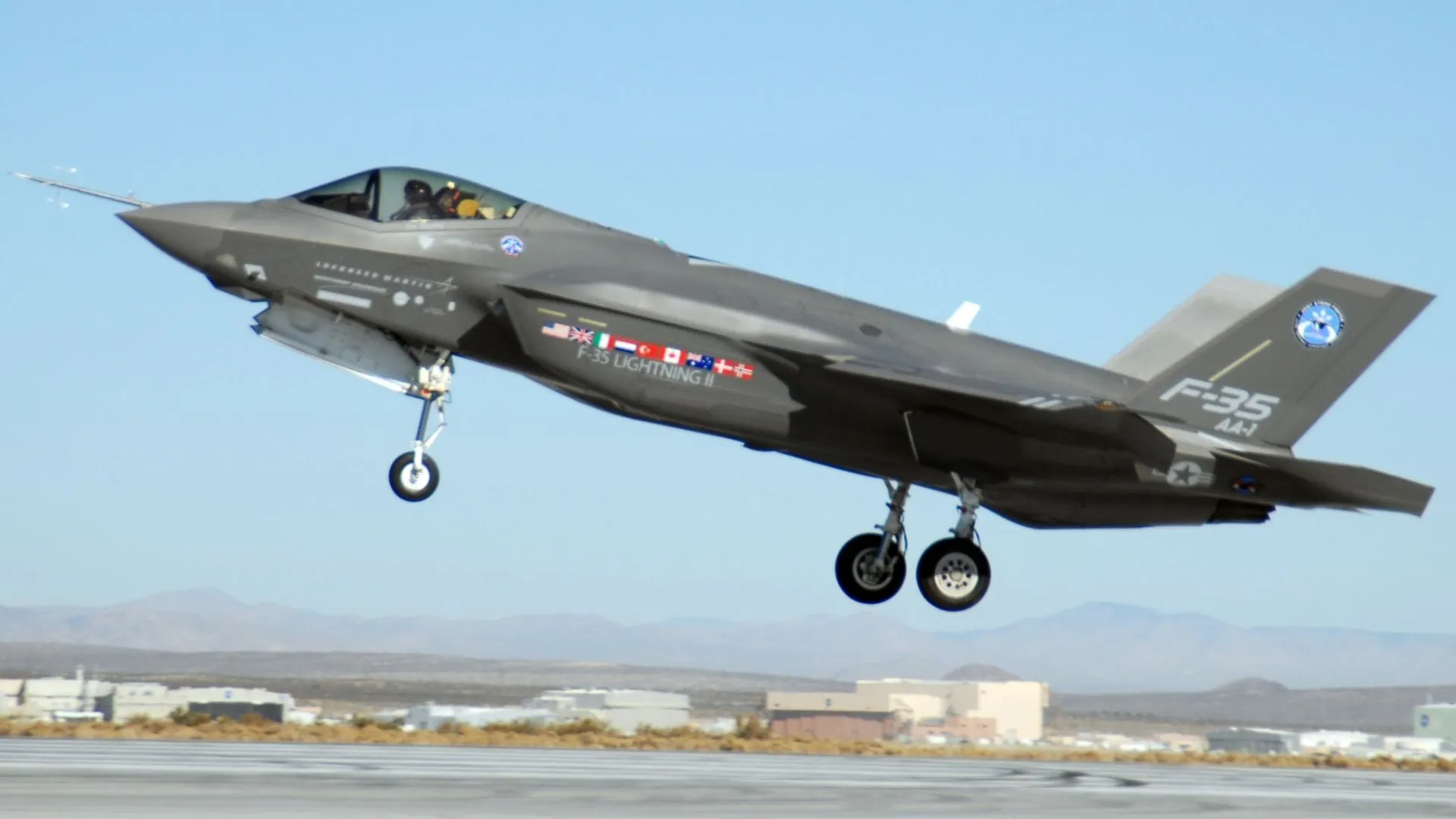
Honeywell Aerospace has introduced an upgrade designed to give the F-35 fighter jet more cooling capacity as its onboard systems become more demanding.
The company says its P40 upgrade would increase the aircraft’s power and thermal management system (PTMS) cooling capacity by 25%, from approximately 32 to 40 kilowatts, without requiring structural changes.
The figure measures how much heat the system can remove, rather than the electrical power available to the jet’s equipment.
Developed by Honeywell Aerospace in Phoenix, Arizona, P40 is intended to help manage heat from the F-35’s sensors, mission systems, and computers as operators add new capabilities.
Why the F-35 needs more cooling
The F-35’s onboard electronics produce heat while collecting information, running mission systems, and supporting pilots. The aircraft must remove that heat to keep its equipment within acceptable temperature limits.
As operators add more demanding sensors and computing capabilities, the load on the cooling system grows. That makes thermal capacity a consideration when planning future upgrades to the fighter.
Honeywell says P40 would provide approximately eight additional kilowatts of cooling capacity. The announcement does not identify specific sensors or mission-system upgrades that would use it.
Building on the existing PTMS
According to Honeywell, P40 achieves the increase through software changes and targeted improvements to liquid-cooling equipment within the PTMS.
The existing system supplies both liquid and air cooling to equipment including the F-35’s radar, electronic warfare system, and avionics. It also provides electrical power for starting the main engine and serves auxiliary and emergency power needs.
The PTMS combines the functions of an auxiliary power unit, emergency power unit, environmental control system, and thermal management system in one integrated package. According to Honeywell, P40 builds on that architecture without changing the F-35’s structure.
Beyond cooling mission equipment, the PTMS cools and pressurizes the cockpit, supplies oxygen to the pilot, and helps seal and defog the canopy. It also helps prevent fuel tank fires by replacing oxygen with inert gas.
Honeywell says it can also provide emergency power to primary flight controls if the main engine or generators fail. During an in-flight emergency, it can supply ram-air cooling to the cockpit and air-cooled avionics.
“Operators need additional cooling capacity and improved readiness on a timeline that matters. P40 delivers both by building on the proven PTMS architecture already operating across the global F-35 fleet,” said Matt Milas, president of Defense and Space at Honeywell Aerospace.
The company has described its proposed approach, but the information released so far does not explain how it would install the upgrade across the fleet.
Fielding targeted for 2029–2030
Honeywell expects to field P40 between 2029 and 2030. Until then, the upgrade remains a proposed way to meet the growing cooling demands of the F-35’s onboard systems.
If fielded as planned, P40 would give operators more thermal capacity for future equipment. How much of that capacity they would use depends on the capabilities ultimately added to the aircraft.
Source: https://interestingengineering.com/military/40-kilowatt-cooling-boost-for-f-35
Related articles

Everything is spying on you and there’s no opting out
Earlier this month, Apple announced that its new Apple Watches will have the ability to continuously listen to every spoken word they detect and create summaries of whatever's going on around you.

Meta’s Muse AI Charms can interact with each other
Meta's handheld AI gadget, called the Muse Charm, will be able to recognize and interact with other nearby Charms when it launches later this year.

Waymo’s driverless cars continue to crash less often than people
Waymo's latest batch of self-reported data continues to affirm the company's message that its driverless cars are safer than human drivers.

Island solar plant gets 150-kW electrolyzer to make hydrogen from surplus energy
A solar plant on the French island of Corsica has a new use for electricity...
Electra’s EL2 first fixed-wing plane to fly helicopter-style IFR at commercial airport
A fixed-wing aircraft has landed at a commercial airport using helicopter-style instrument procedures for the...

Unitree humanoid robots return to America’s Got Talent for Chinese dance finale
A Chinese dancer and eight humanoid robots from Unitree Robotics have brought a centuries-old Chinese...