
First for US Army: MH-47G Chinook helicopter refuels from autonomous barge at sea
A U.S. Army MH-47G Chinook helicopter has landed on an uncrewed vessel at sea and...
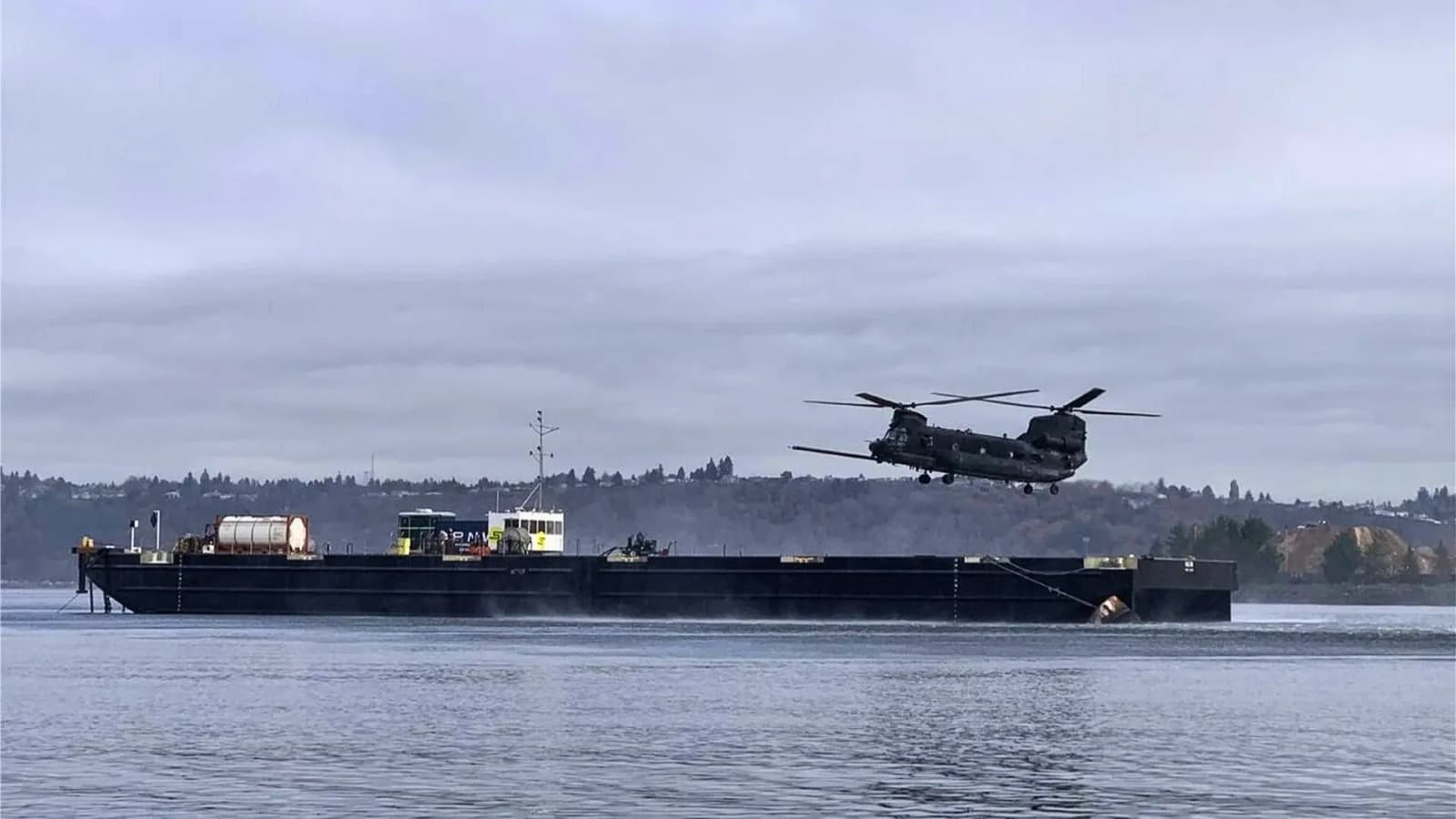
A U.S. Army MH-47G Chinook helicopter has landed on an uncrewed vessel at sea and completed a refueling operation, demonstrating a new way to keep special operations aircraft flying on long missions far from land. The aircraft belongs to the 160th Special Operations Aviation Regiment, known as the Night Stalkers.
The demonstration points toward a future where mobile, uncrewed support ships extend helicopter reach across the Pacific and other contested maritime regions, rather than special operations forces depending solely on fixed bases or large crewed vessels.
A barge that refuels
The autonomous vessel used in the test was a barge fitted with Sea Machines Robotics’ SM300 autonomy system, according to information the company shared. The SM300 provides automated navigation, route execution and remote supervisory control, and can be adapted to different propulsion and steering setups depending on the vessel it’s installed on.
The MH-47G itself is a heavily modified version of the CH-47 Chinook built specifically for special operations. It combines heavy-lift capability with specialized avionics, navigation systems and defensive equipment suited to long-range infiltration, extraction and resupply missions far from conventional infrastructure.
Extending reach at sea
Pairing the two systems effectively creates a mobile refueling point that can move with the mission instead of staying fixed at a base or airfield. That could extend the MH-47G’s operational range without any modification to the aircraft itself, since the logistics simply move closer to the objective rather than requiring the helicopter to carry more fuel.
For the 160th SOAR, whose missions typically depend on long range, precise timing and surprise, that flexibility could matter considerably. A mobile resupply point positioned along a flight route could support infiltration or extraction missions in places where suitable airfields are limited or too predictable to use safely.
Built for the Pacific
The concept carries particular weight in the Pacific, where island chains, long overwater distances and a limited number of forward airfields constrain traditional helicopter operations. Multiple autonomous vessels spread across a maritime theater could offer several possible replenishment points instead of one, making a support network harder for an adversary to predict or target.
The barges themselves would remain vulnerable to surveillance, electronic warfare, missiles and rough seas, and offer nowhere near the protection of a major naval ship. Their value instead comes from mobility and distribution, spreading logistics dependence across several smaller nodes rather than concentrating it in one place that, if lost, could disrupt an entire mission.
Sea Machines has designed its autonomy system to work across different vessel sizes using largely the same core architecture, adapting mainly to whatever propulsion and steering setup a given hull uses. That means moving from a small autonomous craft to a larger logistics vessel would not necessarily require building an entirely new control system.
The concept would not replace aerial refueling, crewed support ships or shore-based infrastructure. It would instead add another option planners can draw on, depending on distance, threat level and terrain.
Related articles

China conducts satellite-to-satellite refueling operation in high Earth orbit: Report
China has successfully refuelled one of its BeiDou satellites in high orbit, according to reports. The...

Nuclear war, bioweapons, runaway AI: How researchers rank risks of smart systems
Artificial intelligence researchers have long warned the technology could wipe out humanity, whether by designing...
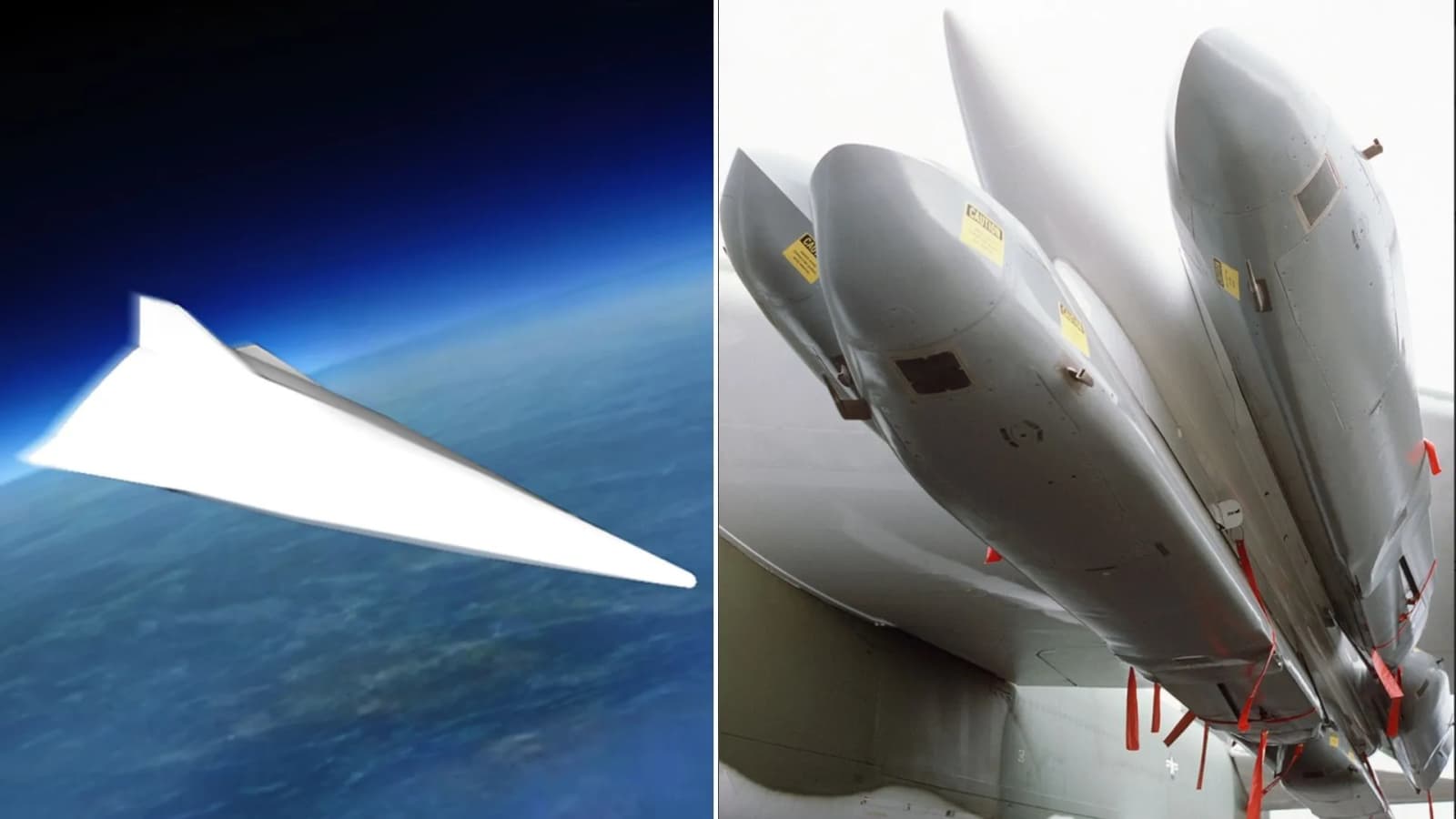
Hypersonic glide vehicles vs cruise missiles: How the weapons differ
Hypersonic weapons are designed to travel at speeds of Mach 5 or higher, or at...
US scientists’ new material could make next-gen microchip encryption faster, more secure
Researchers have defined a new material blueprint for the next-generation microchip encryption. The team of...

Why OLPC’s $100 laptop never stood a chance
The idea was big, exciting, and inspiring: What if we could get every kid in the world access to a computer?
US Air Force receives first ‘robot wingmen’ drones to begin autonomous warfare trials
The United States Air Force (USAF) has taken delivery of the first batch of two...