
US scientists’ new material could make next-gen microchip encryption faster, more secure
Researchers have defined a new material blueprint for the next-generation microchip encryption. The team of...
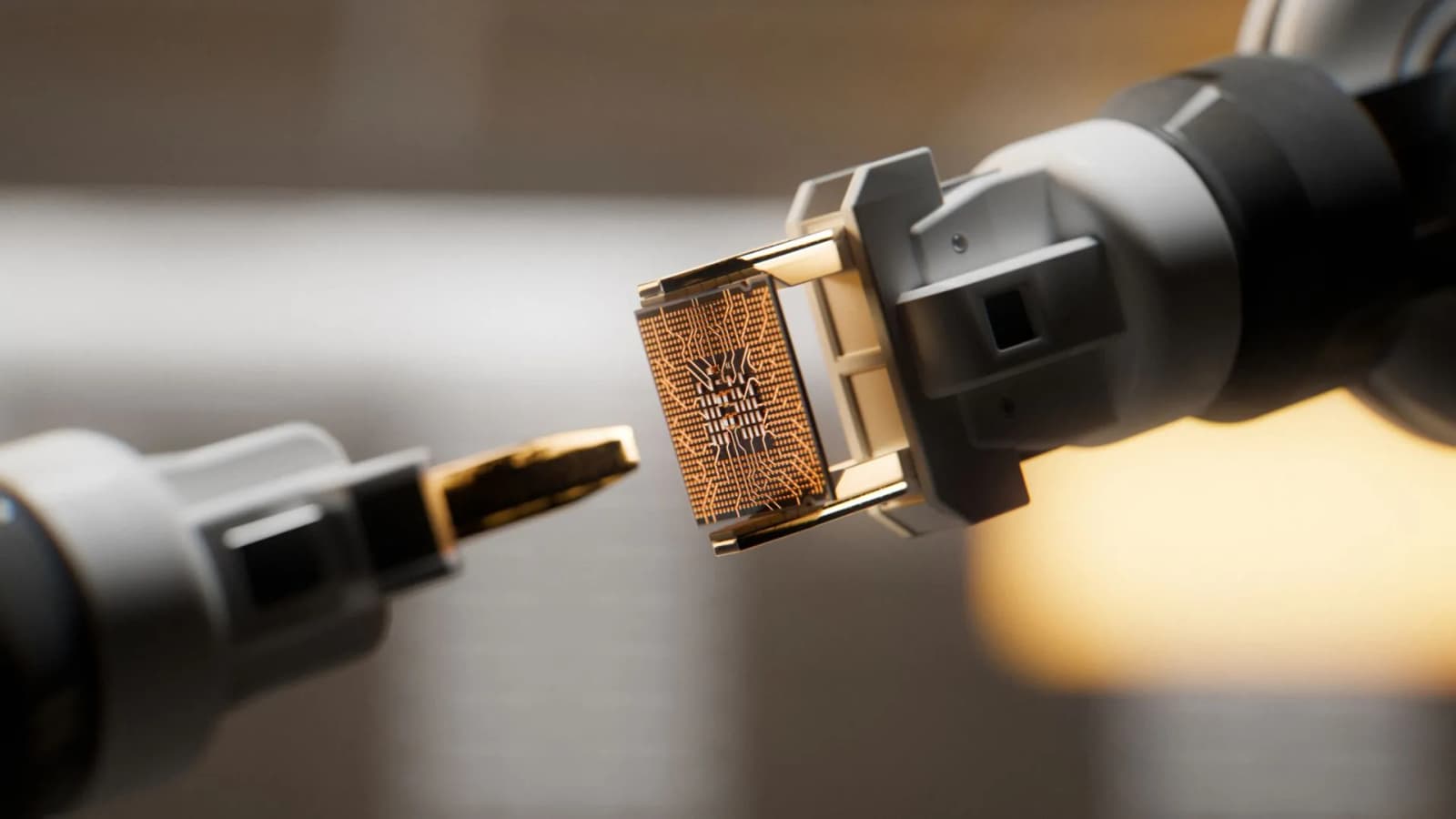
Researchers have defined a new material blueprint for the next-generation microchip encryption. The team of physicists has now theoretically eliminated a long-standing roadblock, opening the door for next-generation security chips that protect everyday data without slowing down performance.
The new study demonstrates a new class of materials. These materials are called autferroics and can speed up physical, true random number generators (TRNG) thousands of times while keeping signal clarity at full strength.
Charge-fluctuating entities in field-effect transistors
“Our broader interest in TRNG, or how to extract entropy from physical behavior and convert it into random bits, focused mostly on charge-fluctuating entities in field-effect transistors,” said Rice University’s Jun-Jie Zhang.
“But when exploring the energy landscape of autferroics, especially the lower barrier separating opposite polarizations, Jun-Jie proposed this might lead to faster TRNG. It turned into a very fruitful collaboration with our recent report dovetailing with our previous one.”
The team also highlighted that security systems can lag under heavy use or become vulnerable to hacking if the random numbers driving encryption are generated too slowly or with weak signals. Inside these security devices, unpredictable thermal fluctuations within tiny magnetic switches generate the crucial numbers. Standard devices, however, trigger these microscopic jumps far too slowly. Engineers can try to speed them up by shrinking the physical components or applying external magnetic forces. However, doing so degrades the signal and leads to data-reading errors.
Team’s work grew out of exploring fundamental physical behaviors
Yakobson said the team’s work grew out of exploring fundamental physical behaviors.
By balancing the speed of physical random number generators with the clarity of their signals, the new device principle, in theory, can achieve processing speed yielding high bit-rate with signal clarity and stochasticity. It ensures physical security chips can run at top speeds without introducing electronic reading errors.
“This research could be useful for computing, data encryption and processing and other information technologies,” said Zhang, a postdoctoral research associate in Rice’s Department of Materials Science and Nanoengineering. “It aims to make true random number generators faster and more reliable.”
The team also revealed that autferroic materials bypass this issue through a unique “seesaw” interaction between their electrical and magnetic properties.
Rather than coexisting, the electrical and magnetic states actively push against each other. Instead of forcing a direct, high-energy flip from one magnetic state to another, the autferroic switch routes the transition through an intermediate electrical-only step. This alternative path lowers the energy barrier by nearly two-thirds while keeping the magnetic signal at full strength.
Computer simulations and dynamic modeling performed by the team show that lowering this energy barrier boosts speed from under 100 flips per second to over 400,000 flips per second, ultimately generating over a million random bits every second. These results passed official National Institute of Standards and Technology benchmark test suites, which serve as the gold standard for measuring randomness, as per the release.
“Seesaw magnetoelectricity makes low-energy switching easier without weakening the magnetic state, thereby keeping the readout signal strong,” Zhang said. “It provides clear ‘yes’ or ‘no’ signals, not a ‘maybe’.”
Related articles

China conducts satellite-to-satellite refueling operation in high Earth orbit: Report
China has successfully refuelled one of its BeiDou satellites in high orbit, according to reports. The...

Nuclear war, bioweapons, runaway AI: How researchers rank risks of smart systems
Artificial intelligence researchers have long warned the technology could wipe out humanity, whether by designing...

Hypersonic glide vehicles vs cruise missiles: How the weapons differ
Hypersonic weapons are designed to travel at speeds of Mach 5 or higher, or at...

First for US Army: MH-47G Chinook helicopter refuels from autonomous barge at sea
A U.S. Army MH-47G Chinook helicopter has landed on an uncrewed vessel at sea and...

Why OLPC’s $100 laptop never stood a chance
The idea was big, exciting, and inspiring: What if we could get every kid in the world access to a computer?

US Air Force receives first ‘robot wingmen’ drones to begin autonomous warfare trials
The United States Air Force (USAF) has taken delivery of the first batch of two...