Former SpaceX engineers plan water-powered spacecraft for flight to moon
Argo Space, a California startup founded by three former SpaceX engineers, plans two flights in...
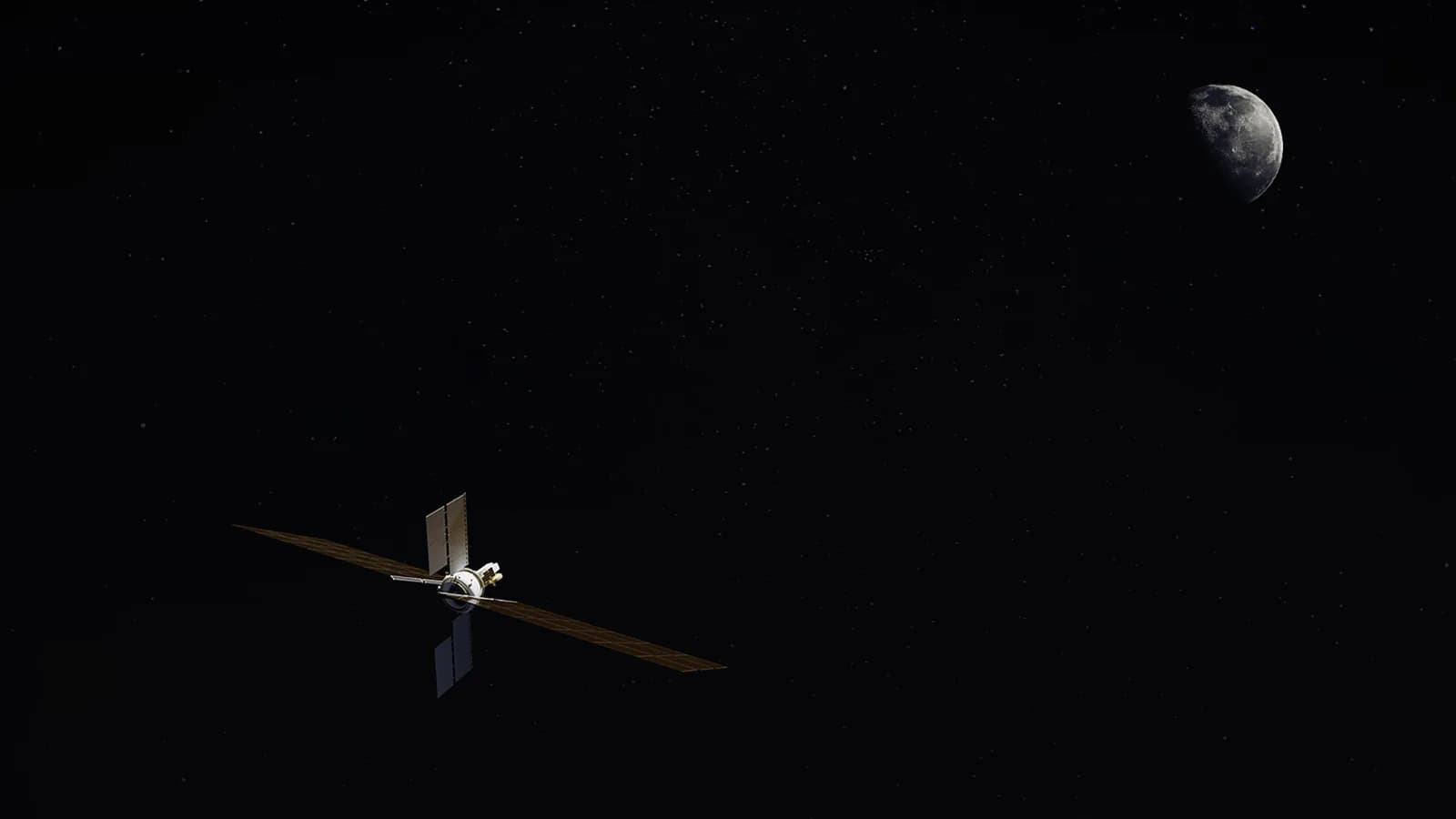
Argo Space, a California startup founded by three former SpaceX engineers, plans two flights in 2027 of a small water-powered spacecraft, after its first test craft ended its July flight early.
Argo said in an Oct. 2 recap that its first spacecraft separated from the launch vehicle, sent telemetry and generated power, but the test ended early. CEO Robert Carlisle told Ars Technica that one of two rollout solar arrays did not deploy. The craft stayed power-negative, meaning it used more energy than it made, and its battery drained before the team could test propulsion.
The team did validate its flight software and core avionics, Carlisle said. Argo has raised $20 million and employs fewer than 30 people, Ars Technica reported. Its founders chose water because it may be harvestable on the Moon.
“We based the company on water,” Carlisle said in an interview.
How water becomes rocket fuel
Chiron, Argo’s next spacecraft, weighs roughly 440 pounds (about 200 kilograms) and carries its fuel as liquid water, the company says. In orbit, solar power splits that water into hydrogen and oxygen gas, a process called electrolysis. A conventional rocket engine then burns the gases for thrust. Ars Technica reported that this approach gives more thrust than a typical electric thruster at similar power.
Chiron can deliver 2,000 to 4,200 meters per second of high-thrust delta-v per tank before refueling, Argo said. Delta-v is the total change in speed a spacecraft can produce, a standard measure of how far it can go. Ars Technica reported that more than 2,000 meters per second would be enough to raise a circular orbit from about 250 miles above Earth to more than 3,100 miles.
Water has practical advantages, Argo said. It can be stored as a dense liquid at modest pressure, and the gases can be stored without the supercold tanks that liquid hydrogen and oxygen need. Water also cools the thrusters and electronics, which lets the vehicle devote more of its mass to propellant.
What is still unproven
Argo has not reported firing its water-based engine in orbit, so its performance figures are the company’s own claims. Water propulsion has flown before, Ars Technica noted, on a NASA demonstration and on a Momentus spacecraft.
Argo is aiming for a larger scale with Argonaut, a vehicle it says could carry up to 3,100 pounds (about 1,400 kilograms). The Moon water that anchors Argo’s long-term plan is also only potentially harvestable, according to Ars Technica.
Next, Argo plans two Chiron missions in 2027 carrying U.S. government payloads, the company said. The first will fly to low-Earth orbit on a new commercial rocket the company has not named, Ars Technica reported. The second will go to geostationary transfer orbit, a stretched path toward the high orbit where many communications satellites operate, on a government-supplied launch vehicle. Carlisle said Falcon 9 rideshare slots now require a long wait.
Separately, ispace and Argo said in September that Argonaut will carry ispace’s lunar relay satellite to lunar orbit as soon as 2027.
Get the latest news delivered to your inbox.
Related articles