Fortum’s new recycling tech turns battery waste into three critical materials
Fortum Battery Recycling has successfully produced its first customer samples of three battery-grade materials using...
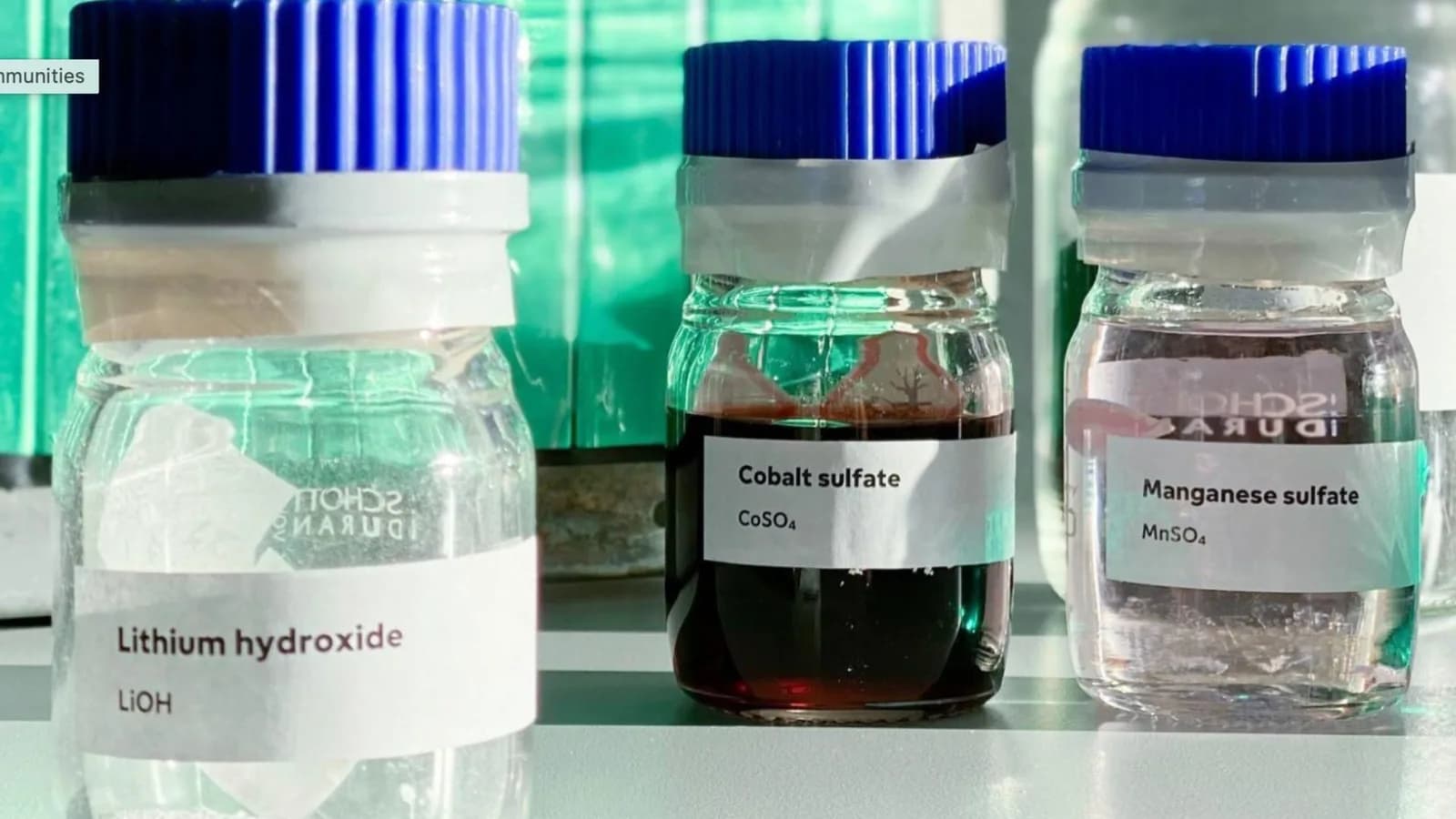
Fortum Battery Recycling has successfully produced its first customer samples of three battery-grade materials using its next-generation recycling technology, marking a major milestone in the company’s efforts to advance sustainable battery manufacturing.
The samples, comprising nickel sulfate, cobalt sulfate, and lithium hydroxide, were produced during a pilot campaign at its facility in Harjavalta, Finland.
The technology is designed to recover high-purity materials from recycled batteries while reducing chemical consumption, waste generation, and carbon emissions.
The recovered materials are currently undergoing customer qualification. Fortum has received encouraging feedback so far and is holding discussions with several potential buyers over offtake agreements.
Reducing reliance on external chemicals
A central feature of Fortum’s new recycling technology is its ability to recirculate essential chemical reagents within the production process.
This closed-loop approach reduces the need for externally supplied chemicals while limiting the amount of waste generated during material recovery.
The technology also relies on industrial electrification, using clean electricity to facilitate the conversion of recovered materials into battery-grade compounds.
“Our ability to produce these battery-grade materials for our customers marks a major step forward in advancing battery recycling and strengthening regional supply in Europe,” said Anssi Airas, Head of Fortum Battery Recycling.
The company has not yet disclosed specific material recovery rates, energy consumption figures, or the extent of carbon emission reductions achievable through the process.
Addressing battery recycling challenges
The development comes as Europe’s battery recycling industry continues to grapple with economic challenges that threaten its commercial viability.
A study published in August under the European Union’s Safeloop research project estimated that battery recycling currently generates a loss of approximately €1.90 ($2.20) per kilogram of battery pack.
Transportation of hazardous materials, battery pack disassembly, and uncertainties surrounding material recovery were identified as major contributors to these costs.
However, the researchers estimated that improvements across various stages of the recycling process could reduce costs by approximately 34 percent.
Meanwhile, regulatory developments are expected to increase demand for recycled battery materials. Beginning in August 2031, the EU Battery Regulation will require certain battery categories to contain minimum proportions of recycled materials.
These requirements could encourage battery manufacturers to establish long-term supply arrangements with regional recycling companies.
Strengthening Europe’s battery supply chain
Fortum’s Harjavalta facility has already received substantial institutional backing as Europe looks to reduce its dependence on imported critical raw materials.
In 2025, the European Commission designated the facility a Strategic Project under the Critical Raw Materials Act (CRMA).
Business Finland subsequently approved €86.4 million in financial support for the facility’s planned expansion. Fortum also secured a grant agreement with the European Climate, Infrastructure and Environment Executive Agency for up to €40 million through the EU Innovation Fund.
“Our recent progress demonstrates how battery recycling can help customers build more competitive and resilient supply chains while strengthening Europe’s battery materials ecosystem,” Airas concluded.
Despite the successful pilot campaign, Fortum has yet to announce a timeline for scaling its new recycling technology to industrial production levels.
The company has also not disclosed the identities of prospective buyers or the potential volumes of recycled battery materials covered under the ongoing commercial negotiations.
Source: https://interestingengineering.com/innovation/fortum-battery-recycling-waste-critical-materials
Get the latest news delivered to your inbox.
Related articles