Google expands eighth-generation TPU lineup with TPU 8tx for confidential computing and TPU 8i Max for long context
Google introduced two new TPU systems, marking the first time it has launched four TPU systems in a single year: TPU 8tx protects data and model weights in use at the hardware level, while TPU 8i Max packs two chips into one package to double compute and memory bandwidth.
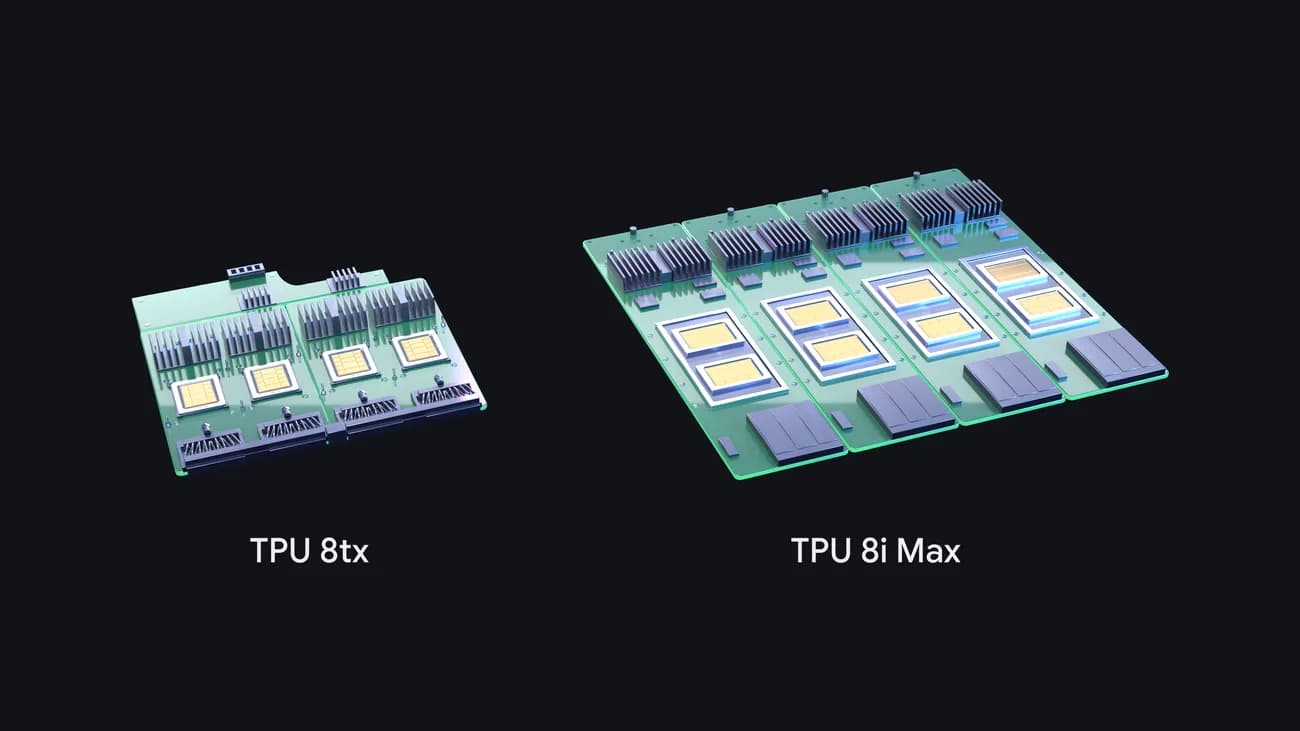
Google on November 9 expanded its eighth-generation Tensor Processing Unit (TPU) portfolio with two new systems, TPU 8tx and TPU 8i Max. It is the first time the company has introduced four TPU systems in a single year, wrote Amin Vahdat, Google's SVP and chief technologist for AI and infrastructure. The launch was also covered by DCD and SiliconANGLE.
TPU 8tx: confidential computing
Data is normally encrypted when stored or sent over a network but must be unlocked in memory while it is processed. Built on the same silicon as TPU 8t and paired with 5th Generation AMD EPYC CPU hosts, TPU 8tx builds security into the hardware layer, keeping sensitive data and model weights protected and isolated even while in use, Google said. It targets regulated enterprises and governments running frontier or proprietary models and autonomous agents alongside sensitive data, and delivers up to 2x lower latency than TPU 8t with what Google calls a near-zero performance penalty.
TPU 8i Max: tackling the memory wall
When dozens of AI agents work across an entire codebase or hours of video, memory bandwidth becomes the bottleneck. TPU 8i Max combines two TPU 8i chips in a single package, doubling compute, SRAM and HBM bandwidth compared with TPU 8i. Because it fits twice the silicon in the existing rack footprint, data centers can deploy significantly more compute per square foot and per watt.
The eighth-generation lineup now spans TPU 8t for large-scale training, TPU 8i for low-latency reasoning, TPU 8tx for confidential computing and TPU 8i Max for massive context windows and maximum rack density.
Opening TPUs to more developers
Google said TPUs are now a rapidly growing business with nearly 100 customers, including frontier labs, trading firms, retailers and universities. After open-sourcing TorchTPU last month so PyTorch code and Hugging Face models run natively on TPUs, it is now open-sourcing TPU Sync, a model-state layer that tiers KV caches off the chip, and made Cloud Pathways and GKE dynamic slicing generally available. The push is part of Google's effort to compete with Nvidia, particularly in AI inference.
Sources: Google, DCD, SiliconANGLE
Get the latest news delivered to your inbox.
Related articles