Rolls-Royce gets a new Chinese rival as BYD unveils its Altior ultra-luxury electric limousine
Yangwang, BYD’s luxury brand, has unveiled the Altior (an ultra-luxury electric vehicle) in Abu Dhabi....
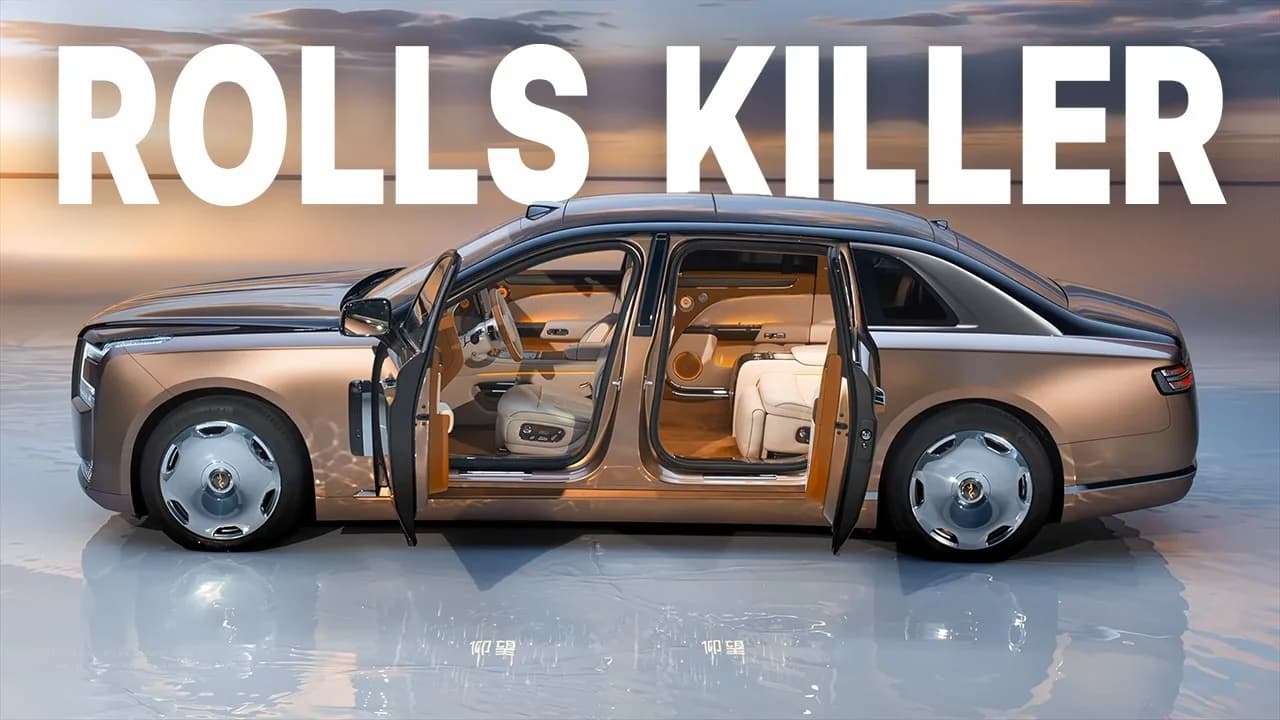
Yangwang, BYD’s luxury brand, has unveiled the Altior (an ultra-luxury electric vehicle) in Abu Dhabi. Expected to be available for pre-order in China at around $311,540 (2,080,000 yuan), the new vehicle features rear-hinged coach doors, a four-seat cabin, and a range of bespoke interior and exterior features.
Also known as the ‘Dingyao,’ the Altior is positioned to compete with other ultra-luxury vehicles like Rolls-Royce Ghost, Mercedes-Maybach S-Class, and Maextro S800.
The Altior measures around 18.4 feet (5.6 meters) long and is effectively a four-seat executive limousine. But unlike competitors like Rolls-Royce, BYD’s new ultra-luxury car has one main competitive edge: its electric drivetrain and control systems.
Its main selling points include four independent electric motors, one on each wheel. This should give the Altior precise traction and vehicle movement.
BYD muscles in on Rolls-Royce’s territory
It also reportedly comes with active suspension, meaning the vehicle uses cameras to detect approaching objects and other obstacles such as bumps. This allows the car’s suspension to anticipate rather than react to road conditions ahead.
The Altior has a claimed range of 621 miles (1,000 km), though this is based on China’s Light-Duty Vehicle Test Cycle (CLTC) testing. A more realistic range under the Worldwide Harmonized Light Vehicle Test Procedure (WLTP) puts the range at something closer to 500 miles (805 km), though this has not been officially certified.
The Altior reportedly supports charging from 10 percent to 70 percent in approximately five minutes using megawatt-capable chargers, although BYD has yet to confirm the vehicle’s full charging specifications. The Altior’s drivetrain reportedly allows tank turns, crab walking, and stability control following tire blowouts.
Of its features, however, the four-motor system is arguably the most interesting and impressive. Conventional cars tend to rely on mechanical systems, brakes, and differentials to provide torque to each wheel.
BYD’s system, however, can do this at the wheel directly and, in theory, independently. That allows capabilities such as rotating the vehicle almost on the spot and maintaining directional stability when a tire suddenly loses pressure.
Such technology has potentially major implications beyond luxury vehicles, particularly for vehicle safety and off-road applications. These features are impressive, but could the Altior realistically challenge the likes of Rolls-Royce?
Will the Altior succeed?
Technologically, it certainly appears capable of competing. Commercially, however, that’s another question entirely. But Rolls-Royce ownership is more than just buying a piece of hardware; it is seen as a symbol of status and craftsmanship.
It also has a long, storied heritage and reputation around the world. BYD doesn’t yet have the brand recognition in this area, which is not something you can just “speedrun.” It takes time.
But the bigger picture is that Chinese automotive manufacturers like BYD are no longer satisfied with competing on price and production scale. They’re looking to move into the highest-margin, most prestigious segments of the global industry.
And they’re attempting to do so with technology that traditional luxury manufacturers may struggle to match. Whether the gamble pays off remains to be seen, but it will be interesting to see how popular the Altior becomes.
Get the latest news delivered to your inbox.
Related articles