B-21 Raider vs B-2 Spirit: Lessons that helped America shape it’s new stealth bomber
For more than two decades, the B-2 Spirit has represented the cutting edge of American...
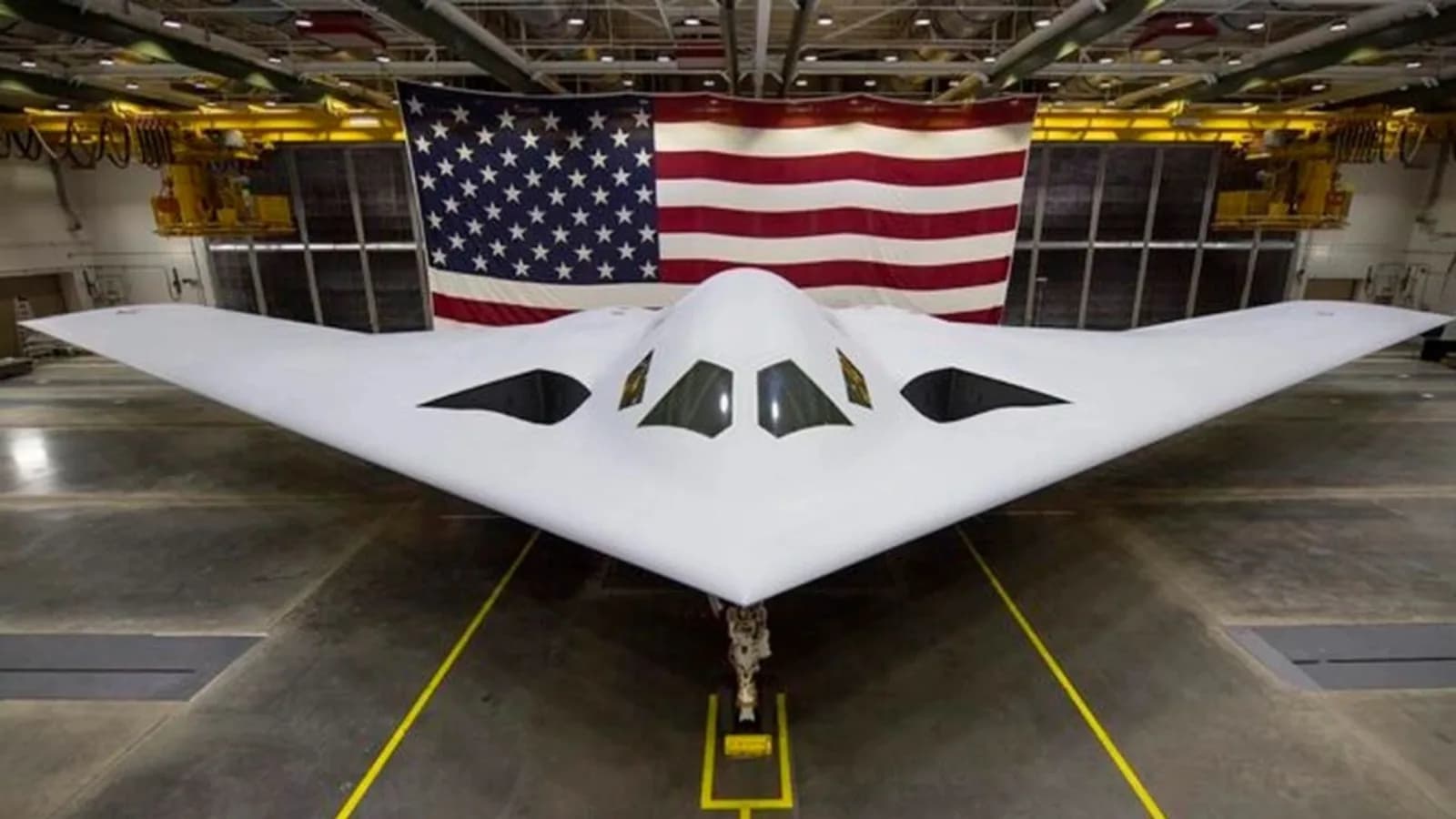
For more than two decades, the B-2 Spirit has represented the cutting edge of American stealth-bomber technology. Its distinctive flying-wing design, long range, and ability to carry conventional and nuclear weapons made it one of the most capable aircraft in the US military. Now, its successor, the B-21 Raider, is preparing to take over that role with a design intended for an increasingly contested battlefield.
Developed by Northrop Grumman for the US Air Force, the B-21 is not simply a newer version of the B-2. It introduces advances in stealth, networking, computing, and maintainability, reflecting how long-range air combat has evolved since the Spirit first entered service in the 1990s.
From the B-2 Spirit to the B-21 Raider
The B-2 was developed during the Cold War to penetrate heavily defended Soviet airspace and strike strategic targets without being detected by radar. It first flew in July 1989 and entered operational service in 1997.
Its flying-wing configuration, composite material, and radar-absorbing coatings help reduce its radar signature. Four General Electric F118 engines power the aircraft, which has a 172-foot (52-meter) wingspan, an unrefueled range of about 6,000 nautical miles, and a maximum weapons payload of 60,000 pounds (27,216 kilograms).
The bomber can carry both conventional and nuclear weapons, including precision-guided munitions and the massive GBU-57 Massive Ordnance Penetrator. In June 2025, B-2s used the 30,000-pound bunker-busting weapon during Operation Midnight Hammer against Iranian nuclear facilities.
However, the B-2’s advanced design comes with significant maintenance demands. Its low-observable coatings and specialized structures require careful inspection and restoration to preserve its stealth characteristics. Keeping the aircraft mission-ready has therefore remained a major challenge for the Air Force.
The B-21 is intended to address these requirements while introducing a more adaptable platform for future operations.
What makes the B-21 different?
Like the B-2, the B-21 uses a flying-wing configuration and carries its weapons internally to reduce its radar signature. However, the Raider incorporates advances in low-observable materials, propulsion integration, and digital engineering developed over several decades.
The Air Force describes it as a dual-capable penetrating strike bomber, designed to deliver conventional and nuclear weapons against heavily defended targets. Unlike the B-2, the Raider is also being developed around an open systems architecture.
This lets engineers update software, integrate new sensors, and add weapons with less reliance on redesigning the entire aircraft. The approach is intended to help the bomber adapt as radar systems, electronic warfare capabilities, and other air-defense technologies evolve.
The B-21 will also operate as part of a broader family of systems involving intelligence, surveillance and reconnaissance, electronic attack, communications and other capabilities. Rather than functioning solely as an independent strike aircraft, it is designed to exchange information with other platforms and contribute to a connected battlespace.
Many of its specifications remain classified. The Air Force has not publicly disclosed its exact range, speed, payload capacity, or radar signature, making direct performance comparisons with the B-2 difficult.
A different approach to operating costs and production
The B-21 is also designed for long-term maintenance and affordability. Its newer materials and manufacturing methods are intended to reduce the time and resources required to maintain its low-observable characteristics.
The Air Force lists an average procurement unit cost of $692 million in fiscal year 2022 dollars, based on a planned minimum fleet of 100 aircraft. This figure includes procurement-related costs and should not be compared directly with the B-2’s historical unit cost, which was calculated using a different accounting basis.
The service currently plans to acquire at least 100 Raiders, although senior military officials have discussed the possibility of a larger fleet.
As of 2026, the B-21 remains in flight testing. The aircraft has demonstrated aerial refueling with a KC-135 Stratotanker, an important milestone for its long-range mission profile. The Air Force is targeting the arrival of its first operational aircraft at Ellsworth Air Force Base in South Dakota in 2027. Production capacity has also been expanded by 25% to accelerate deliveries.
Why the B-2 will still remain relevant
The introduction of the B-21 does not mean the B-2 will disappear immediately. The Air Force continues to invest in upgrades, maintenance, and low-observable improvements to keep the existing fleet operational until its successor is ready.
The two aircraft represent different stages in the evolution of stealth aviation. The B-2 demonstrated that a large strategic bomber could penetrate sophisticated air defenses using low-observable design. The B-21 builds on that foundation with more adaptable software, advanced networking, and an emphasis on sustained operations.
Raider’s significance will depend not just on how difficult it is to detect, but on how effectively it can operate alongside other military systems and adapt to changing threats. As the US Air Force prepares to introduce the B-21, the transition is a shift from the pioneering stealth technology of the Cold War toward a more connected and digitally adaptable generation of long-range strike aircraft.
Get the latest news delivered to your inbox.
Related articles