
Google launches Nano Banana 2.1 with better visuals, editing—and half the image cost
On October 6, 2026 Google released Nano Banana 2.1, a Gemini 3.6 Flash–based image generation and conversational editing model rolling out across Gemini, AI Mode, AI Studio and the Gemini API, with paid-tier image output priced at roughly half of Nano Banana 2.
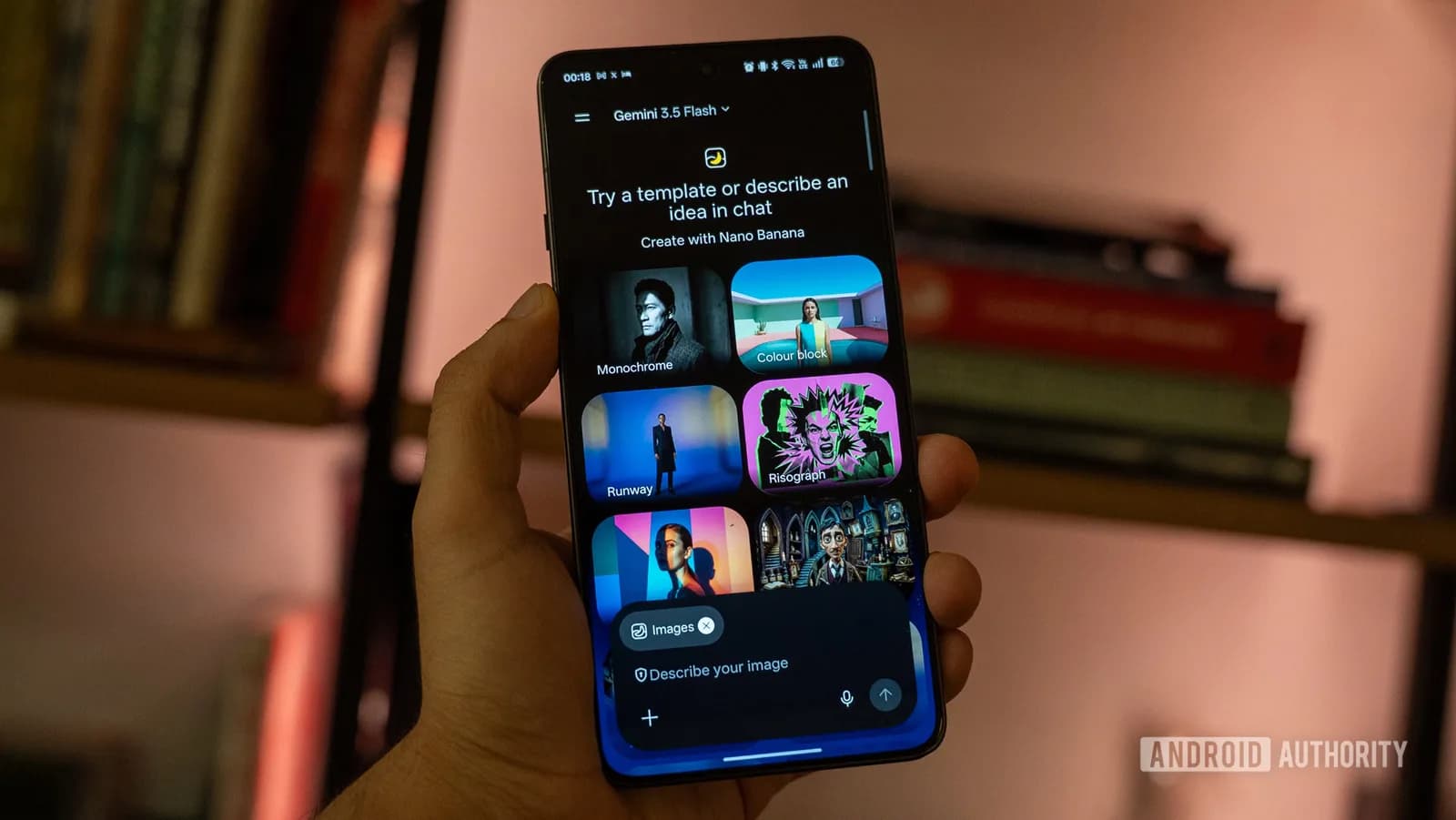
Google launched Nano Banana 2.1 on October 6, 2026, an image generation and conversational editing model that the company says improves visual design, mask-based editing and subject consistency, Android Authority reported. Google DeepMind’s model card describes it as a member of the Gemini 3 series based on Gemini 3.6 Flash.
According to Gemini API documentation, Nano Banana 2.1 is an update to Nano Banana 2 (Gemini 3.1 Flash Image). It keeps Flash-tier speed and cost efficiency while serving as the more efficient counterpart to Gemini 3 Pro Image (Nano Banana Pro).
What’s new
Google and developer docs highlight:
- Improved visual quality and realism across 1K, 2K and 4K outputs (default 1K)
- Fixed tiling artifacts on wide/panoramic ratios (1:4, 4:1, 1:8, 8:1) at 2K and 4K
- Stronger text rendering and infographic layout accuracy
- Multi-image fusion with up to 14 reference images (up to 4 characters and 10 objects)
- Grounding with Google Web and Image Search
- Configurable Thinking levels:
minimal,medium(default) andhigh
Where it ships
The model is rolling out in the Gemini app, AI Mode in Google Search, Google AI Studio, Google Flow, Stitch, Google Ads and the Gemini Enterprise platform. The API model ID is gemini-nano-banana-2.1. Search Engine Roundtable noted that Google Search VP Robby Stein confirmed it is already live in AI Mode.
Pricing
As summarized by Unite.AI, paid-tier Gemini API image output is listed at $30 per million tokens—about $0.0336 / 1K, $0.0504 / 2K and $0.0756 / 4K image—roughly half the per-image image-token cost of Nano Banana 2.
Evaluations and limits
DeepMind’s card reports an Overall Preference Elo of 1050±14 for Nano Banana 2.1 (Thinking) on text-to-image, with Infographic Design at 1048±17, ahead of Nano Banana 2 and Nano Banana Pro in the published table. Editing metrics for mask/ink edits and multi-character consistency are also listed higher.
Known limits include blurry small text and long paragraphs, imperfect character consistency, partial mask/ink instruction following, occasional left/right confusion, and limited 3D/world-knowledge factuality. The underlying Gemini 3.6 Flash knowledge cutoff is given as March 2026.
Sources: Android Authority, Google DeepMind Model Card, Gemini API docs, Unite.AI.
Related articles

Boeing tests software that connects Super Hornet fighters with MQ-25A drone tankers
Boeing has demonstrated software designed to let pilots in crewed aircraft coordinate with unmanned aircraft...

OpenAI drops another batch of mathematical breakthroughs
OpenAI has revealed solutions to a number of long-standing mathematics problems produced by an unreleased frontier model in a batch of 722 manuscripts, covering 372 result families that group related…
Tiny light-measuring chip helps stabilize 10× more combs, could shrink atomic clocks
Researchers have demonstrated a chip-based optical frequency comb that matched bulky tabletop systems in key...
OpenAI’s largest mathematics release tackles 4,000 problems with Lean-checked proofs
OpenAI has released a large collection of mathematical research produced by an internal frontier model,...
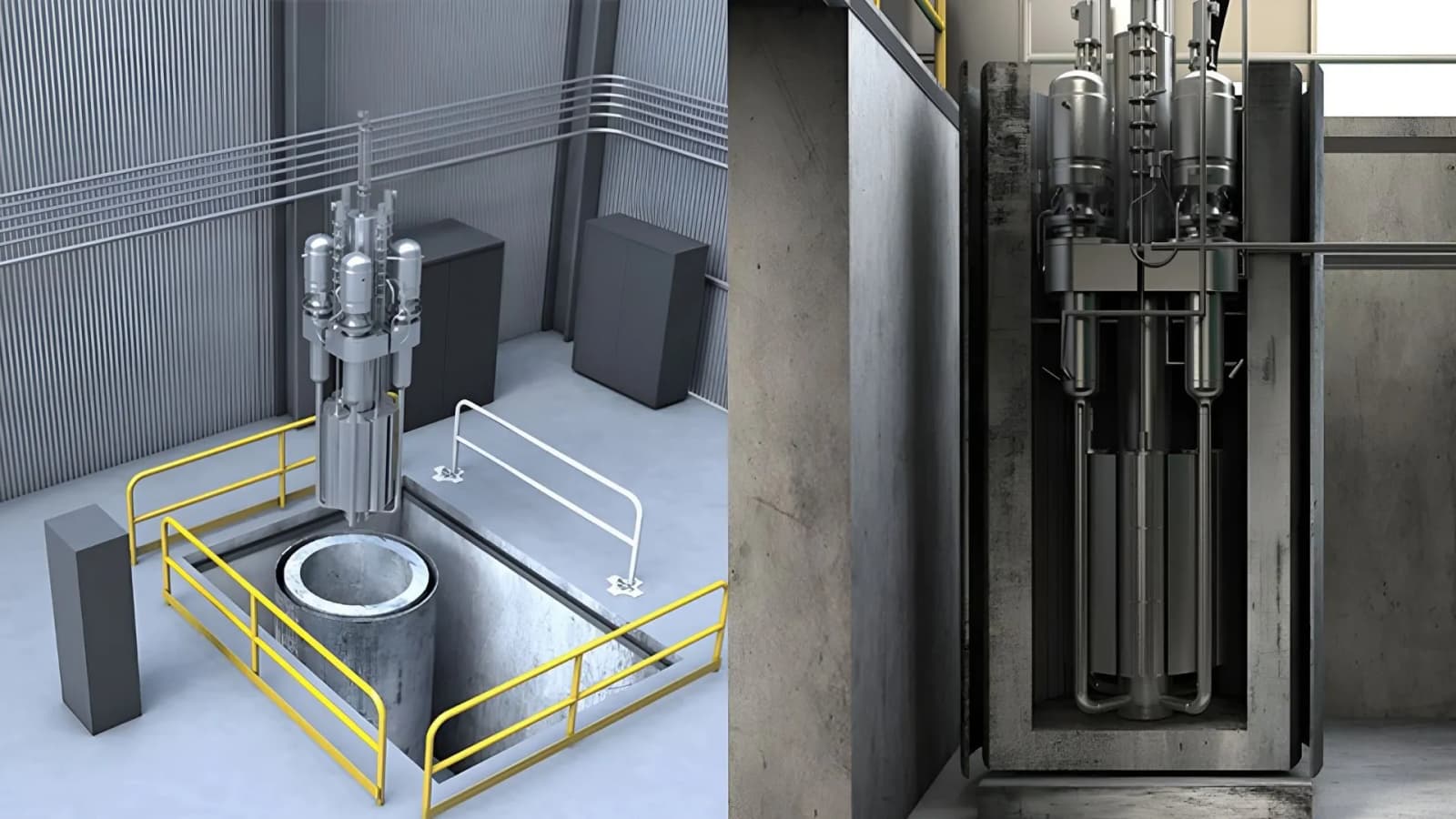
85-kW MARVEL microreactor gets liquid-metal coolant ahead of criticality test
A small nuclear reactor at Idaho National Laboratory is approaching its first criticality test after...