
Hypersonic glide vehicles vs cruise missiles: How the weapons differ
Hypersonic weapons are designed to travel at speeds of Mach 5 or higher, or at...
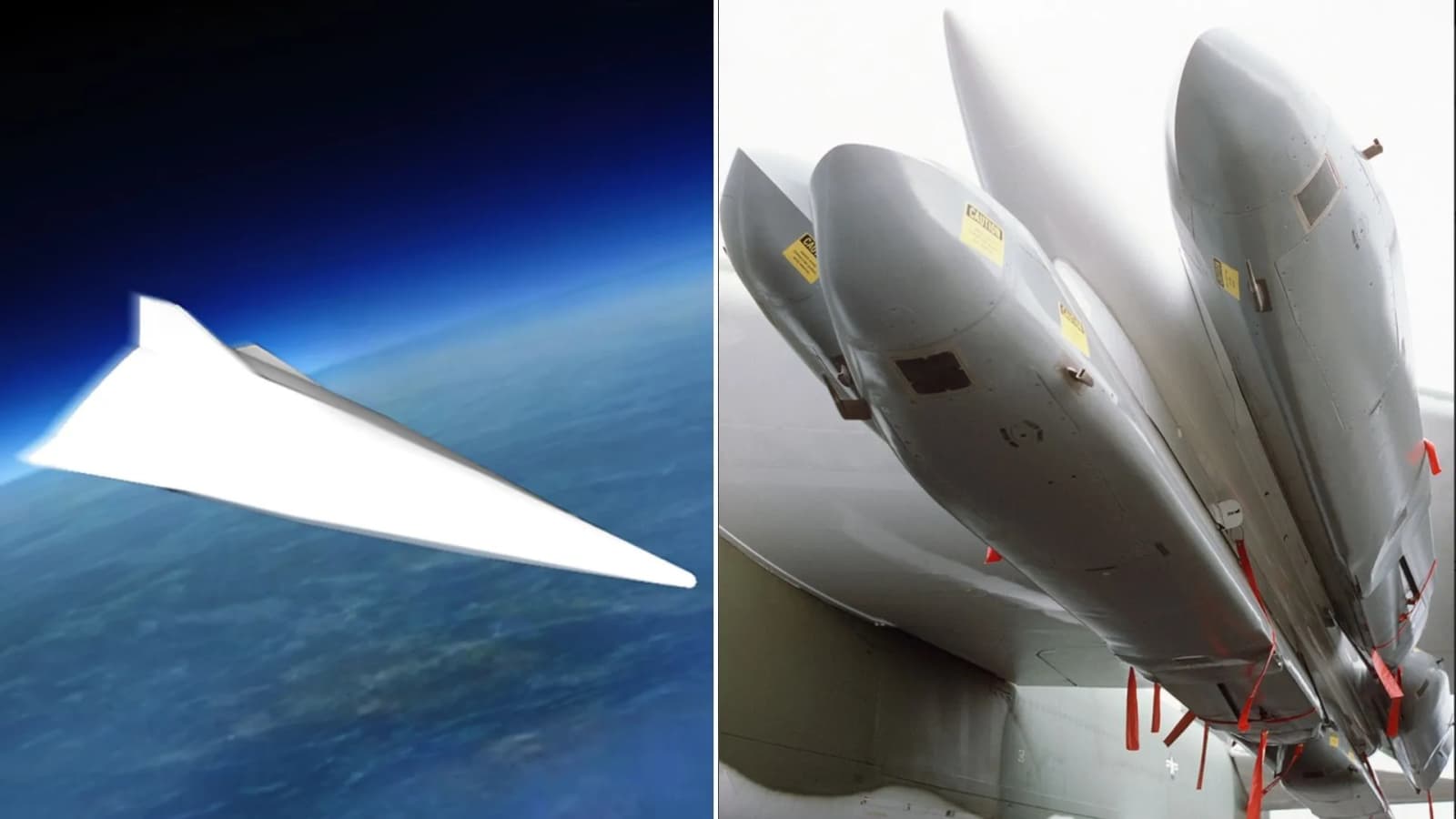
Hypersonic weapons are designed to travel at speeds of Mach 5 or higher, or at least five times the speed of sound. But not all hypersonic weapons fly the same way. Two major types, hypersonic glide vehicles (HGVs) and hypersonic cruise missiles (HCMs), use different propulsion systems and flight paths to reach their targets.
The key difference is that an HGV is accelerated by a rocket before gliding toward its target, while an HCM uses an air-breathing engine to sustain hypersonic flight. Both can maneuver during flight, making their trajectories more difficult to predict and complicating missile defense.
What is a hypersonic glide vehicle?
A hypersonic glide vehicle is an aircraft-like body that a rocket booster carries to high speed. Once the booster accelerates and releases it, the vehicle glides through the atmosphere toward its target without relying on a powered engine for sustained flight.
Unlike a conventional ballistic missile, which follows a relatively predictable arcing trajectory, an HGV generates aerodynamic lift and can maneuver during its descent. This allows it to change direction and potentially complicate an adversary’s efforts to track its position and predict its destination.
HGVs generally travel at high altitudes, where the thinner atmosphere reduces aerodynamic drag. However, their extreme speeds still produce intense heating, requiring specialized materials and guidance systems.
China’s DF-17 is a prominent example of a missile system designed to carry a hypersonic glide vehicle. Russia’s Avangard is another example, using an intercontinental ballistic missile to deliver a strategic glide vehicle designed for nuclear delivery.
What is a hypersonic cruise missile?
A hypersonic cruise missile differs in that it uses an engine to generate thrust throughout its powered cruise phase. Many designs rely on a scramjet, or supersonic combustion ramjet, which uses the missile’s forward motion to compress incoming air before mixing it with fuel and igniting it.
Unlike conventional jet engines, scramjets do not use rotating compressor blades. Air flows through the engine at supersonic speeds, and combustion takes place while the airflow remains supersonic.
Because scramjets cannot operate efficiently from a standstill, a rocket booster or another propulsion system must first accelerate the missile to the required speed. The air-breathing engine then takes over and provides sustained propulsion.
The US Air Force’s Hypersonic Attack Cruise Missile (HACM) is an example of a program developing an air-breathing hypersonic weapon. The Boeing X-51A Waverider, meanwhile, demonstrated scramjet-powered hypersonic flight but was an experimental demonstrator rather than an operational missile.
Why are hypersonic weapons difficult to intercept?
Speed alone does not make a weapon hypersonic in a strategically meaningful sense. Conventional ballistic missiles also reach hypersonic speeds during parts of their flight.
The greater challenge is the combination of speed, maneuverability, and flight profile. Ballistic missile defenses are designed to track relatively predictable trajectories, while air-defense systems generally focus on lower-altitude threats. Hypersonic weapons can operate between these regimes, potentially complicating detection and interception.
However, neither type is invulnerable. Maneuvering consumes energy, and atmospheric flight produces substantial heating and drag. The US Missile Defense Agency is developing the Glide Phase Interceptor to engage hypersonic threats during their glide phase.
Ultimately, HGVs and HCMs share the goal of delivering weapons at hypersonic speeds, but their approaches differ fundamentally. One uses a rocket to accelerate an unpowered glider; the other combines an initial boost with sustained engine-powered flight.
Related articles

China conducts satellite-to-satellite refueling operation in high Earth orbit: Report
China has successfully refuelled one of its BeiDou satellites in high orbit, according to reports. The...

Nuclear war, bioweapons, runaway AI: How researchers rank risks of smart systems
Artificial intelligence researchers have long warned the technology could wipe out humanity, whether by designing...

First for US Army: MH-47G Chinook helicopter refuels from autonomous barge at sea
A U.S. Army MH-47G Chinook helicopter has landed on an uncrewed vessel at sea and...
US scientists’ new material could make next-gen microchip encryption faster, more secure
Researchers have defined a new material blueprint for the next-generation microchip encryption. The team of...

Why OLPC’s $100 laptop never stood a chance
The idea was big, exciting, and inspiring: What if we could get every kid in the world access to a computer?

US Air Force receives first ‘robot wingmen’ drones to begin autonomous warfare trials
The United States Air Force (USAF) has taken delivery of the first batch of two...