
Meta unveils 100g VR glasses with 5K display, gesture controls and 3D movie viewing
Meta has unveiled a new $1,299.99 virtual reality device that puts displays, cameras, and sensors...
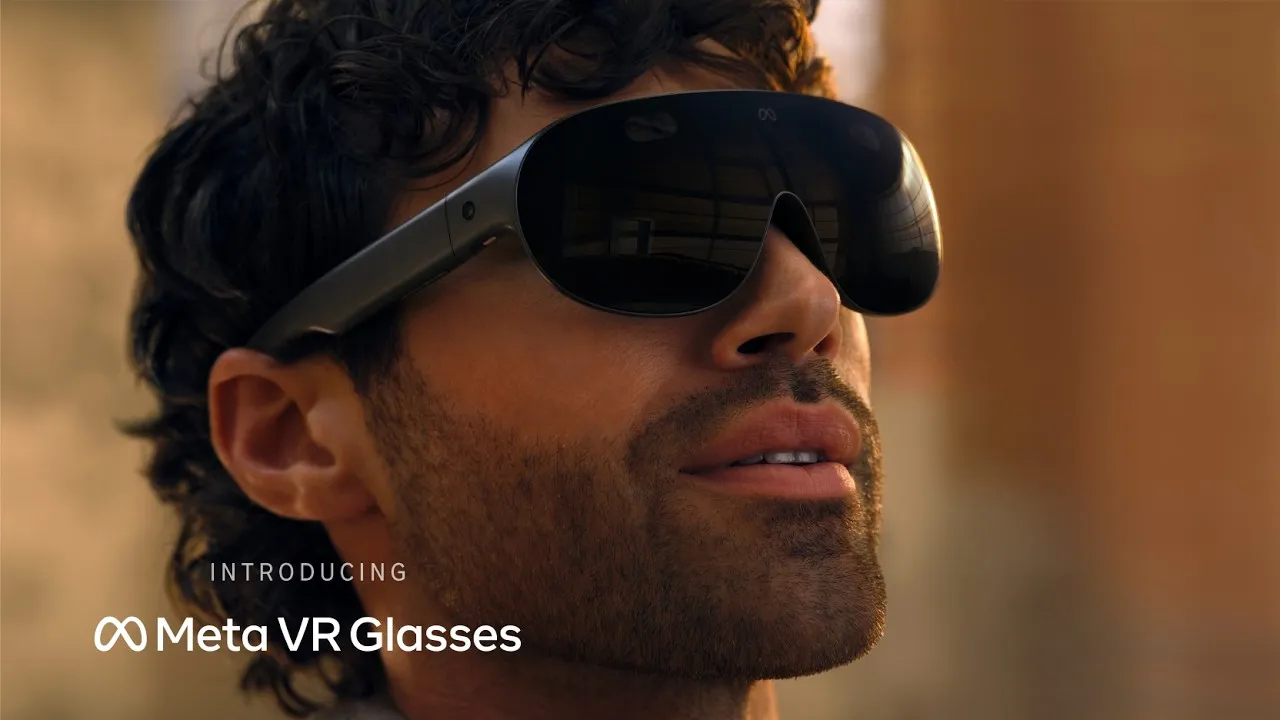
Meta has unveiled a new $1,299.99 virtual reality device that puts displays, cameras, and sensors into a glasses-like form factor, while also turning some of its AI-powered glasses into FDA-cleared over-the-counter hearing aids.
The announcements came at Meta Connect 2026 as the company continues shifting its wearable strategy toward glasses and its personal AI agent, Muse.
The new Meta VR Glasses will go on sale in spring 2027 for $1,299.99. Unlike conventional VR headsets, the device weighs about 100 grams, with the processor, battery, and storage moved into a separate computing puck connected to the glasses by an optical tether.
A 100-gram VR computer
The split design is one of the most significant differences between Meta’s new glasses and traditional VR headsets. The glasses contain the displays and sensing hardware, while the external puck handles much of the computing and power.
Meta said the system is five times lighter than its Quest 3 headset. The glasses use micro-OLED panels with a 5K Infinite Display and are powered by Qualcomm’s Snapdragon Reality Elite processor. The puck provides up to three hours of continuous high-resolution media playback and supports 45-watt fast charging.
The device is designed for more than virtual reality gaming. The company revealed that the users can create a private multi-screen workspace, with flat surfaces functioning as virtual keyboards and touchpads. More than 75 games are expected to support hand-gesture controls at launch, while Xbox Cloud Gaming will provide access to additional games.
The headset is also the first VR device to receive IMAX Enhanced certification, Meta added. Disney+ will bring selected 3D movies to the platform, while other services including HBO Max, Peacock and Paramount+ are preparing 3D catalogs. Meta also says the platform will support more than 100 immersive live sports events each year through partners including ESPN and TNT Sports.
At $1,299.99, the device sits between Meta’s existing Quest headsets and Apple’s much more expensive Vision Pro. Business Standard notes that the Meta device costs about one-third as much as Apple’s $3,699 headset while weighing roughly one-sixth as much.
Meta glasses become hearing aids
The more unexpected announcement concerns Meta’s non-VR glasses. Meta is introducing Hearing Enhancement, an FDA-cleared software feature that can turn supported Meta Glasses into over-the-counter hearing aids for adults with perceived mild to moderate hearing loss.
According to reports, users can perform a guided hearing test through the Meta AI app, allowing the glasses to create an individual hearing profile and adjust amplification accordingly. The system is designed to amplify speech while using machine learning to suppress background noise.
The feature is scheduled to arrive in the US later this year on supported glasses. It will cost $149.99 as a one-time activation or be included with a Meta One subscription, according to reporting from TechRadar and other coverage of the announcement.
Meta is also introducing the $349 Ray-Ban Meta Audio, its first camera-free AI glasses. The 43-gram glasses use open-ear audio and can handle music, calls, and Meta’s AI assistant without incorporating a camera. They offer up to 12 hours of battery life, with another 48 hours available from the charging case, and are scheduled to ship October 13.
The camera-free design also gives Meta another way to address privacy concerns surrounding camera-equipped smart glasses. Alongside these products, Meta announced the third-generation Ray-Ban Meta glasses, new Meta Glasses styles and the expansion of its Muse AI agent across its wearable lineup.
Taken together, the announcements show Meta moving beyond the idea of glasses as simply VR or camera devices. The company is increasingly treating ordinary-looking eyewear as a platform for computing, AI, communication, and now hearing assistance.
Source: https://interestingengineering.com/innovation/meta-unveils-new-vr-glasses
Related articles

Meta ditches the camera on its newest smart glasses
Walking around Meta Connect 2026, everyone's sporting smart glasses in all sorts of shapes, colors, and sizes. It's a marked difference here, a tech bubble where "pervert glasses" are not a concern.

Muse is coming to Meta smart glasses
Just a couple of weeks after launching Muse, Meta announced that it's "working on" bringing the agent to its smart glasses, including the new glasses it unveiled at Meta Connect.

Meta’s next VR device isn’t a headset — it’s glasses
Meta is launching new VR hardware: a pair of glasses.

Meta Connect 2026: The 7 biggest announcements
Meta announced a slate of new wearables during its annual Meta Connect showcase on Wednesday.

Meta is making a standalone Muse AI gadget
Meta is building a dedicated hardware device for its new Muse AI agent.

New turbojet-powered autonomous aircraft packs modular nose for rapid payload swaps
AEVEX Corp. has revealed a new autonomous aircraft designed to bring jet propulsion and modular...