New photonic quantum computer could crack problems that take thousands of years
Researchers in Germany have unveiled a novel photonic quantum computer that relies on particles of...
Researchers in Germany have unveiled a novel photonic quantum computer that relies on particles of light to explore calculations that could take supercomputers thousands of years to simulate.
The machine, known as the Paderborn Quantum Sampler (PaQS), was created by scientists at Paderborn University in North Rhine-Westphalia. The project was led by Christine Silberhorn, PhD, a professor at the Institute of Photonic Quantum Systems (PhoQS).
The team used the system to examine how different quantum properties affect computing performance. The findings could lead to better quantum computers that can solve problems too complex for conventional machines.
Michael Stefszky, PhD, who leads the Quantum Computing research group and coordinated the initiative, explained its significance. “The results underscore that building useful quantum computers involves far more than simply scaling up a system,” he pointed out.
Powered by photons
Conventional computers process information using bits, the smallest unit of data represented as 0 or 1. By contrast, the Paderborn Quantum Sampler (PaQS) relies on photons to perform calculations.
Photons are massless particles that can only move at one speed in a vacuum, the speed of light. The photon belongs to the class of boson particles. PaQS, a type of quantum computer known as a Gaussian boson sampler, sends photons through a complex optical network to process and sample light patterns.
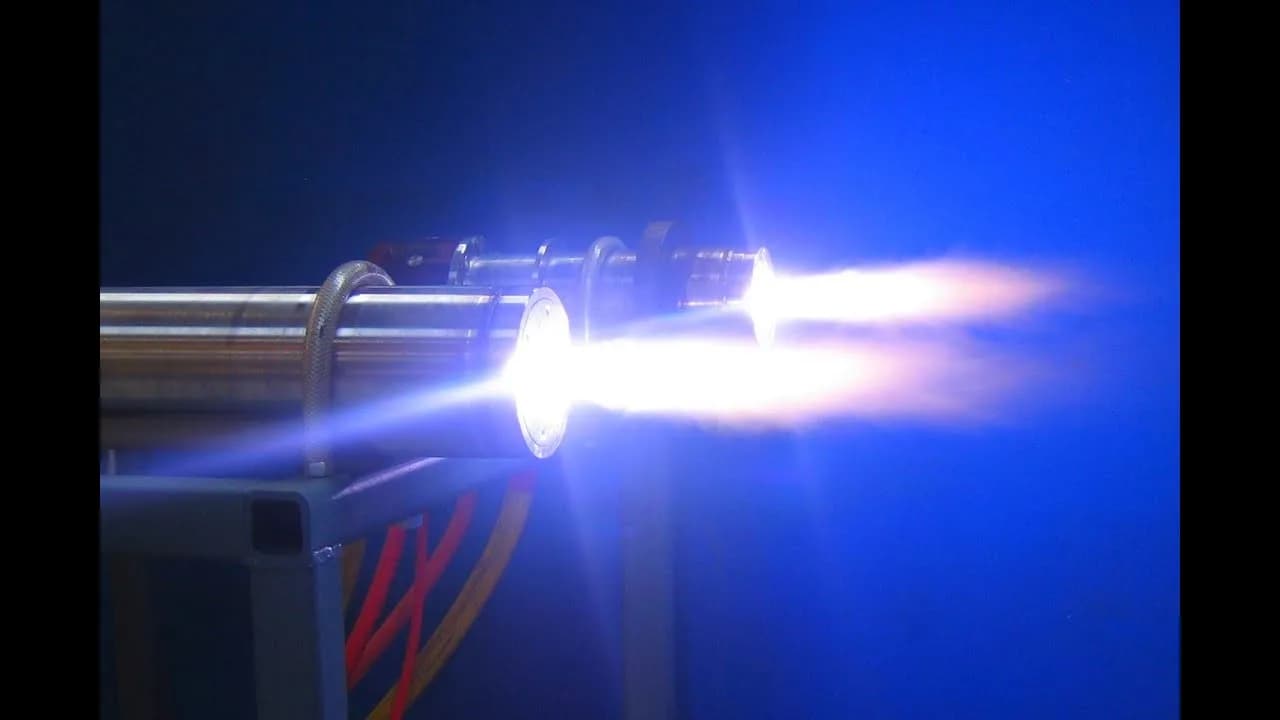
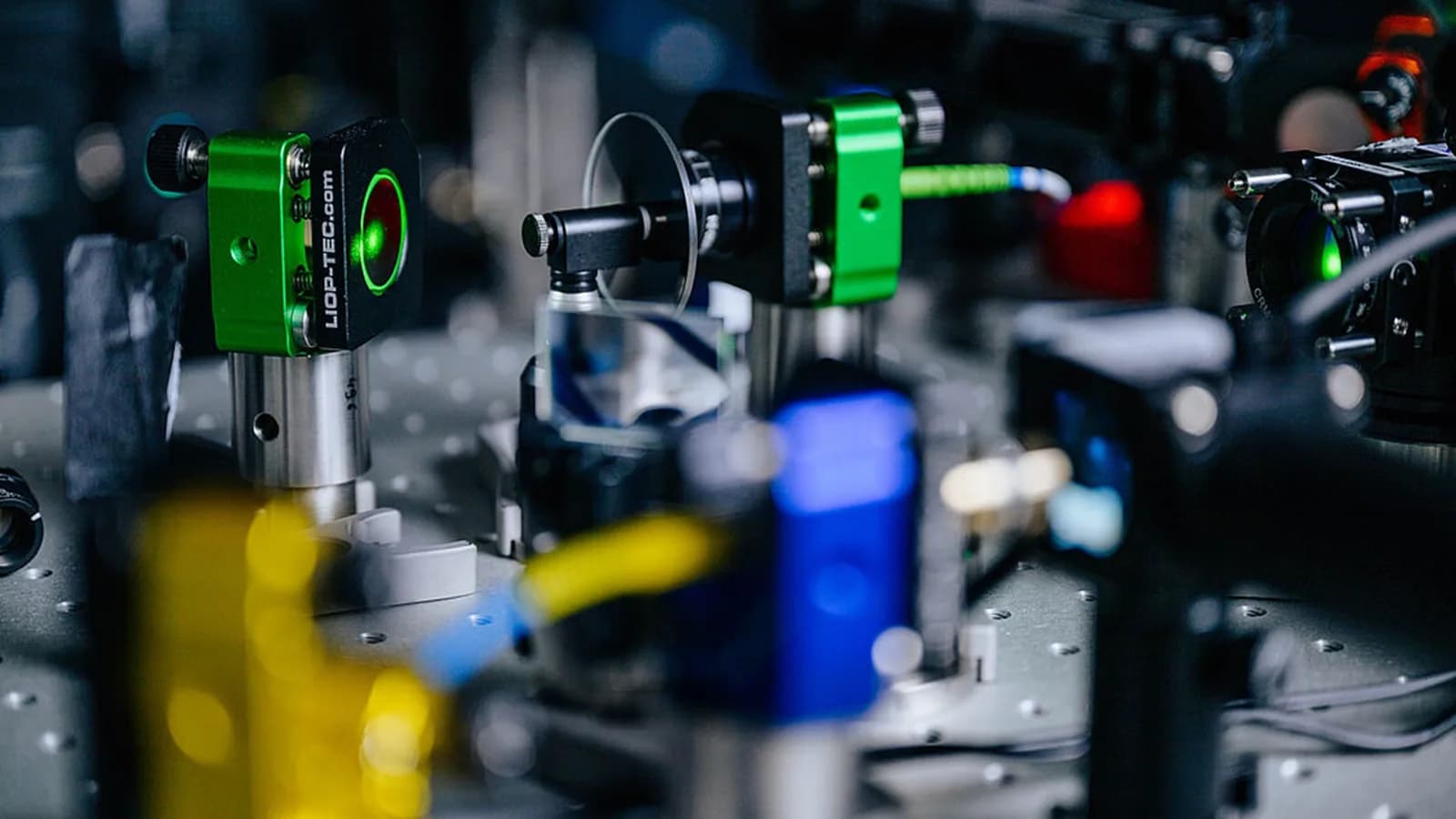
Optical technology at Paderborn University, Germany. Credit: Paderborn University, Besim Mazhiqi
However, predicting these patterns becomes difficult as their number grows and the network becomes more complex. Simulating the results of sufficiently large systems on conventional supercomputers could take many thousands of years.
PaQS can examine these patterns and better understand how different quantum properties affect its performance. It can furthermore be programmed for different experiments. Instead of performing just one task, the machine can be adjusted to test different ways of processing light. “This new research goes beyond the mere demonstration of a large-scale quantum system,” university representatives said.
Quantum performance
The project set out to understand which light properties are key for improving the performance of quantum computers, such as how light particles behave, how their properties can be controlled, and how they can be linked through quantum entanglement.
The scientists turned to experiments, data analysis, as well as computer models to study their effects. “A precise understanding of how properties such as squeezed light, photon statistics and entanglement influence computational performance is essential for the development of the next generation of quantum technologies,” Stefszky said in a press release.
The effort brought together specialists in integrated photonics, computer science, and theoretical quantum optics. They built the optical equipment, connected its different parts, and developed ways to analyze the results.
The team is currently improving PaQS to handle more complex calculations and explore new uses. In the future, light-based quantum computers could be useful in chemistry, energy, and secure communications. PaQS was developed as part of the PhoQuant research initiative in collaboration with the Fraunhofer Institute for Applied Optics and Precision Engineering (IOF), Swabian Instruments, and Menlo Systems.
The study has been published in the journal PRX Quantum.
Get the latest news delivered to your inbox.
Related articles