
New prototype to test world’s first wireless power transfer between two spacecraft
Star Catcher Industries is preparing its Protostar spacecraft for a power-beaming test that could reshape...
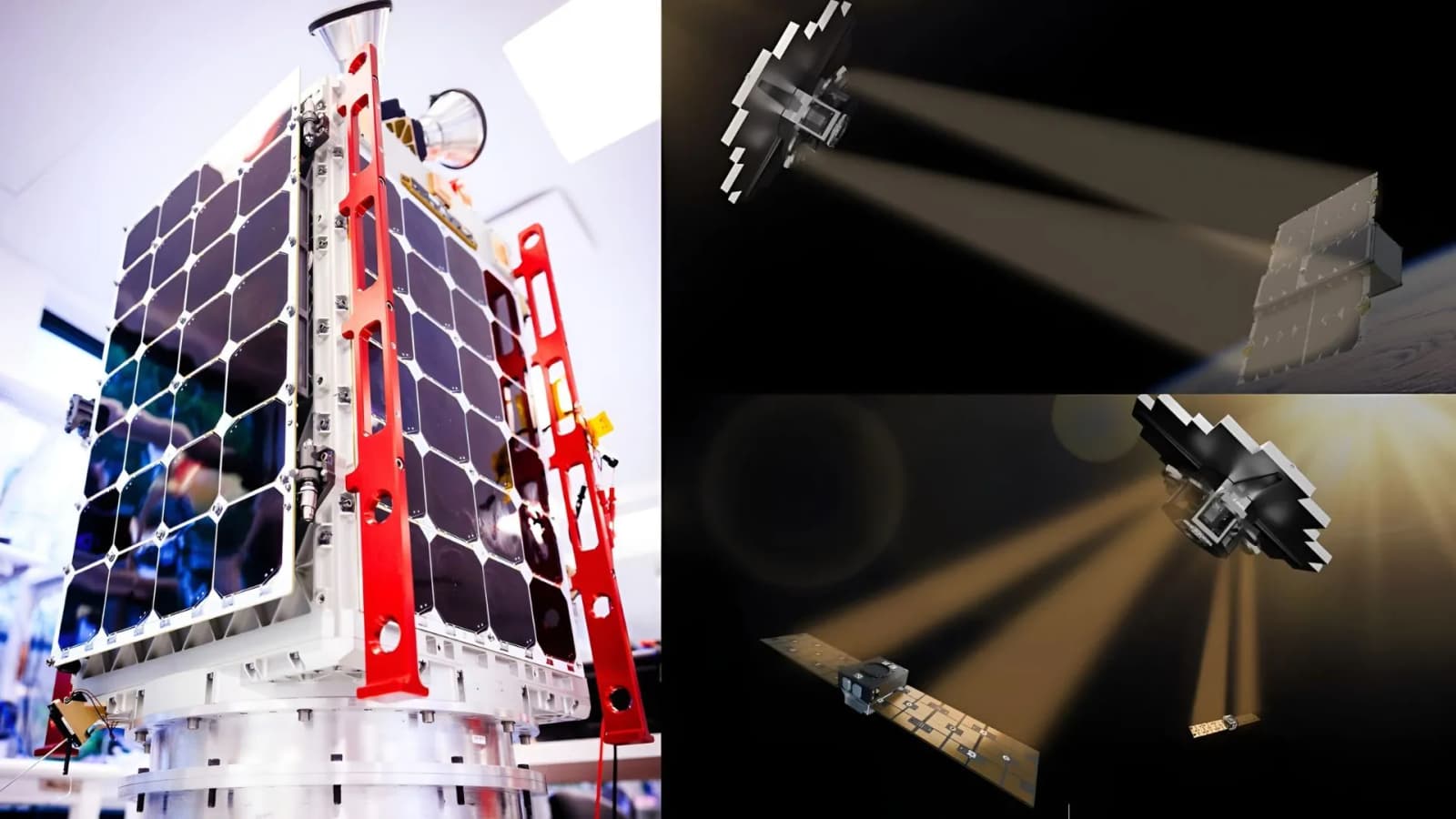
Star Catcher Industries is preparing its Protostar spacecraft for a power-beaming test that could reshape how satellites receive energy in orbit.
The prototype is slated to launch from Vandenberg Space Force Base aboard SpaceX’s Transporter-18 mission in October 2026. Star Catcher plans to use the mission to transmit optical power between two independent spacecraft.
The demonstration would mark a major step toward wireless energy delivery in space. It would also test several systems together under actual orbital conditions.
Power transfer gets orbital test
Protostar combines the main technologies Star Catcher needs for its proposed orbital power network. The spacecraft can harvest energy, locate another spacecraft, and maintain a tracking link.
It can then direct that energy toward a receiving spacecraft. Star Catcher plans to deploy a CubeSat during the mission for that test. The CubeSat will carry commercially available solar panels. Protostar will aim its power beam at those panels and measure the resulting energy transfer.
That setup will give engineers operational data that ground testing cannot fully reproduce. Orbital motion also adds another layer of complexity to acquisition and tracking.
Michael Snyder, Star Catcher’s co-founder and chief technology officer, said the mission will provide critical operational data. He said those results will guide development of the company’s planned orbital power network.
The company has already tested parts of the system before reaching the launch stage. Its terrestrial work included an optical power-beaming demonstration at NASA’s Kennedy Space Center.
Earlier tests paved the way
Star Catcher also completed the Sextant Alpha mission in late 2025. That flight demonstrated spacecraft acquisition and tracking software in orbit.
Engineers used results from those efforts while developing Protostar. The company says it moved from its founding in 2024 to a flight-ready prototype within two years.
Protostar will therefore serve as an integrated test of the technology. Its mission will combine energy collection, spacecraft tracking and wireless transmission in one orbital system.
The receiving CubeSat will provide a practical target for the demonstration. Success would show that spacecraft can exchange useful optical power without a physical connection.
Larger orbital power network
Star Catcher sees wireless energy as a way to address growing power demands in space. Satellites could potentially receive energy without relying solely on their own onboard generation.
Andrew Rush, the company’s co-founder and CEO, pointed to several potential applications. Those include national security missions, orbital computing and Earth observation.
Star Catcher has announced 10 power purchase agreements with space companies. Its customers include Starcloud, Loft Orbital, Astro Digital and Aethero.
The company also reports more than 40 letters of intent from prospective customers. Its funding includes an $88 million venture capital raise and a $60 million U.S. Space Force STRATFI award.
Star Catcher has already started work on a larger follow-on spacecraft. That vehicle would target operational power delivery rather than a prototype demonstration.
The upcoming Transporter-18 mission will provide the next critical test. If Protostar successfully transfers measurable power between free-flying spacecraft, the concept moves closer to commercial orbital deployment.
Related articles
New 3D-printed gas turbine injector can burn hydrogen, kerosene and e-fuels
A new 3D-printed injection system created by scientists in Germany could allow compact gas turbines...

AMD is acquiring AI company World Labs in a deal worth more than $8 billion
AMD announced today that it's acquiring World Labs, an AI research lab co-founded by the prominent researcher Dr. Fei-Fei Li, in an all-stock deal worth approximately $8.2 billion.


OpenAI’s AI agents need to catch up
OpenAI popularized the modern generative AI chatbot, but as its 2026 DevDay event approaches, it's fallen behind in one of the industry's hottest categories: continuously running, consumer-facing AI…

Bose starts adding Auracast to its headphones
A new firmware update for the $449 Bose QuietComfort Ultra Headphones Gen 2 adds support for Bluetooth LE Audio and Auracast as beta features.