
New stacked chip gives wearables local memory, tops 90% accuracy in signal tests
Korean researchers have developed a vertically stacked semiconductor system that can process both recent and...
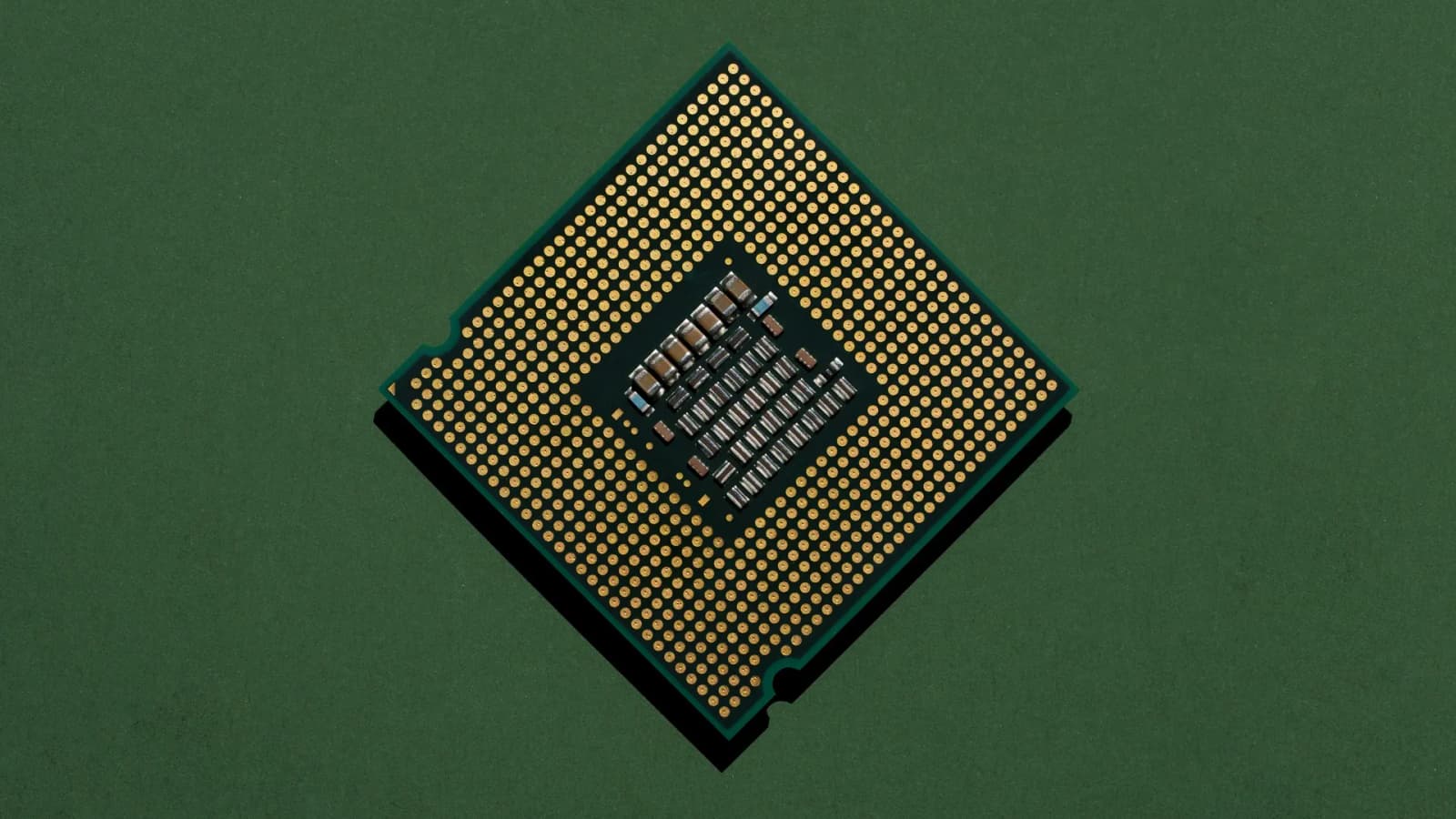
Korean researchers have developed a vertically stacked semiconductor system that can process both recent and earlier signals, potentially allowing small wearable devices to analyze movements and physiological data without relying heavily on external computing.
The technology was developed by researchers at KAIST, UNIST, and POSTECH. It uses carbon nanotube transistors controlled by a solid-state ionogel, a material containing mobile ions that influence how electrical current flows through the device.
When voltage is applied, ions move through the material. They do not immediately return to their original positions after the voltage disappears, leaving a temporary electrical “memory” of earlier signals. Instead of treating that delayed response as a limitation, the researchers used it to process information that changes over time.
By adjusting the concentration of ions and the thickness of the ionogel, the team created devices with different response speeds. The researchers then vertically stacked fast- and slow-responding devices, allowing different layers to process information over different timescales.
Different layers remember differently
The faster layer responds more strongly to the latest input, while the slower layer retains information accumulated over a longer period. Combining their outputs therefore gives the system information about both what has just happened and what happened immediately before it.
Previous ionic materials used for such devices have often been liquids or soft gels. Those materials can make precise semiconductor fabrication and multilayer stacking difficult. Turning the ionogel into a solid thin film allowed the researchers to better control its properties while building multiple device layers.
The team tested whether the hardware could distinguish temporal patterns using four consecutive input signals that could each be switched on or off. The devices successfully differentiated all 16 possible combinations.
Researchers also used measurements from the devices to create a simulation for classifying videos of moving handwritten digits. The system achieved validation accuracy above 90 percent when processing moving-image sequences played at different speeds.
The approach could eventually help electronics process changing information locally rather than continually transferring raw data elsewhere for analysis. Potential applications include wearable devices monitoring movement and physiological signals.
Wearables gain local memory
The team demonstrated that the technology is compatible with different manufacturing formats. Researchers fabricated the devices on 4-inch wafers as well as flexible substrates, potentially making the architecture suitable for electronics that need to conform to non-flat surfaces.
The devices also maintained stable electrical characteristics for 55 months after fabrication, according to the researchers.
“These devices can be fabricated on large-area substrates using existing thin-film semiconductor processes, and they can also be stacked in multiple layers,” said Professor Jimin Kwon of KAIST.
Kwon said the technology could be developed into chips that analyze movement and physiological signals in low-power devices such as smartwatches.
However, the researchers have not yet demonstrated those power savings in an actual smartwatch. Further testing will be needed to determine how the architecture performs and how much energy it can save when integrated into real wearable electronics.
The study was published in the journal Advanced Materials.
Source: https://interestingengineering.com/innovation/stacked-transistors-motion-memory-wearable-chips
Related articles

40-kW fast charger and floating battery bring mobile power to electric boats
U.S. electric marine propulsion developer Photon Marine will deploy a floating battery platform capable of...

New 3D-printed gas turbine injector can burn hydrogen, kerosene and e-fuels
A new 3D-printed injection system created by scientists in Germany could allow compact gas turbines...
New prototype to test world’s first wireless power transfer between two spacecraft
Star Catcher Industries is preparing its Protostar spacecraft for a power-beaming test that could reshape...

AMD is acquiring AI company World Labs in a deal worth more than $8 billion
AMD announced today that it's acquiring World Labs, an AI research lab co-founded by the prominent researcher Dr. Fei-Fei Li, in an all-stock deal worth approximately $8.2 billion.