New technique pushes organic solar cells to 20.4% efficiency with 2,000-hour durability
A new molecular locking strategy could help overcome the efficiency, stability, and scalability challenges in...
This story was prepared automatically by software.
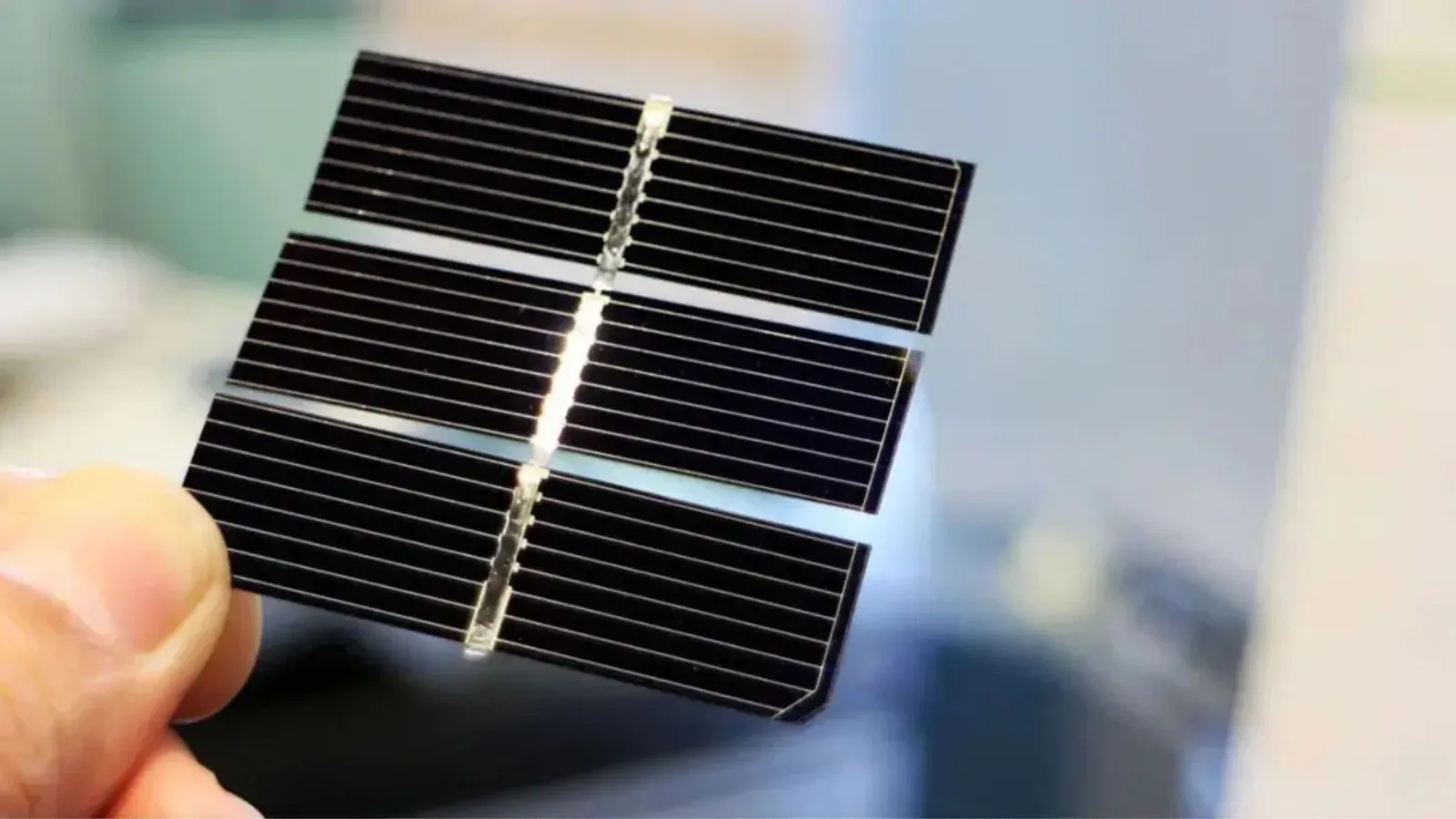
A new molecular locking strategy could help overcome the efficiency, stability, and scalability challenges in organic solar cells (OSCs).
Organic solar cells offer lightweight, flexible, carbon-based alternatives to silicon and offer vast potential for commercial use. But the cells’ delicate layers typically degrade quickly under heat and continuous sunlight
A team from the Ningbo Institute of Materials Technology and Engineering (NIMTE) of the Chinese Academy of Sciences (CAS) worked to solve this stability issue with a molecular-locking strategy that anchors the delicate solar layers together.
In particular, it introduces a specialized intermediate layer that chemically anchors the solar materials to the electrodes. This structure creates strong molecular bonds for better energy efficiency and long-term durability across large-scale panels.
“We achieved 20.4% small-area efficiency and 18.8% active-area module efficiency,” the study paper stated.
Problem with next-gen solar cells
To understand the development, you first have to understand why flexible solar cells fail.
Organic solar cells (OSCs) harvest sunlight using ultrathin molecular films called self-assembled monolayers (SAMs) laid over transparent electrodes.
The connection between the electrode and the organic film is slippery. Under intense heat and continuous light, the chemical bonds slide apart. The layers desorb, and the cell dies.
This is a trilemma for solar cell experts: the ultimate balancing act between high efficiency, long-term stability, and commercial scalability. Up until now, optimizing for one usually meant sacrificing the others.
To strengthen the troublesome solar cell interface, the NIMTE research team inserted an ultra-thin indium chloride intermediate layer that undergoes a localized reaction upon heating. This process drives out loose chlorine ions, forming a dense matrix of interconnected indium, oxygen, and phosphorus bonds. The resulting chemical network acts as a strong anchor, firmly locking the solar molecules in place rather than leaving them loosely attached.
Endurance testing
Heating the material triggers a chemical reaction that removes loose chlorine ions and forms strong bonds between indium, oxygen, and phosphorus. This process builds a durable protective network across the surface. The newly formed layer holds the solar cell materials tightly in place, greatly improving overall stability.
“The interlayer triggers ligand exchange, forming a robust, multidentate In-O-P coordination network that densely and uniformly anchors SAMs,” the researchers noted in the press release.
The strategy immediately improved performance across all key testing metrics. Small lab-scale cells reached an impressive 20.4 percent power conversion efficiency. On the other hand, larger modules with a 15.6 square centimeter area set a record efficiency of 18.8 percent.
Interestingly, the devices demonstrated exceptional durability. And retained over 85% of their initial output after 2,000 hours of continuous operation under continuous illumination.
“We scaled the technique to large-area modules with an aperture area of 15.6 cm2, reaching a record active-area PCE of 18.8%,” said Prof. LIU Quan, corresponding author of the study.
This universal chemical-locking strategy offers a pathway for the commercial future of organic photovoltaics. Overcoming the efficiency, stability, and scalability trilemma might bring flexible solar technology much closer to mass manufacturing. One day, surfaces like skyscraper windows, car roofs, and smartwatch covers could silently generate clean electricity using these tiny chemical locks.
The findings were detailed in the journal Joule on October 21.
Source: https://interestingengineering.com/innovation/new-technique-pushes-solar-cell-20-efficiency
Related articles