
New US plant to turn wastewater into 3,000 tons of lithium for batteries
The US has reportedly launched its first new lithium mining plant in the last five...
The US has reportedly launched its first new lithium mining plant in the last five decades, which is expected to produce at least 3,000 tons of the critical mineral annually from oilfield wastewater.
The site is located in Midland, Texas. it started commercial operations in February, 2026. This marked the first time a new US lithium mining project had reached the market since the late 1960s.
Built by clean-tech firm Element3, it relies on technology from the Department of Energy’s Oak (DOE) Ridge National Laboratory (ORNL) to extract lithium from wastewater generated during oil and gas production.
According to ORNL, the plant’s annual production capacity is equivalent to nearly half of current US lithium output. The country currently produces approximately 5,000 to 6,000 metric tons of lithium per year. “We can produce our own starting materials, like for battery manufacturing for example,” Parans Paranthaman, PhD, a materials scientist and corporate fellow at ORNL, said.
Lithium from oilfield brines
The facility extracts lithium from produced water, a type of wastewater generated during oil and gas extraction in the Permian Basin.. Data shows that the US oil and gas industry generates approximately 25.9 billion barrels of wastewater, known as produced water or brine, each year. That amounts to roughly 1.09 trillion gallons annually, or nearly three billion gallons per day.
Although this water contains lithium, it also carries numerous other elements that must be separated before the mineral can be used in batteries. These can include dissolved and suspended salts, heavy metals, hydrocarbons, as well as radioactive materials.
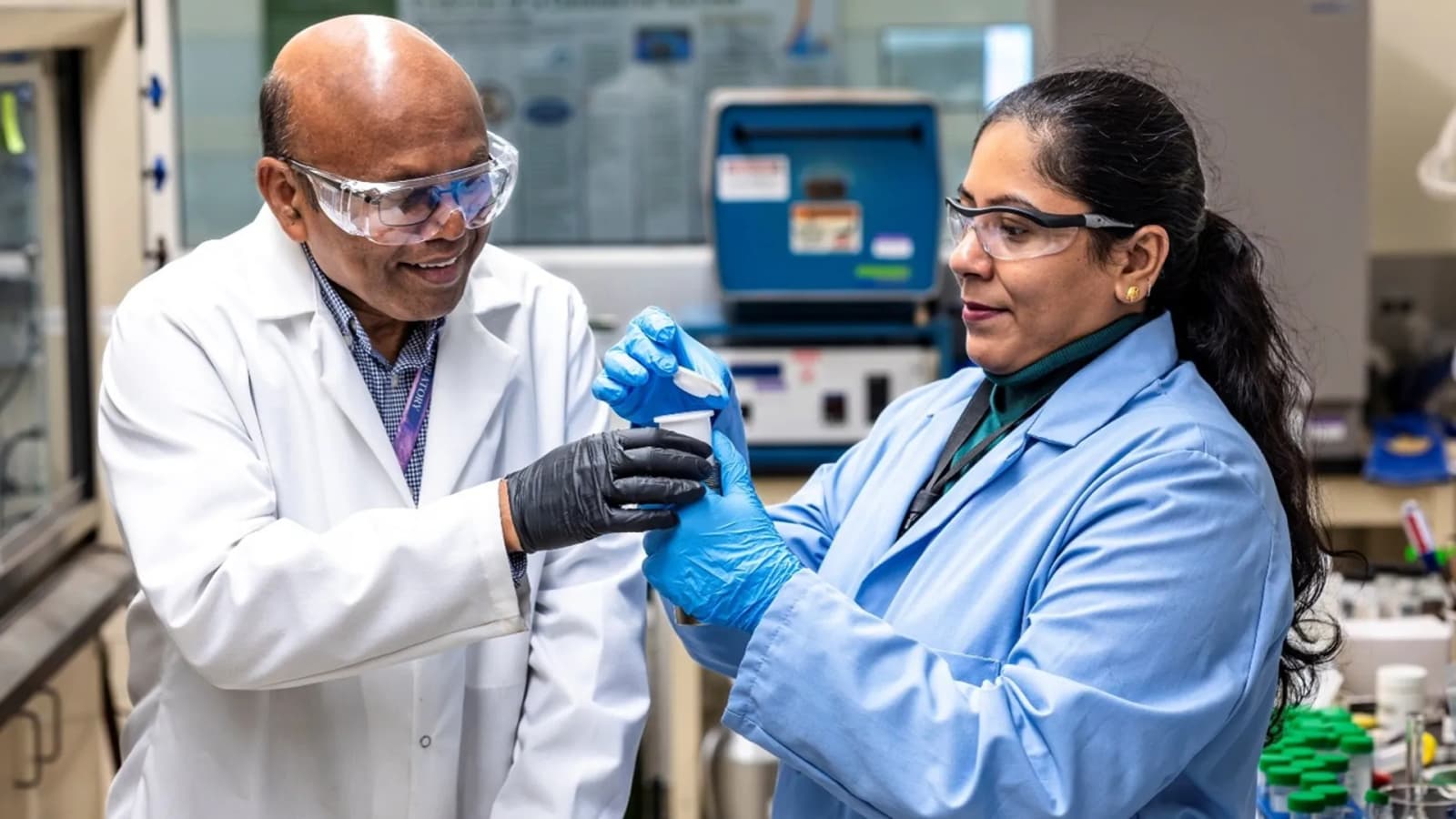
Parans Paranthaman, PhD, and Jayanthi Kumar, PhD, preparing lithium brine and sorbent for lithium recovery. Credit: Carlos Jones / ORNL, U.S. Dept. of Energy
Paranthaman highlighted the difficulty of separating lithium from other elements. “The feedstock contains all kinds of elements, so you need to selectively extract the element of interest with high efficiency and low cost as you scale up,” he continued.
However, ORNL’s novel technology can selectively recover lithium chloride (LiCl) from the wastewater before converting it into battery-grade lithium carbonate powder. This feat also reflects the work of the DOE’s Minerals to Materials Supply Chain Research Facility (METALLIC).
Launched in April 2025, the project brings together nine DOE national labs across four research centers. Its aim is to boost mineral extraction, separation, refining as well as manufacturing technologies. Element3 licensed ORNL’s lithium recovery technology in 2024. The process has since moved from research to commercial use.
Securing domestic lithium supplies
According to ORNL, the technology could reduce reliance on overseas processing and create a domestic source of materials necessary for battery production. “You need lithium hydroxide or lithium carbonate, and we are producing those chemicals at the Texas site,” Paranthaman said.
He added that this could make it possible for the US to produce its own lithium. “This is a domestic supply chain,” he continued. For reference, the US produces less than one percent of the world’s lithium and relies heavily on imports.
The nation’s domestic output is estimated at up to 4,000 metric tons per year. Yet, most of the imported lithium comes from countries such as Chile and Argentina, which together account for 95 percent of the US lithium imports.
“We want to optimize material processing methods, reduce environmental impact and recover more value from materials,” Paranthaman noted in a press statement.
METALLIC allows companies and universities to test their technologies ahead of their commercial deployment. The initiative could strengthen US critical mineral supply chains. “The success of Element3 is what METALLIC’s innovation ecosystem aims to emulate with keystone companies,” Paranthaman concluded.
Related articles
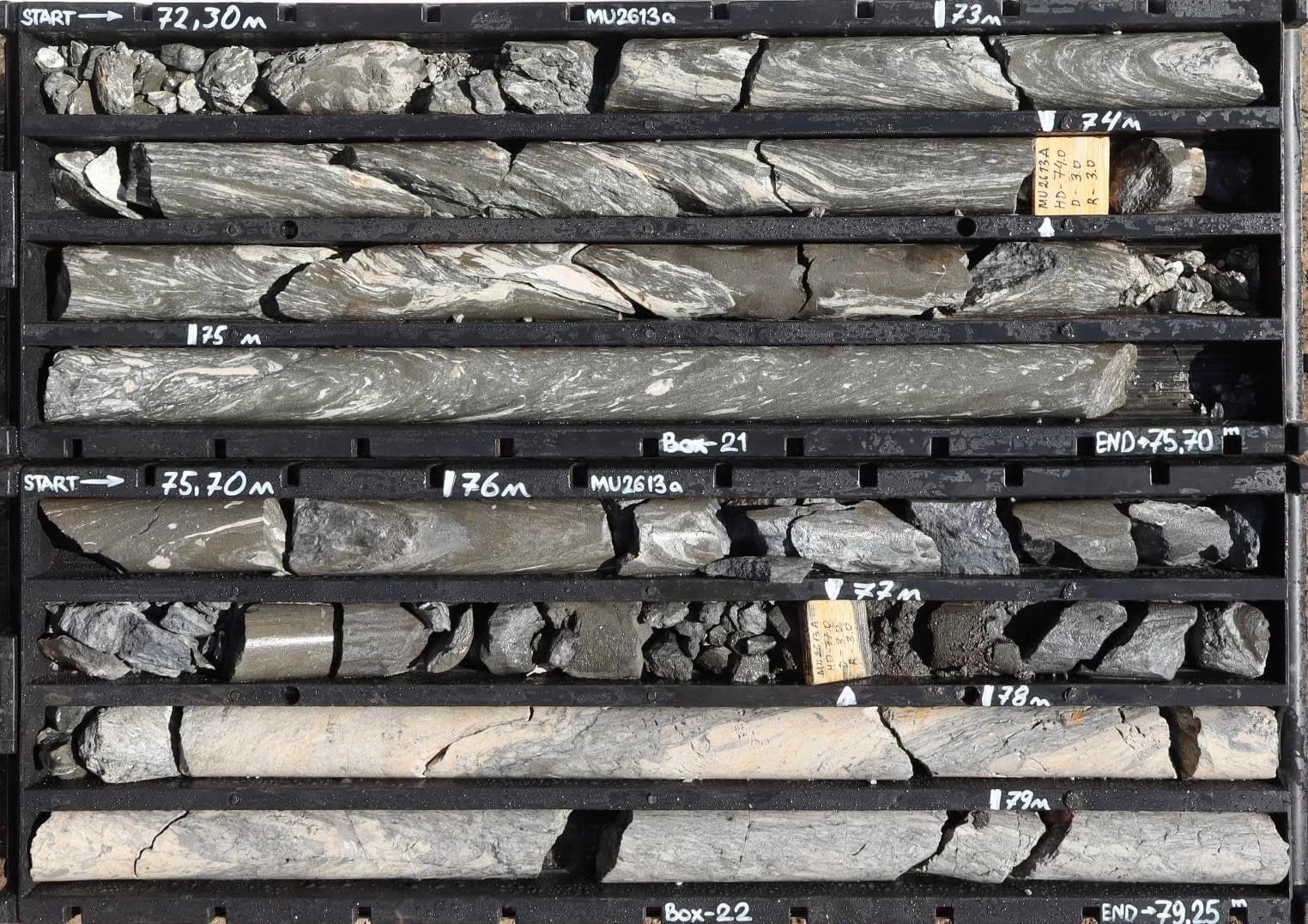
Azzuro Resources discovers new copper sulphide zone at Red Hill in Mongolia
ASX-listed Azzuro Resources PLC (AZ9) said on 1 October 2026 that drillhole MU2613A intersected 7.0 metres of semi-massive to massive sulphide at its 100%-owned Red Hill (formerly Maikhan Uul) copper-gold VMS project in southwestern Mongolia.
5 companies working to expand America’s rare earth processing capacity
Rare earth elements are essential to electric vehicles, wind turbines, robotics, semiconductors, and military systems....