
Visualized: The World on the UAE’s Plate
Which regions feed the UAE? Explore the 2025 data behind its broad and diverse sourcing network.
Published
October 8, 2026 8:55 am
By
Design
- Abha Patil
The following content is sponsored by DP World
UAE Food Imports by Region in 2025
Key Takeaways
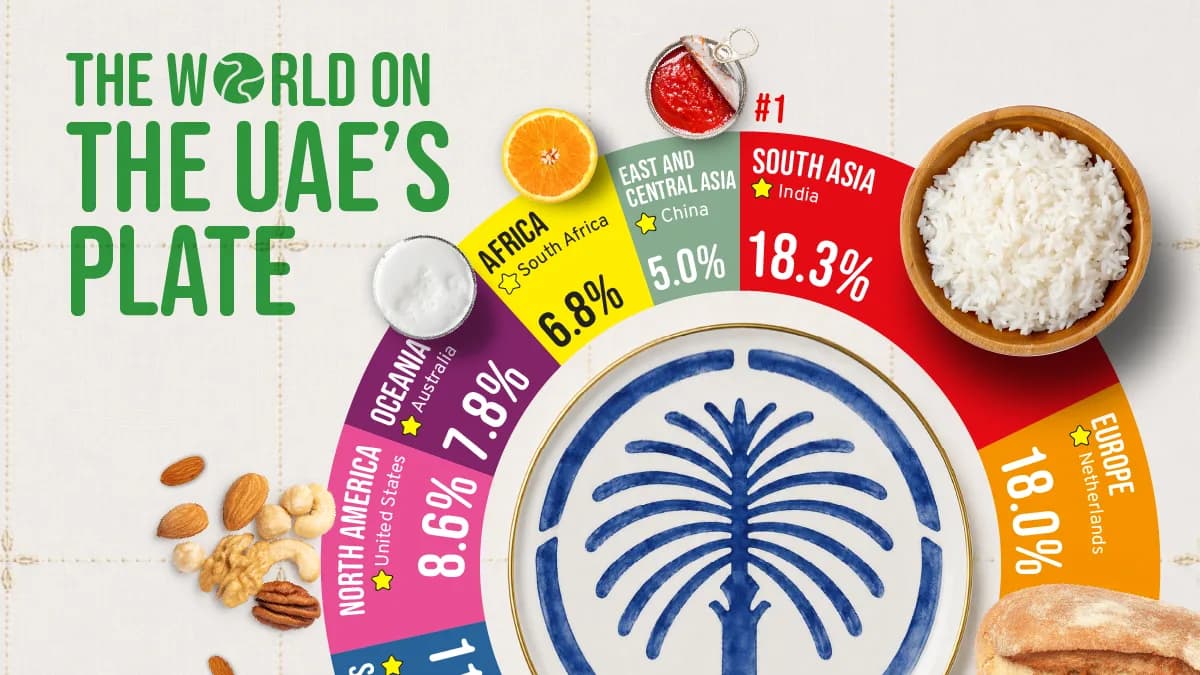
The UAE sources food imports from a wide range of regions, with no single region accounting for more than 18.3%.
South Asia, Europe, and Southeast Asia are the three largest source regions, together representing 49.0% of imports.
Dubai Food District supports this diverse sourcing model through logistics and cold-chain infrastructure.
Trade networks shape what ends up on store shelves. In the UAE, the 2025 data highlights the importance of connectivity in linking the country to diverse food sources around the world, supporting a food supply system built on global reach, resilience, and year-round availability.
This graphic, in partnership with DP World, shows how the UAE sources food imports from a wide mix of regions using data from IHS Markit.
A Broad Sourcing Base
A diverse sourcing base supports variety, resilience, and year-round availability across the market. The UAE’s food imports span the globe, with two regions nearly tied for the largest share.
Here is a table that shows the UAE’s food import supply by source region in 2025.
RankSource RegionShare of UAE food importsKey Food ItemTop Country
1South Asia18.3%Rice India
2Europe18.0%Packaged Food Netherlands
3Southeast Asia12.7%Cooking Oils Vietnam
4Middle East11.5%Dairy Products Saudi Arabia
5South America11.2%Chicken, Turkey & Duck Brazil
6North America8.6%Nuts United States
7Oceania7.8%Dairy Products Australia
8Africa6.8%Citrus Fruits South Africa
9East & Central Asia5.0%Packaged Food China
Disclosure Note
×
Disclosure Note
The UAE is treated as a mirror reporting country. As a result, the dataset may not fully represent the complete trade picture, particularly as key trade partners such as Kuwait, Oman, and Iraq are also mirror reporting countries.
In 2025, South Asia accounted for 18.3% of UAE food imports, while Europe followed closely at 18.0%. Southeast Asia ranked third at 12.7%, meaning the top three regions together supplied less than half of the total.
The remainder was spread across the Middle East, South America, North America, Oceania, Africa, and East & Central Asia. Notably, no single region supplied even one-fifth of total imports, highlighting a broad procurement base.
Why Diversity Matters
That distribution matters beyond variety on the plate. When food flows come from multiple regions, buyers have more options to manage seasonality, category specialization, and shifting demand.
At the category level, the mix is equally telling. Rice from India, packaged food from the Netherlands, cooking oils from Vietnam, and poultry from Brazil show how different suppliers fill different needs.
This pattern also reflects how the countries that feed the world specialize across agricultural trade. As a result, the UAE can draw from multiple strengths instead of relying on one dominant source.
The Role of Dubai Food District
For DP World, that is where Dubai Food District fits in. As a connected food ecosystem, Dubai Food District brings trade, logistics, storage, processing, and distribution closer together, helping food move efficiently from global sources to regional markets.
Overall, the data shows a food import supply network built on breadth rather than reliance on a single market. That breadth strengthens the case for Dubai Food District as a platform supporting the UAE’s food security ambitions.
Learn more about the Dubai Food District
You may also like
- Trade6 days ago Oman: A Trade Gateway on the Rise How much did Oman’s exports and imports grow from 2020 to 2025? Explore the data behind this rising trade gateway.
- Economy1 year ago Visualized: Countries by Container Volume Per Capita Which countries punch above their weight in container volume per capita?
- Cities1 year ago Ranked: The Top Cities in the World by Reputation Discover the top 10 city reputations of 2024 and see why Dubai is a rising hub for investment, innovation, and opportunity.
- Economy1 year ago Ranked: The Top 10 Countries by Merchandise Exports Per Capita Explore how the UAE, powered by Jebel Ali Port, is rising as a global trade hub, challenging traditional leaders in commerce.
- Technology2 years ago Visualized: UAE Vehicle Trade Growth by Country The UAE’s vehicle trade is booming, with China leading import growth & Iraq topping export growth thanks to Dubai’s port of Jebel Ali.
Subscribe
Related articles
Mapped: The Economies Most Dependent on U.S. Trade
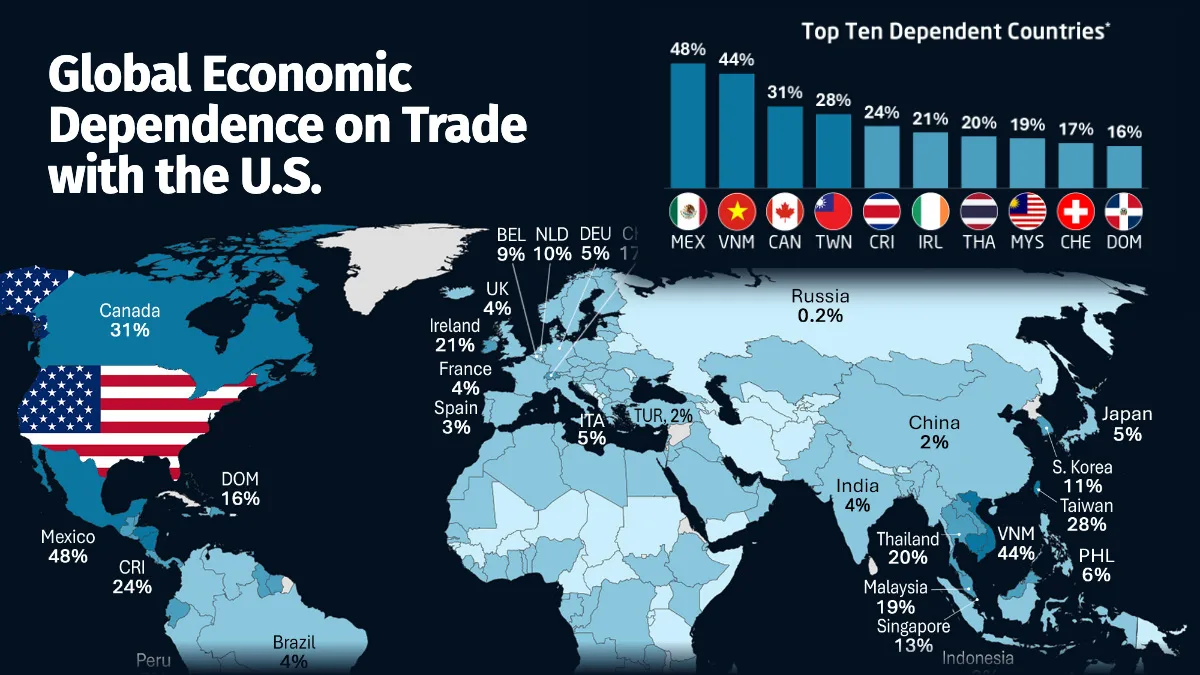
Trade with the U.S. equals 48% of Mexico's GDP and 44% of Vietnam's, more than six times the global average. See where your country ranks.
Oman: A Trade Gateway on the Rise
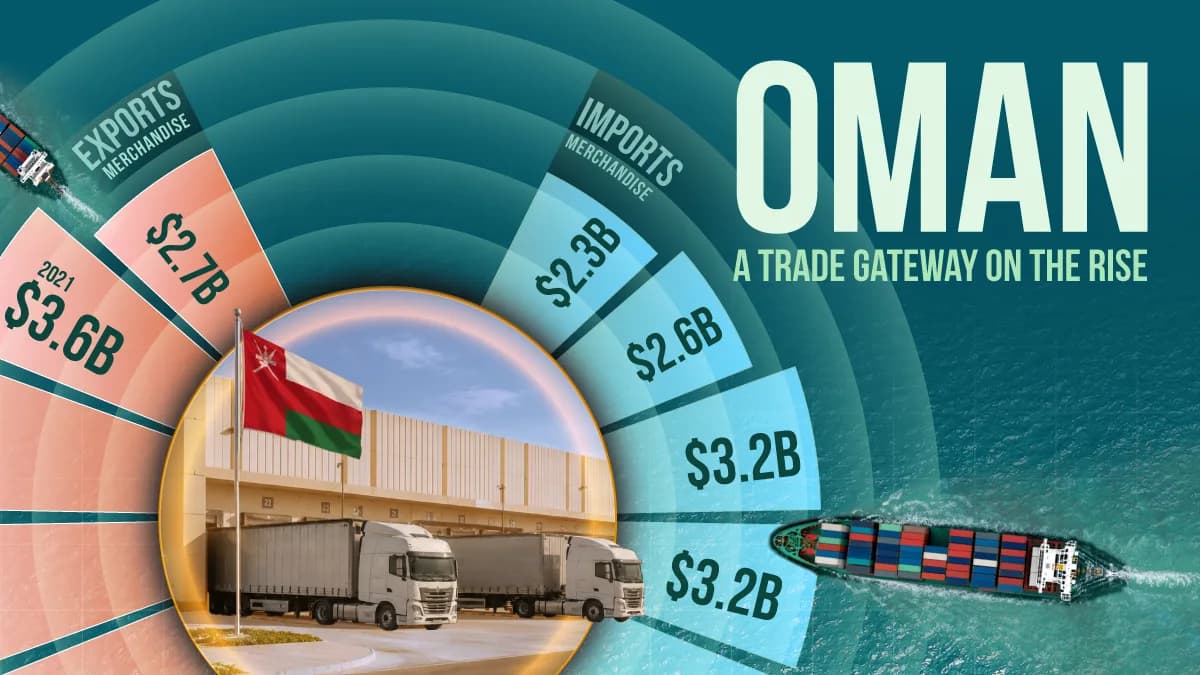
How much did Oman’s exports and imports grow from 2020 to 2025? Explore the data behind this rising trade gateway.
Mapped: How U.S.-China Trade Changed by U.S. State
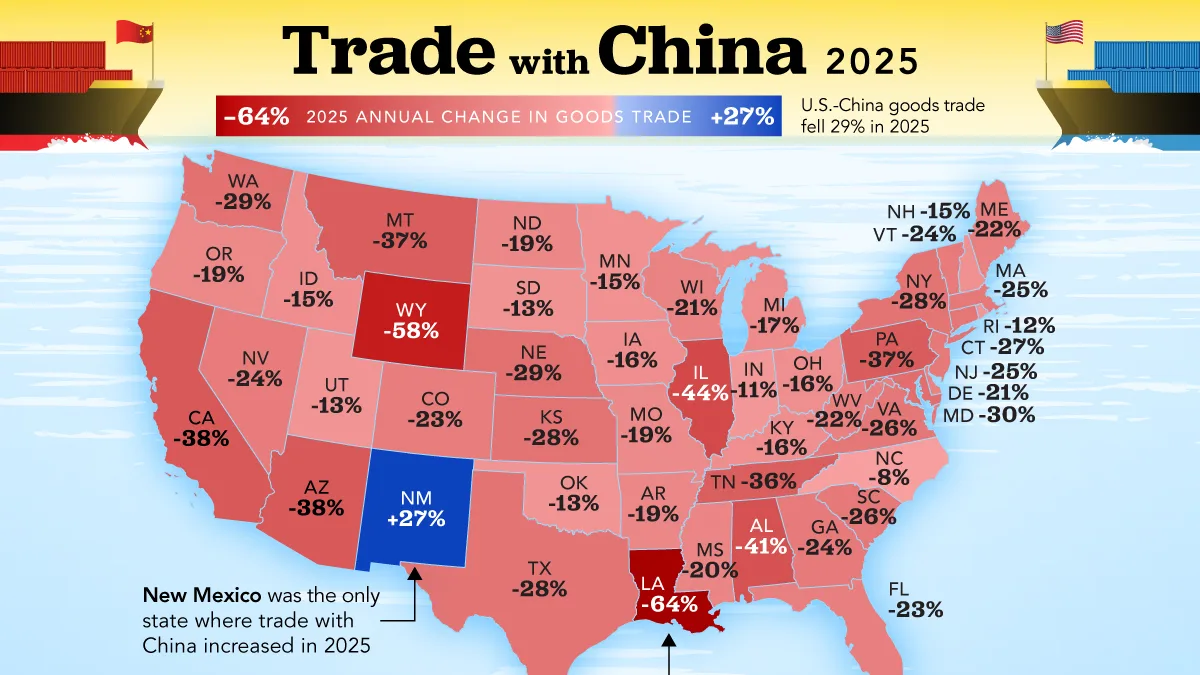
Trade with China fell in 49 of 50 U.S. states in 2025. Only New Mexico grew, lifted by a surge in electronics exports.
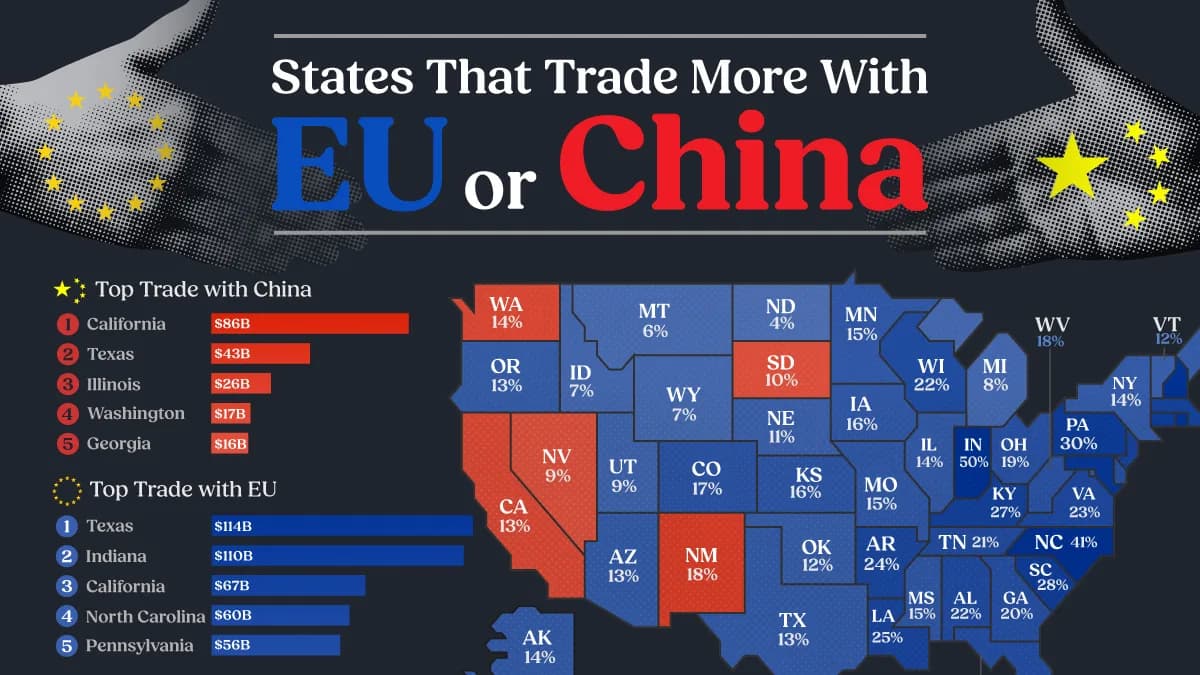
Mapped: Does Your State Trade More With China or the EU?
The European Union has emerged as an unexpected beneficiary of rising trade tensions between the U.S. and China.
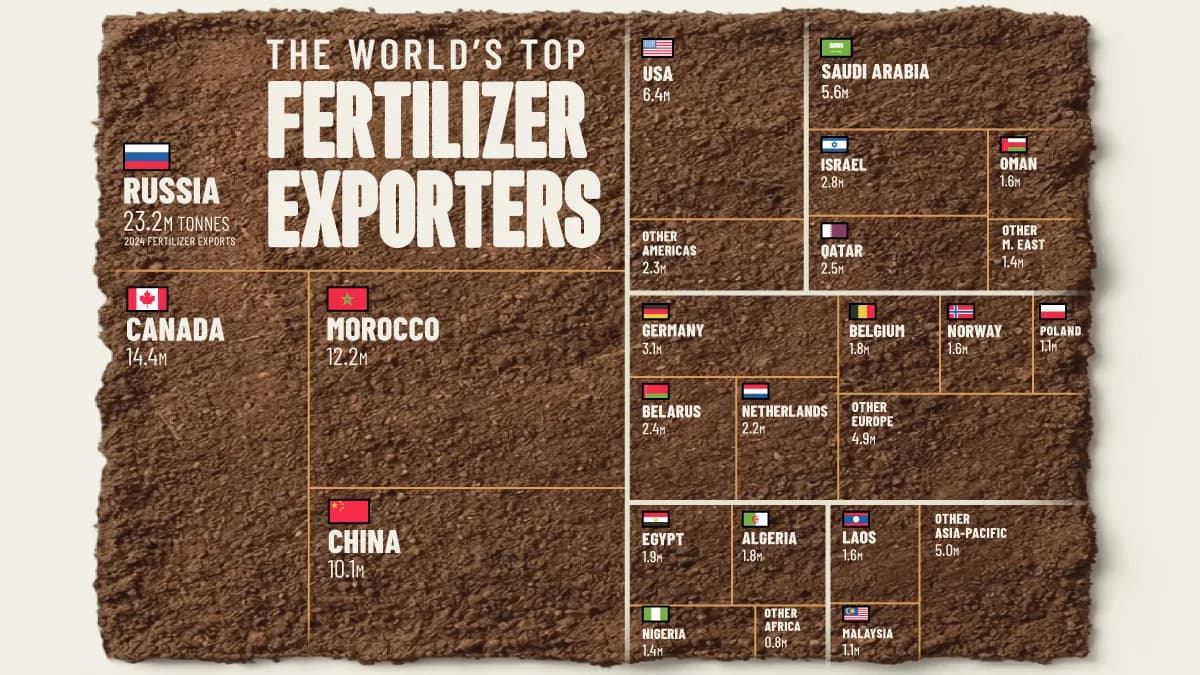
Ranked: The Countries That Dominate the Fertilizer Trade
Global agriculture depends on three main fertilizers. Four countries are responsible for over half of all fertilizer exports.
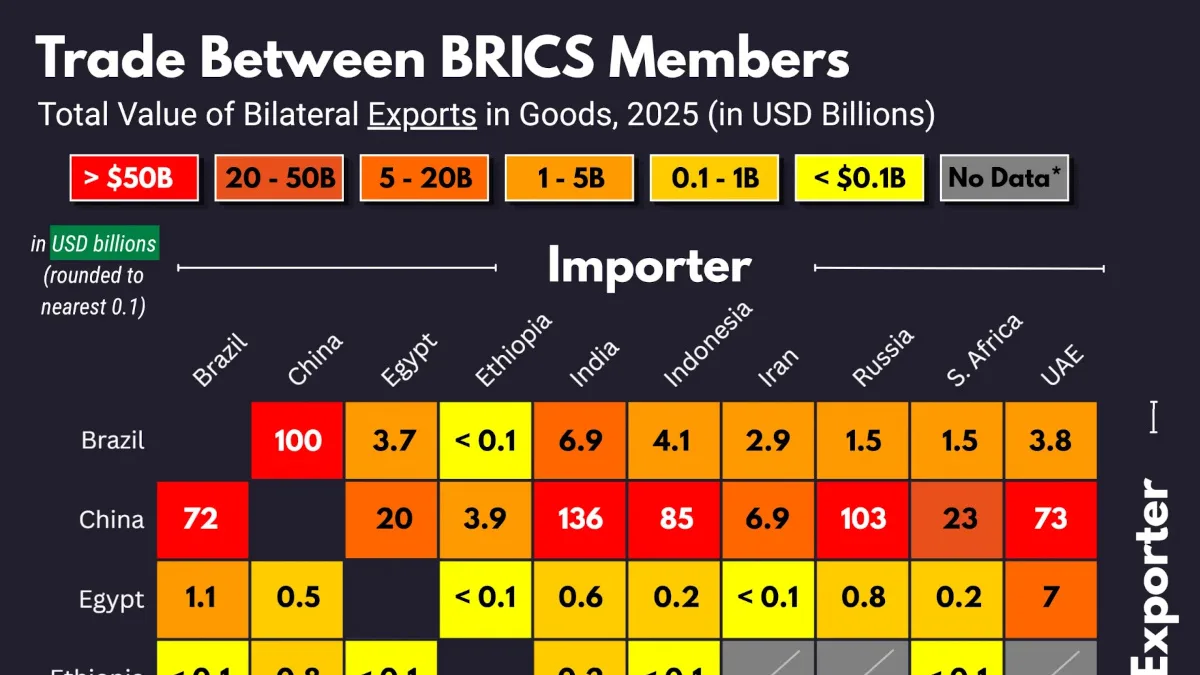
Which BRICS Countries Trade the Most With Each Other?
Which BRICS countries trade the most with each other? This chart maps bilateral exports across the 10-member group.