
Mapped: Where China Out-Trades the U.S. and EU (2000 vs. 2025)
China is now the top goods-trade partner for 92 countries and territories when measured against the U.S. and EU, up from just 10 in 2000.
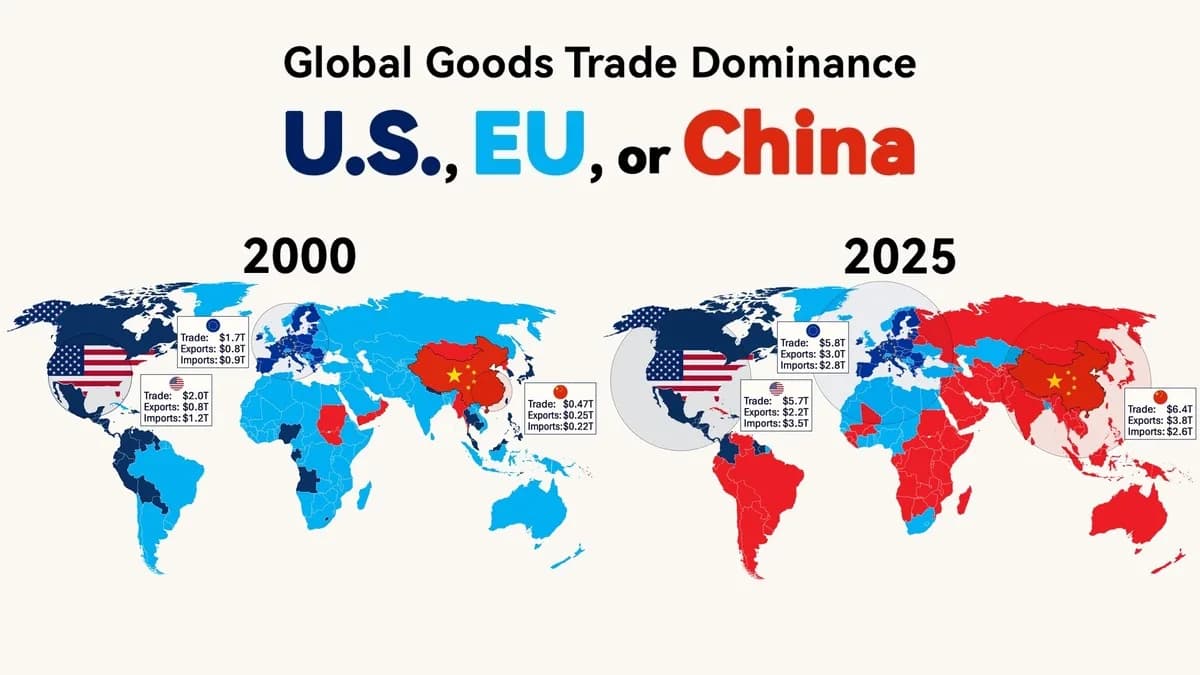
Does Each Country Trade More With the U.S., EU, or China?
Key Takeaways
China is the leading goods-trade partner among the three powers for 92 countries and territories in 2025, up from just 10 in 2000.
China’s goods trade grew nearly 14-fold to $6.4 trillion from 2000 to 2025, overtaking both the EU and the U.S.
Longtime American allies including Japan, South Korea, Taiwan, and Australia now trade more goods with China than with the U.S. or EU.
In 2000, China outranked the U.S. and EU as a trade partner for just 10 economies. By 2025, it held that spot for more than half of the world.
This graphic compares which of the United States, European Union, or China each country traded with most in 2000 and 2025, using bilateral goods data from the International Monetary Fund and UN Comtrade.
Total trade is the sum of goods imports and exports. Services are excluded, and the comparison is limited to these three powers, so a country colored red trades more with China than with the U.S. or the EU, not necessarily more than with anyone else.
China Is Now the Leading Trade Partner for Most Economies
In 2000, the EU was the largest of the three partners for 112 of 175 economies, while the U.S. led for 53 and China for just 10.
By 2025, China led for 92 countries and territories, followed by the EU with 55 and the U.S. with 32.
The table below shows which of the three was each country or territory’s largest goods-trade partner in 2000 and 2025. Blank 2000 cells indicate no available data for that country at that point in time:
Country or TerritoryLargest Trading Partner Among the U.S., EU, and China
20002025
Afghanistan European Union China
Albania European Union European Union
Algeria European Union European Union
Angola United States China
Anguilla United States United States
Antigua and Barbuda European Union United States
Argentina European Union China
Armenia European Union China
Aruba United States United States
Australia European Union China
Azerbaijan European Union European Union
Bahamas United States United States
Bahrain European Union European Union
Bangladesh European Union European Union
Barbados United States United States
Belarus European Union China
Belize United States United States
Benin European Union European Union
Bermuda European Union United States
Bhutan European Union China
Bolivia United States China
Bosnia and Herzegovina European Union European Union
Botswana European Union China
Brazil European Union China
Brunei United States China
Burkina Faso European Union China
Burundi European Union China
Cabo Verde European Union European Union
Cambodia United States China
Cameroon European Union European Union
Canada United States United States
Central African Republic European Union China
Chad European Union European Union
Chile European Union China
Colombia United States United States
Comoros European Union European Union
Costa Rica United States United States
Cuba European Union China
Curaçao United States
Côte d'Ivoire European Union European Union
DR Congo European Union China
Djibouti European Union China
Dominica United States United States
Dominican Republic United States United States
Ecuador United States China
Egypt European Union European Union
El Salvador United States United States
Equatorial Guinea European Union European Union
Eritrea European Union China
Eswatini European Union China
Ethiopia European Union China
Falkland Islands (Malvinas) European Union European Union
Faroe Islands European Union European Union
Fiji United States China
French Guiana European Union European Union
French Polynesia European Union European Union
Gabon United States China
Gambia European Union European Union
Georgia European Union European Union
Ghana European Union European Union
Gibraltar European Union European Union
Greenland European Union European Union
Grenada United States United States
Guatemala United States United States
Guinea European Union China
Guinea-Bissau European Union European Union
Guyana United States United States
Haiti United States United States
Honduras United States United States
Hong Kong China China
Iceland European Union European Union
India European Union China
Indonesia European Union China
Iran European Union China
Iraq European Union China
Israel European Union European Union
Jamaica United States United States
Japan United States China
Jordan European Union China
Kazakhstan European Union European Union
Kenya European Union China
Kiribati China China
North Korea China China
South Korea United States China
Kosovo European Union European Union
Kuwait European Union China
Kyrgyzstan European Union China
Laos European Union China
Lebanon European Union European Union
Lesotho United States European Union
Liberia European Union China
Libya European Union European Union
Macao United States China
Madagascar European Union China
Malawi European Union China
Malaysia United States China
Maldives United States China
Mali European Union China
Marshall Islands China
Mauritania European Union European Union
Mauritius European Union European Union
Mexico United States United States
Micronesia United States United States
Moldova European Union European Union
Mongolia China China
Montenegro European Union European Union
Montserrat United States United States
Morocco European Union European Union
Mozambique European Union China
Myanmar China China
Namibia European Union China
Nauru United States China
Nepal United States China
New Caledonia European Union European Union
New Zealand European Union China
Nicaragua United States United States
Niger European Union European Union
Nigeria United States European Union
North Macedonia European Union European Union
Norway European Union European Union
Oman China China
Pakistan European Union China
Palau United States European Union
Panama United States United States
Papua New Guinea European Union China
Paraguay United States China
Peru United States China
Philippines United States China
Qatar European Union China
Republic of Congo European Union China
Russia European Union China
Rwanda European Union China
Samoa United States China
San Marino European Union
Saudi Arabia European Union China
Senegal European Union European Union
Serbia European Union European Union
Seychelles European Union European Union
Sierra Leone European Union China
Singapore United States China
Sint Maarten United States
Solomon Islands China China
Somalia European Union China
South Africa European Union European Union
South Sudan China China
Sri Lanka European Union China
St. Kitts and Nevis United States United States
St. Lucia United States United States
St. Vincent and the Grenadines United States United States
Sudan China China
Suriname European Union United States
Switzerland European Union European Union
Syria European Union China
São Tomé and Príncipe European Union European Union
Taiwan United States China
Tajikistan European Union China
Tanzania European Union China
Thailand United States China
Timor-Leste United States China
Togo European Union European Union
Tonga United States China
Trinidad and Tobago United States United States
Tunisia European Union European Union
Turkmenistan European Union China
Tuvalu European Union United States
Türkiye European Union European Union
Uganda European Union China
Ukraine European Union European Union
United Arab Emirates European Union China
United Kingdom European Union European Union
Uruguay European Union China
Uzbekistan European Union China
Vanuatu European Union China
Venezuela United States China
Vietnam European Union China
West Bank and Gaza European Union European Union
Yemen China China
Zambia European Union China
Zimbabwe European Union China
Of the 175 economies with data for both years, 88 changed leaders, and 81 of those moved to China: 57 from the EU and 24 from the U.S.
The most striking flips to China came among U.S. partners in Asia, with proximity and cheaper goods being the driving factors. Japan, South Korea, Taiwan, Singapore, the Philippines, Thailand, and Malaysia all traded most with the U.S. in 2000, while Australia and New Zealand moved over from the EU.
China also displaced the West across the Gulf and South America. Saudi Arabia, the UAE, Qatar, and Kuwait moved from the EU as Asian demand for their oil grew. Russia made the same switch, a shift that accelerated after Western sanctions in 2022 redirected its fuel exports east.
The Western powers still hold their home regions. The U.S. leads for Canada, Mexico, Central America, and nearly every Caribbean economy, while the EU leads across most of non-member Europe and much of North and West Africa.
China Has Overtaken the U.S. and EU in Global Goods Trade
The global shift towards China follows the country’s exponential growth in goods trade over the 25 years. In 2000, its goods trade totaled $0.47 trillion, less than a quarter of the U.S. total. By 2025, it reached $6.4 trillion.
The table below shows the total goods trade of China, the EU, and the U.S. in 2000 and 2025, along with the change in percent and in dollars. EU figures exclude trade among its own members:
EconomyTotal Goods Trade (USD, Trillions)Change (2000–2025)
20002025PercentUSD, Trillions
China0.476.41,2625.9
EU1.75.82414.1
U.S.2.05.71853.7
China’s goods trade grew nearly 14-fold over the period, far faster than the EU’s (3.4 times) or the U.S.’s (2.9 times).
A turning point came in December 2001, when China joined the WTO. Membership guaranteed its exports permanent low-tariff access to markets around the world, including the U.S., which until then had reviewed China’s trade status every year.
The balance of that trade diverged too. China’s exports and imports were nearly even in 2000, but by 2025 it ran a surplus of about $1.2 trillion, while the U.S. ran a deficit of about $1.3 trillion. The EU’s trade stayed close to balanced.
That export surge helps explain why so many countries now count China as their biggest import partner. The U.S. and EU still anchor their own regions, but for most of the rest of the world, China has become the leading partner.
Learn More on the Voronoi App
If you enjoyed today’s post, check out The U.S. Was China’s Top Trading Partner in 2025 on Voronoi.
Related articles
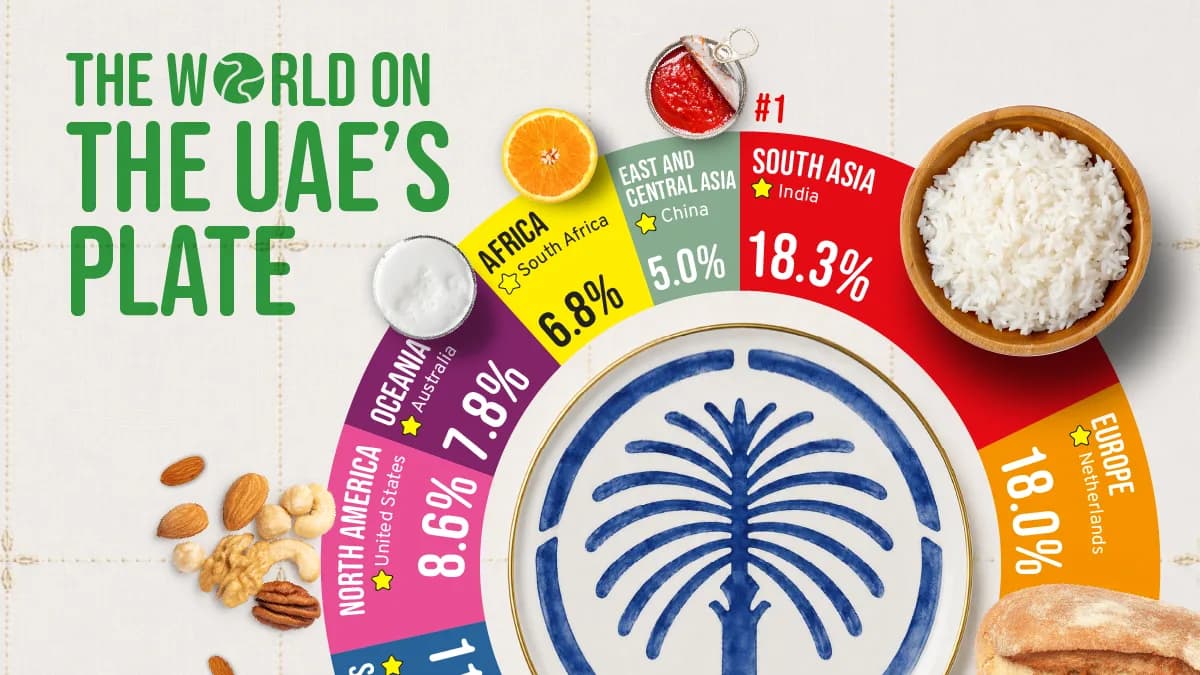
Visualized: The World on the UAE’s Plate
Which regions feed the UAE? Explore the 2025 data behind its broad and diverse sourcing network.
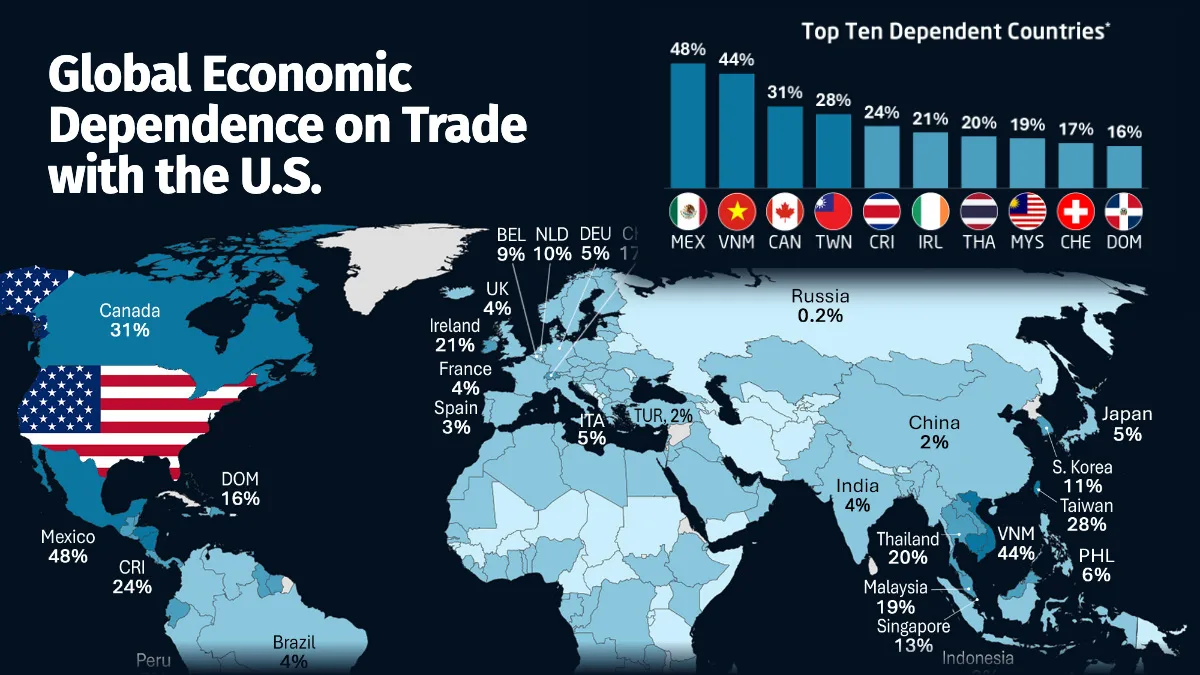
Mapped: The Economies Most Dependent on U.S. Trade
Trade with the U.S. equals 48% of Mexico's GDP and 44% of Vietnam's, more than six times the global average. See where your country ranks.
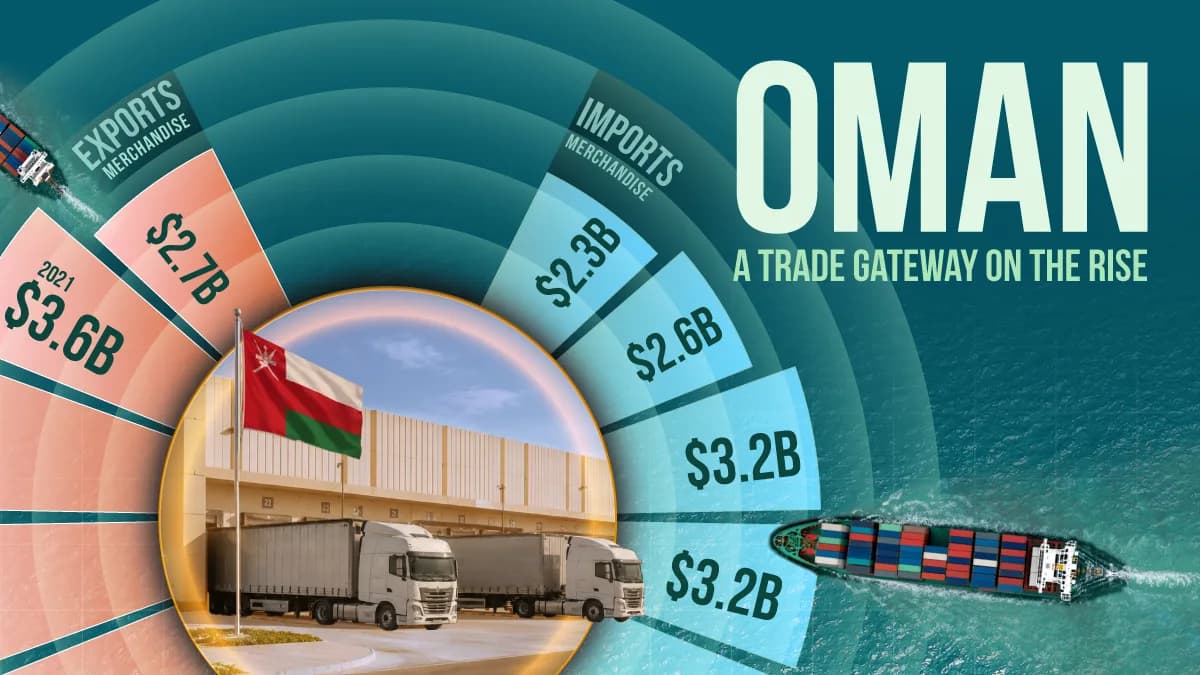
Oman: A Trade Gateway on the Rise
How much did Oman’s exports and imports grow from 2020 to 2025? Explore the data behind this rising trade gateway.
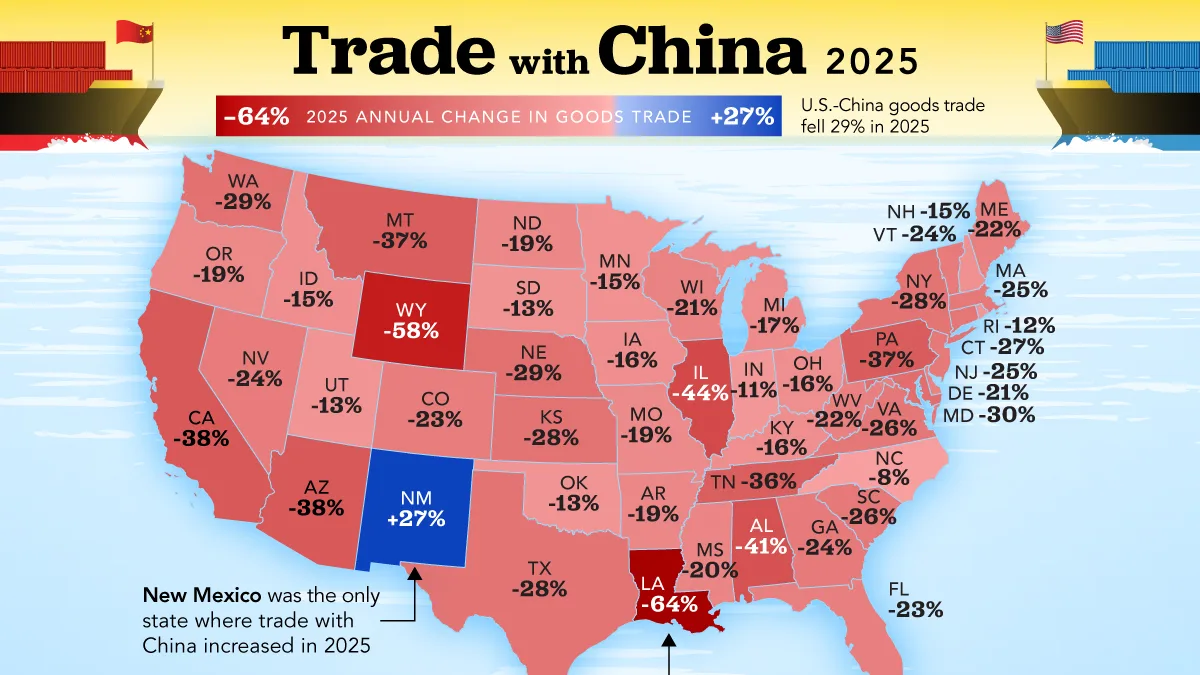
Mapped: How U.S.-China Trade Changed by U.S. State
Trade with China fell in 49 of 50 U.S. states in 2025. Only New Mexico grew, lifted by a surge in electronics exports.
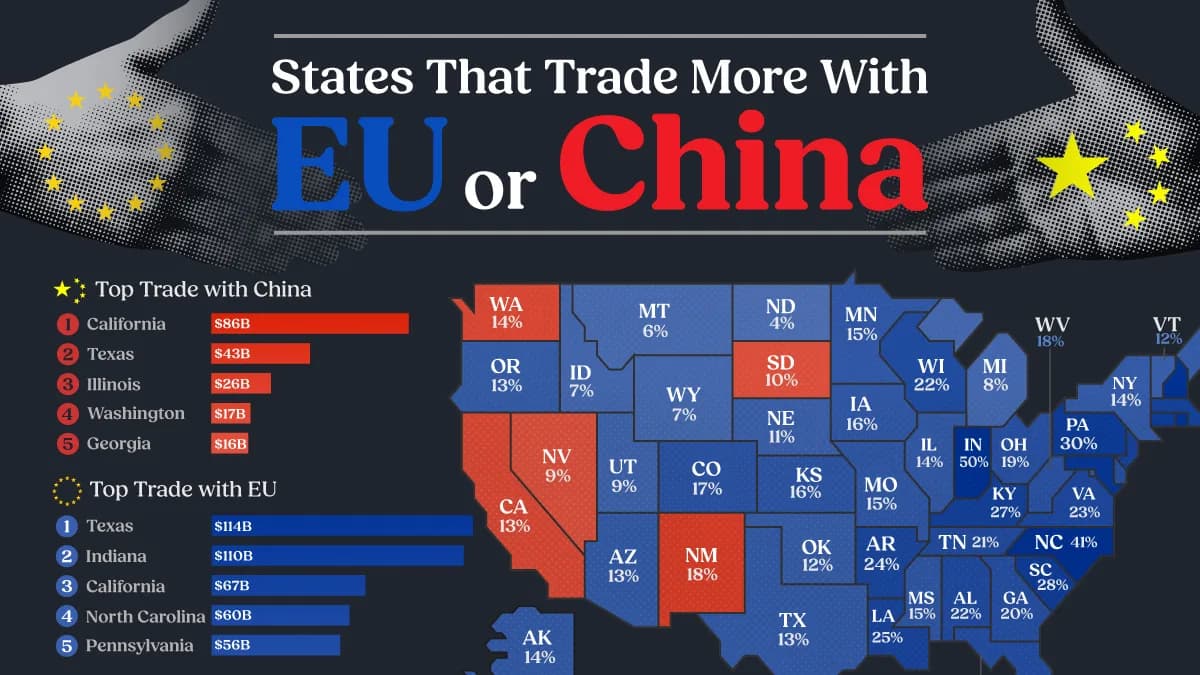
Mapped: Does Your State Trade More With China or the EU?
The European Union has emerged as an unexpected beneficiary of rising trade tensions between the U.S. and China.
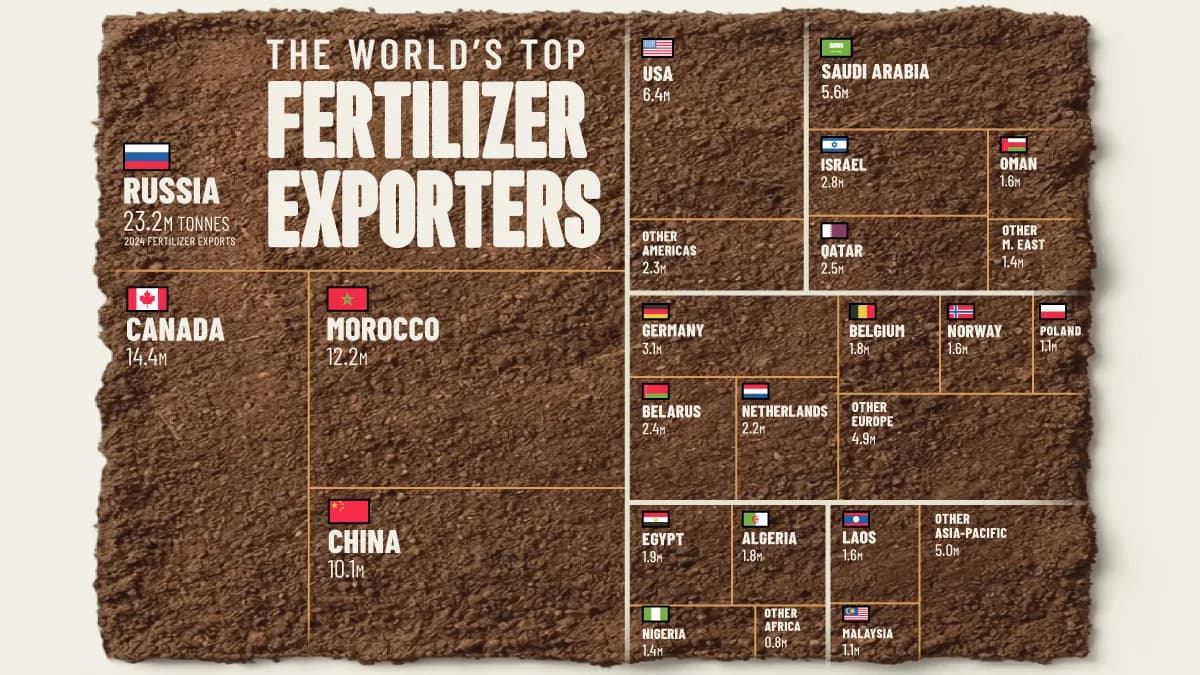
Ranked: The Countries That Dominate the Fertilizer Trade
Global agriculture depends on three main fertilizers. Four countries are responsible for over half of all fertilizer exports.