
NASA battery survives -274°F extreme cold, could power future lunar rovers and tools
NASA has tested a solid-state battery that survived temperatures as low as minus 274 degrees...
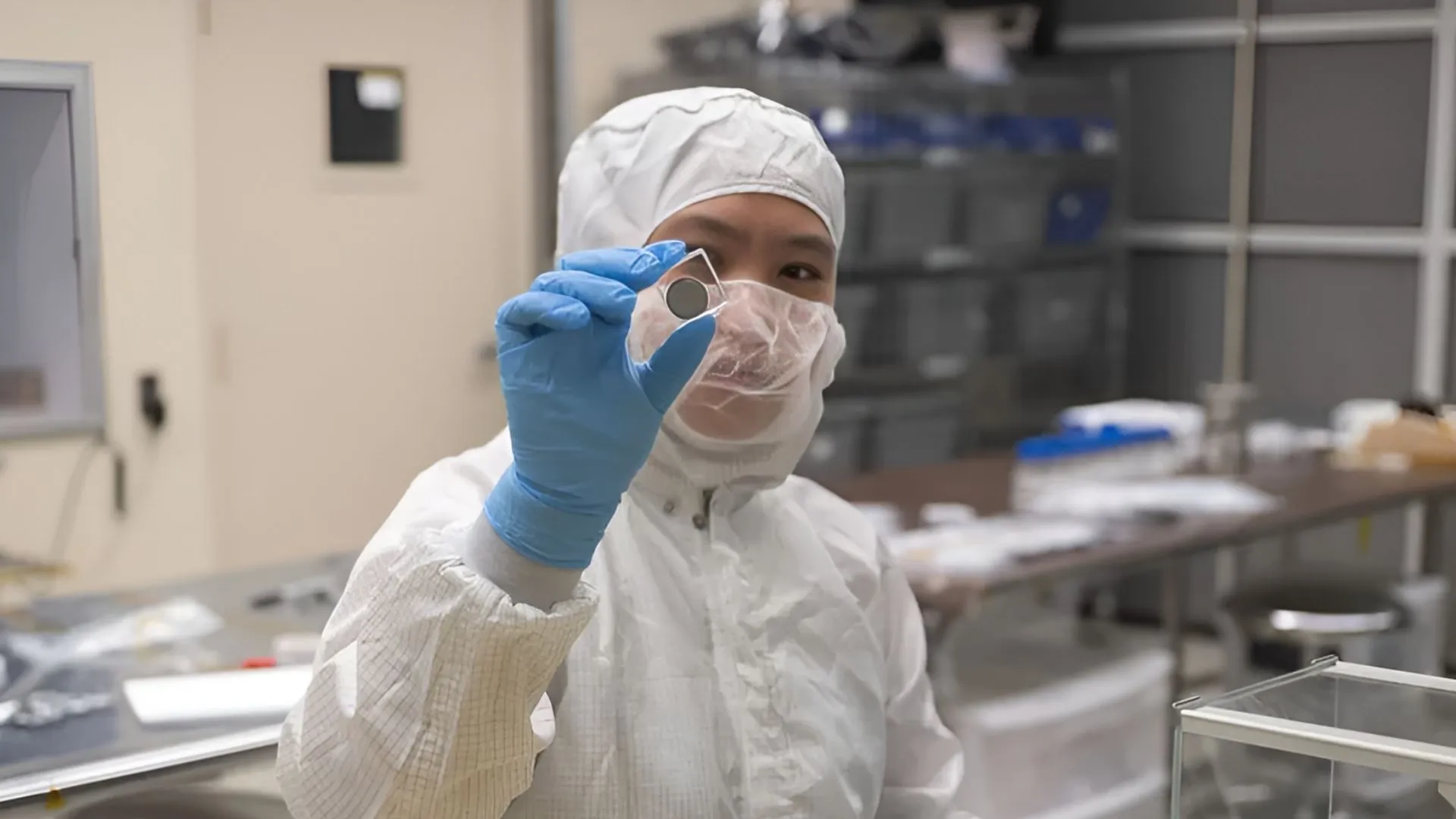
NASA has tested a solid-state battery that survived temperatures as low as minus 274 degrees Fahrenheit (minus 170 Celsius) without damage, a step toward developing power systems for future missions to the Moon’s South Pole.
The prototype cells also operated at temperatures as low as minus 112 F (minus 80 C), although with reduced performance. NASA said the batteries worked well between minus 76 F (minus 60 C) and 176 F (80 C) during recent thermal vacuum testing.
The results come from NASA’s Solid Power for Extreme Environment Adaptability and Resilience in Space (SPEARS) project, which is developing batteries capable of surviving the Moon’s extreme temperature changes without requiring continuous heating.
The technology could eventually power lunar rovers, scientific instruments and emergency equipment used by astronauts under NASA’s Artemis program. However, the batteries remain small laboratory prototypes and have not yet been demonstrated in space.
Surviving extreme lunar temperatures
Temperatures near the Moon’s South Pole can fall to minus 328 F (minus 200 C). Such conditions present a major challenge for conventional lithium-ion batteries, which depend on liquid electrolytes to transport charged particles between electrodes.
These liquids can freeze in extreme cold, while excessive heat can affect battery performance. Exposure to the vacuum of space also creates problems for conventional liquid-based systems.
NASA’s SPEARS batteries instead use solid ceramic- or polymer-based electrolytes. The design aims to improve resistance to temperature extremes while reducing the fire hazards associated with flammable liquid electrolytes.
Researchers conducted thermal vacuum tests at NASA’s Langley Research Center in Virginia to examine how the prototype cells performed under conditions relevant to lunar operations.
“We proved for the first time that these cells can work down to minus 80 degrees Celsius,” said Yi Lin, SPEARS testing and research lead at NASA Langley.
The tests also showed that the cells could withstand exposure to temperatures ranging from 212 F (100 C) to minus 274 F without sustaining damage.
However, the batteries cannot generate power at the lowest temperature tested. Instead, they must be warmed to an operating temperature before use.
Less heating between missions
This ability to survive deep cold without continuous heating could reduce the need for heavy thermal management equipment aboard lunar spacecraft and rovers.
Small heaters could bring the batteries back to operating temperature when power is needed, rather than keeping them warm throughout the lunar night.
NASA researchers are also exploring different electrodematerials to adjust the batteries’ energy capacity, power output, and durability for specific applications.
The SPEARS project began in 2026 with funding from NASA’s Research and Technology Mission Directorate. NASA’s Glenn Research Center in Ohio leads the effort, while Langley researchers are conducting materials development and testing.
NASA’s Ames Research Center in California is developing test boards and electronics to help prepare the technology for future spaceflight testing.
The agency sees potential applications beyond lunar exploration, including aircraft, drones, vehicles, and portable electronic devices. However, further development and testing will be required before the batteries are ready for operational use.
Related articles
Scientists develop novel route to produce nanoporous ceramic materials at just 1,472 °F
A team of Japanese researchers has obtained Silicon Carbide (SiC) crystals at approximately 1,472 °F,...

Microsoft has a new machine learning tool to improve weather forecasts
Old-school physics-based weather forecasting and even new AI models typically become less reliable beyond two weeks, a problem Microsoft claims to have solved using machine learning.
US student builds smart X-ray tool that cuts 44-hour particle analysis to 10 hours
A student in the US has come up with a new automated X-ray tool that...

Ukraine claims Starlink is suddenly disrupting service for its military
Ukrainian officials claim the Elon Musk-owned Starlink put new limits on its service in the area without warning, disrupting the country's drone operations and missions, according to reports from…
Cold-proof alloys: Scientists find new class of metal that resist cracking at minus 423°F
A pair of experimental alloys has stayed tough at 20 kelvin, or minus 423 degrees...
X-ray imaging detects pores as small as 80 nanometers in nuclear fuel cladding
Researchers at Switzerland’s Paul Scherrer Institute (PSI) used a new X-ray imaging technique to examine...