
New 360-degree air defense radar with detection range exceeding 205 miles can transform warfare
Leonardo DRS has launched its new cxMHR radar and begun initial production of the system,...
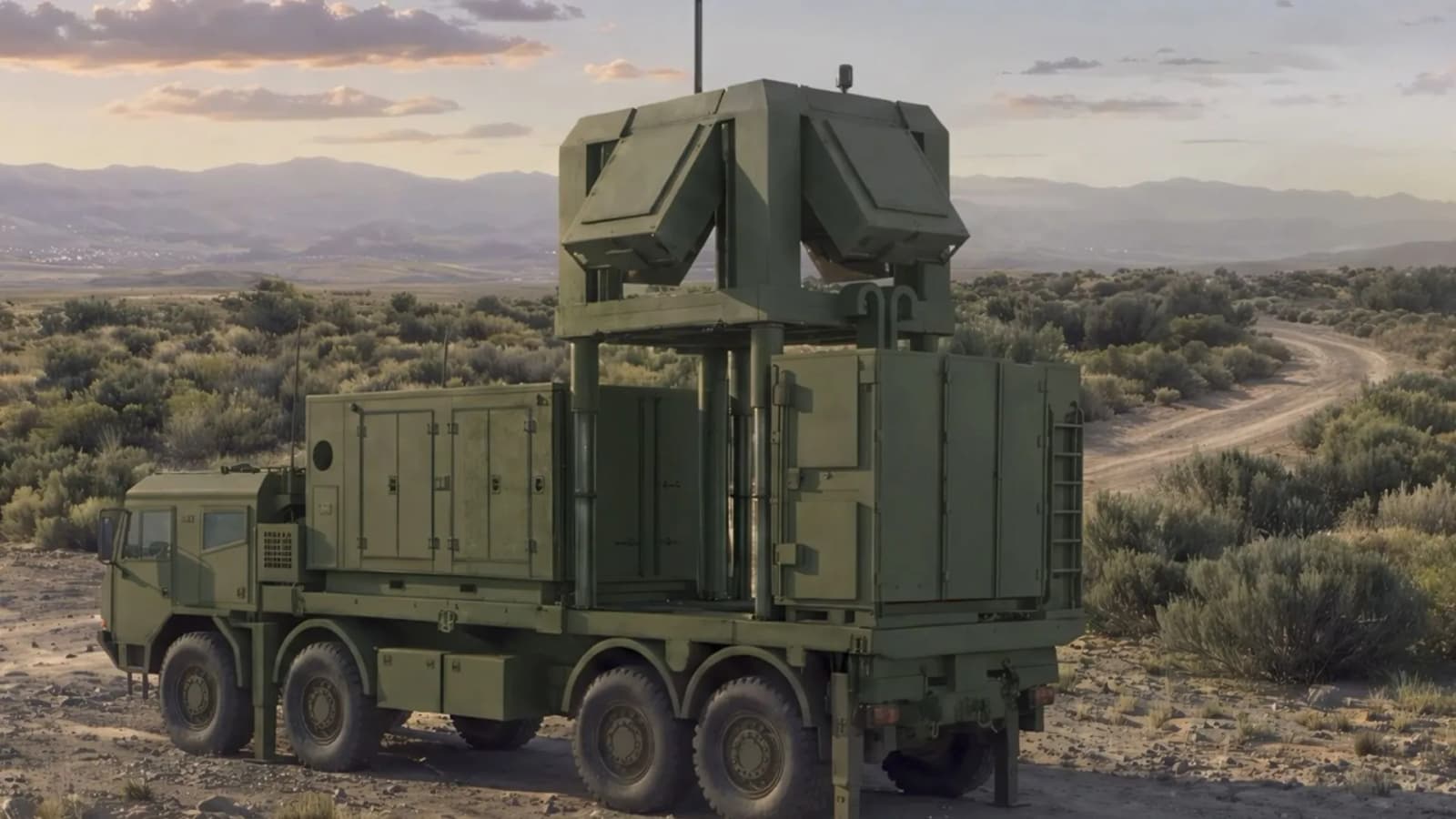
Leonardo DRS has launched its new cxMHR radar and begun initial production of the system, which is designed to help military forces detect and track drones, cruise missiles, rockets, and other aerial threats as part of integrated air and missile defense networks.
The company announced the milestone at the Association of the U.S. Army’s (AUSA) 2026 Annual Meeting & Exposition in Washington, D.C., on October 12. The radar is intended to provide continuous 360-degree coverage while combining long-range detection, target tracking, and a transportable configuration in a single system.
Called the C-Band Extended Multi-Mission Hemispheric Radar, or cxMHR, the system uses four active electronically scanned array (AESA) panels integrated with identification friend-or-foe (IFF) equipment, command-and-control components, and supporting hardware.
The entire assembly is housed in an International Organization for Standardization (ISO) container, allowing Leonardo DRS to transport it by air, land, or sea and deploy it on a single vehicle.
Radar designed to track multiple aerial threats
The cxMHR is designed to detect, track, and identify multiple aerial targets simultaneously, including unmanned aircraft systems (UAS), loitering munitions, cruise missiles, rockets, and tactical ballistic missiles.
Leonardo DRS reports detection ranges exceeding 90 kilometers (56 miles) against UAS and loitering munitions, and more than 330 kilometers (205 miles) against transport aircraft. These figures apply to different target categories; the company has not provided equivalent range figures for every threat listed.
The radar uses C-band radio frequencies and a digital AESA architecture. Unlike a conventional mechanically rotating radar antenna, an AESA system electronically directs its radar beams, enabling it to scan and revisit areas of interest without relying on physical antenna rotation.
This approach supports rapid updates to target tracks, an important capability when monitoring multiple aerial threats that may be moving at different speeds and altitudes.
The cxMHR also incorporates AI-enabled tracking and classification, which the company says helps produce what is known as fire-control-quality tracking. In air defense, this refers to sufficiently precise and timely target information to support the systems responsible for engaging a threat. The radar itself is a sensor, not an interceptor.
Built to integrate with existing air defenses
Leonardo DRS says the cxMHR is designed to meet Modular Open Systems Approach (MOSA) standards. This approach uses standardized interfaces and modular components to make it easier to integrate equipment from different manufacturers and upgrade systems over time.
The radar supports interfaces including FAAD, Medusa, SAPIENT, Lattice, ASTERIX, MICAD, and RAFT, among others, according to the company.
Such interoperability matters because modern integrated air and missile defense relies on multiple layers of sensors, command systems, and weapons rather than a single radar or interceptor operating independently. A radar that can share information with existing networks can help commanders build a broader picture of incoming threats and coordinate responses.
Leonardo DRS already markets a family of Multi-Mission Hemispheric Radar systems for missions including counter-drone operations, very-short-range air defense, and hemispheric surveillance. The cxMHR adds a C-band variant specifically positioned for integrated air and missile defense.
“The cxMHR gives our customers a deployable, single-vehicle capability that delivers persistent 360-degree surveillance, long-range detection, and fire-control-quality tracking against today’s most challenging air threats,” said Max Cohen, senior vice president and general manager of Leonardo DRS RADA Technologies.
The company is displaying the radar alongside its wider Multi-Mission Hemispheric Radar family at AUSA Annual 2026, which runs through October 14. The start of initial production marks a manufacturing milestone for the cxMHR, but Leonardo DRS has not disclosed production quantities, customer orders, delivery schedules, or a timeline for operational deployment in its announcement.
Source: https://interestingengineering.com/military/air-defense-radar-detection-range
Related articles

The AI race is back on
Last week, Anthropic and OpenAI looked like they had the AI race to themselves, pulling ahead with increasingly powerful models that left their rivals in the dust.

Save up to 20 percent on gift cards for REI, Barnes & Noble, and more
While we cover a lot of deals on specific products, it’s rare that we find worthwhile savings on gift cards that let you save on essentially anything the store sells.

YouTube sticks new labels on AI-generated songs
YouTube is adding a "Made with AI" label to tracks that were "altered or fully generated" using AI, with a similar approach to its existing process for applying AI labels to videos.

As a TV enthusiast, I was hoping for more from the Apple TV 4K
It's been four long years since the last Apple TV 4K was released, and in that time there have been lots of hopes and dreams for features in whatever comes next.

Now that Character.AI is going bankrupt, what happens to all of its users’ data?
New York Attorney General Letitia James revealed a years-long multi-state investigation against Character.

Bicycle-inspired robot can perform wheelies, jumps, and front flips at high speeds
Researchers have developed a bicycle-inspired robot capable of performing acrobatic maneuvers while maintaining balance at...