
New electric car battery concept promises lighter packs with improved driving range
Jointly anchoring the battery electric-vehicle (BEV) industry, ProLogium, a Taiwan-based energy innovation company, together with...
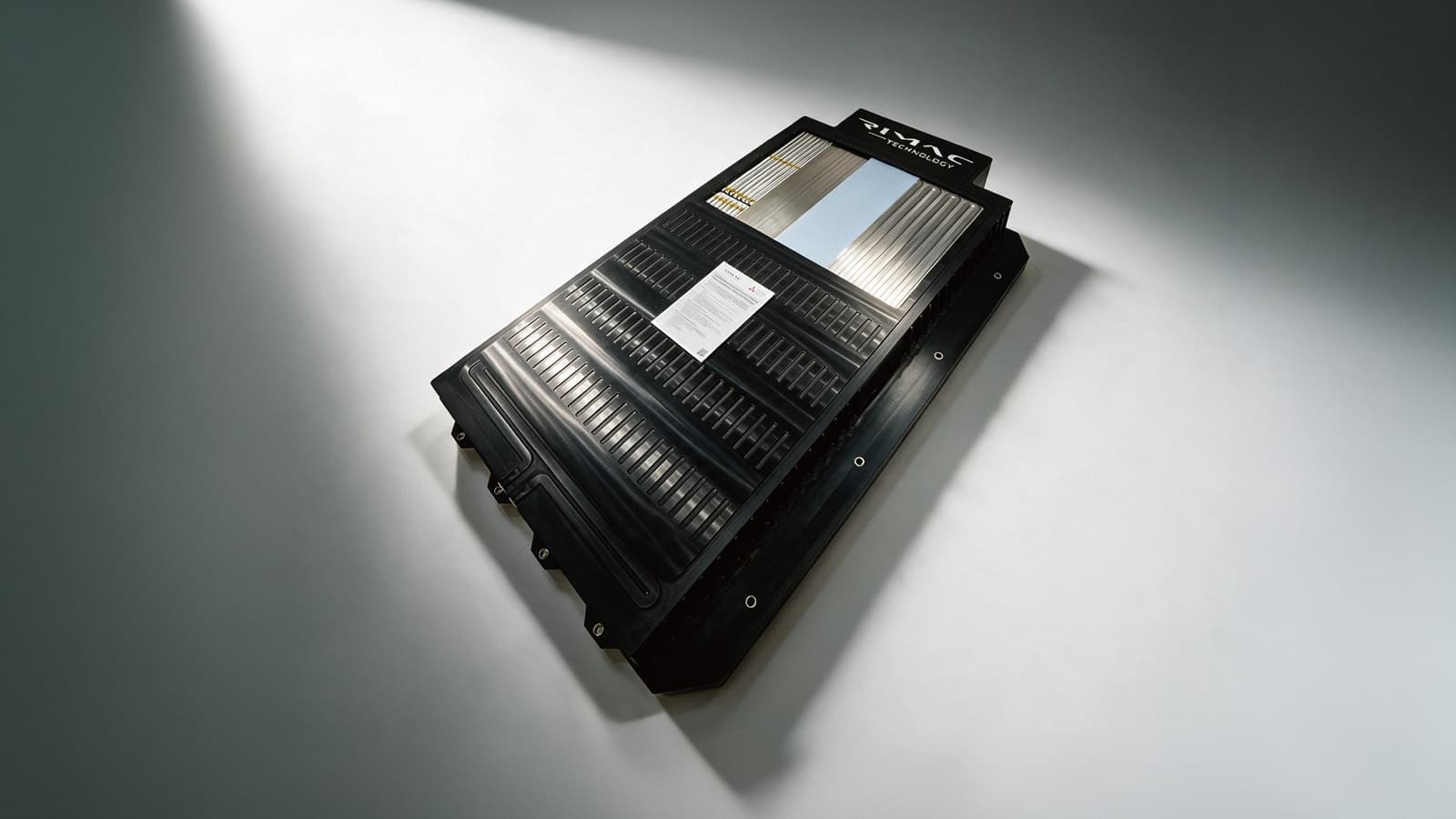
Jointly anchoring the battery electric-vehicle (BEV) industry, ProLogium, a Taiwan-based energy innovation company, together with Croatian Rimac Technology, announced the launch of a battery pack mock-up concept on Monday in Paris.
The announcement comes nearly a year after the two technology giants signed a Memorandum of Understanding (MOU) in September 2025 to develop a next-generation battery platform.
The prototype of the design concept, slated for further testing in-lab, in-vehicle, and on-road, will be showcased at the 2026 Paris Motor Show, the company said in a press statement.
Heat-tolerant pouch batteries
According to the statement, ProLogium is building cell technology that is focused on a cell-to-pack (CTP) architecture for pouch batteries. Much like the big aluminum food bags, pouch batteries are flat packets made of flexible material that can house multiple battery cells instead of food. The CTP architecture for battery packs is designed in a way that omits the need for individual casings, saving space and reducing weight, but it is prone to thermal swelling.
The Taiwanese company is expected to develop a fully operational battery segment by early next year to be presented at the Consumer Electronics Show (CES) 2027 to be held in January in Las Vegas, Nevada. At the same time, the fully functional battery pack is targeted for delivery in the second half of next year.
Taking a multi-step approach to achieve the final battery integration into the vehicle, the company has set multiple milestones, including the development and testing phases.
“Bringing next-generation batteries to the automotive market requires more than cell technology,” said Vincent Yang, Founder and CEO of ProLogium.
Yang said that after building the complete concept mockup, we are currently developing the functional segments. Further elaborating on the next phases, he added, “We are preparing to move into the development and production of a functional battery, progressing toward a full-scale battery pack and subsequent vehicle integration validation.”
Well-performing compact light batteries
Through this collaboration, the companies are attempting to make lighter and compact battery systems by combining multiple high-energy density lithium battery cells. However, it cautioned that such systems cannot automatically translate into a lighter or more compact vehicle battery system.
Exhaustive testing of several factors, including the pack design, cooling mechanism, mechanical integration, and safety, determines which advantages actually benefit the vehicle without compromising on output and performance.
Rimac technology, tasked with the technology integration, is exploring multiple approaches in tandem. These cover testing the EV batteries for heat management, mechanical cell integration, and system design.
“The work starts from vehicle-level requirements and aims to improve every aspect of the battery design by reducing complexity, combining functions, and reducing weight. It does so with cost in mind, while still delivering state-of-the-art charging times and power output,” said Daniel Kišić, Principal Product Architect of Rimac Technology.
Ultimately, the goal is to build a battery that is lighter, less complex, and more compact, with higher charging capacity and performance, not just in labs but in automobiles on the road.
“Once validated at vehicle level, the solution is expected to deliver significant weight savings, improving driving efficiency and extending range,” he added.
The company has set a target to embark on battery testing for vehicles on the road in the second half of 2028.
Once successful, they are open to exploring hybrid solutions combining a smaller and lighter battery pack with the same range or batteries with the same weight but more energy and greater ranges.
“OEMs could …choose between more energy on board at the same weight, a smaller and lighter battery for the same range, or any combination in between,” said Kišić.
Source: https://interestingengineering.com/energy/prologium-rimac-next-gen-ev-battery
Related articles

The Tesla Roadster could have stayed vaporware
For a car that's supposed to be one of the fastest ever made, the new Tesla Roadster certainly took its sweet-ass time getting here.

Rivian spinoff Mind Robotics hires Doug Field as president
Rivian spinoff Mind Robotics announced the appointment of Doug Field as president in a major coup for the EV company's secretive robotics startup.

The feds are looking into reports of Tesla’s robotaxis speeding through school zones
The National Highway Traffic Safety Administration says it's evaluating allegations that Tesla's 1,000 or so robotaxis using its automated driving system are exceeding "posted speed limits in active…
New 800V battery for electric trucks delivers 358 kW, charges to 80% in 42 minutes
A company in the US has recently introduced a rugged 800-volt (V) battery with a...

Inside the mini factory where GM builds its EV future
If you're driving through GM's sprawling campus in Warren, Michigan, you'd likely ignore the pair of adjacent, anonymous white buildings tucked away in the upper reaches of the 710-acre space.
Inside BYD’s new luxury car powered by solid-state EV batteries
For luxury electric cars, longer range often comes with a familiar compromise: a bigger battery...