
Cold-proof alloys: Scientists find new class of metal that resist cracking at minus 423°F
A pair of experimental alloys has stayed tough at 20 kelvin, or minus 423 degrees...
A pair of experimental alloys has stayed tough at 20 kelvin, or minus 423 degrees Fahrenheit (minus 253 degrees Celsius), where similar metals typically turn brittle and snap.
The international team, led by the University of California, Berkeley, Lawrence Berkeley National Laboratory and the University of Oxford, says the niobium-titanium-based alloys avoid failure through an unusual microscopic mechanism that could guide the design of materials for cryogenic environments.
Why cold breaks some metals
Most metals get stronger as they cool, but body-centered cubic metals, a group that includes iron, tungsten and chromium, have an atomic structure that makes them increasingly brittle as temperatures fall. At extremely low temperatures, a crack that would normally be absorbed as the metal bends can instead cause it to fracture.
Bending in these metals relies heavily on dislocations, line-like defects in the crystal structure that slide through the material. In deep cold they become harder to move, which limits how well the metal can deform around a crack and makes fracture more likely.
A different route to bending
In the two alloys, a different process takes over. The researchers saw nanoscale twinning, in which small regions of the crystal rearrange into mirror-image orientations, along with a local change in crystal structure. When those newly formed regions reach the boundaries between neighboring crystals, they create concentrated points of stress that trigger new defects. Those defects let the metal keep deforming instead of cracking.
The team likens it to a road network rerouting around frozen, blocked roads: as the usual paths for deformation become hard to use, twins open new sites where the needed defects can form.
The alloys showed no measurable shift to brittle behavior at the lowest temperature tested.
Testing in the deep freeze
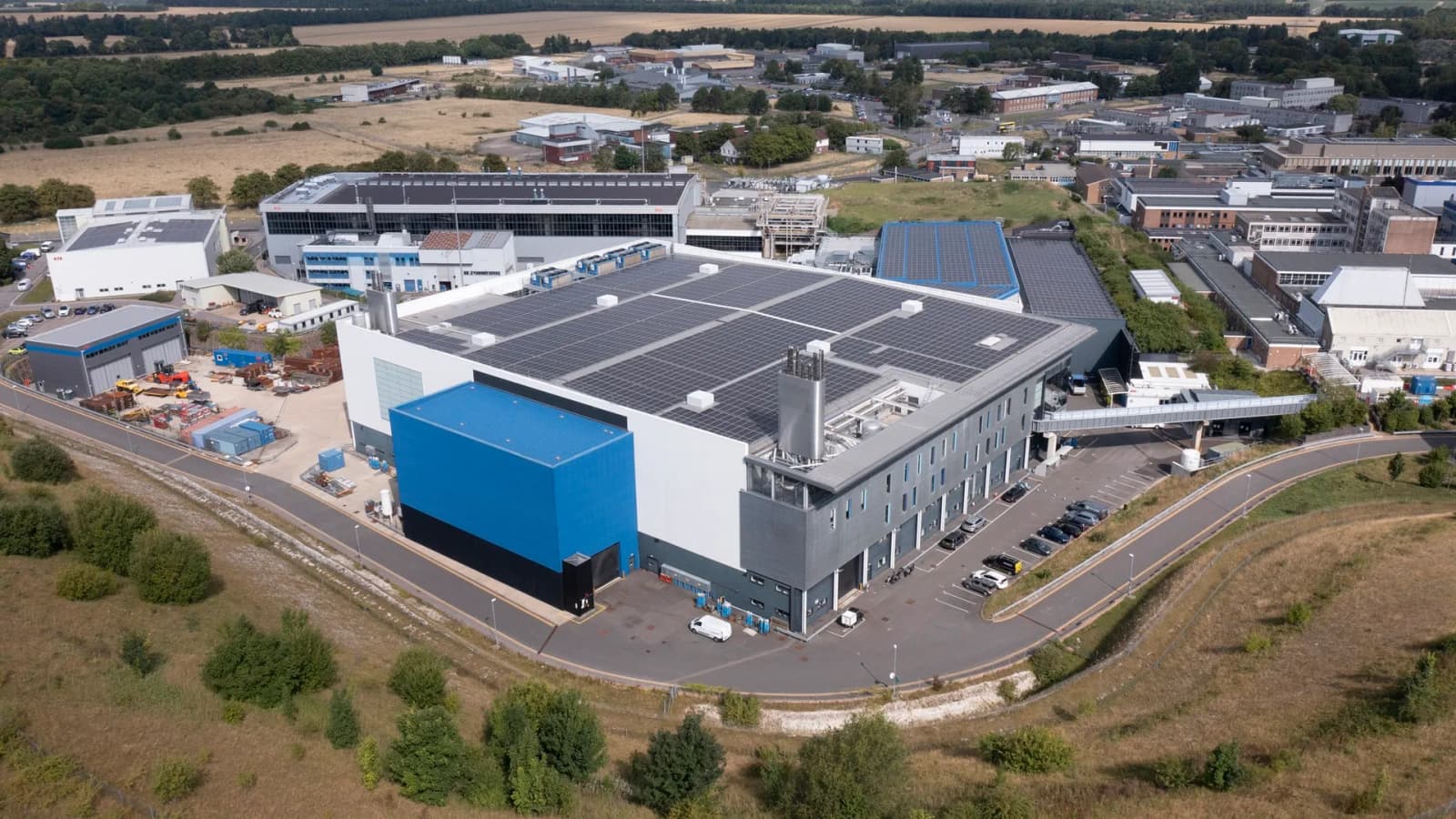
The researchers used the Engin-X instrument at the ISIS Neutron and Muon Source in Oxfordshire, cooling samples to about minus 253 degrees Celsius with gaseous helium. A testing machine pulled each sample from both ends while a neutron beam probed it, measuring how much force the metal could withstand and how far it stretched before failing.
Electron microscopes then revealed structural changes around cracks and inside the material, while atom-probe analysis mapped the distribution of individual elements. Computer modeling helped explain how the mechanisms worked together to prevent brittle failure.
What it could mean
Dong Liu, the corresponding author from Oxford’s Department of Engineering Science, said the ductile-to-brittle transition has long been viewed as a basic limitation of body-centered cubic metals. The alloys, he said, remain “remarkably damage tolerant” at 20 kelvin, pointing to a new route for designing structural metals that work in extreme cryogenic environments, including components exposed to both extreme heat and cold in one application.
Lead author David Cook, who was at UC Berkeley during the study and is now at the University of Cambridge, said researchers have traditionally focused on how easily existing dislocations move. The ability to create new dislocations at interfaces may matter just as much, he said, which could let designers build microstructures that keep metals ductile at extreme temperatures.
The researchers say the findings could inform materials for the energy, transport and aerospace sectors. Other institutions involved include the University of Bristol, the ISIS Neutron and Muon Source, the University of California, Irvine, Pacific Northwest National Laboratory, Texas A&M University and Nanyang Technological University in Singapore.
The research was first published in the journal Nature.
Related articles

Microsoft has a new machine learning tool to improve weather forecasts
Old-school physics-based weather forecasting and even new AI models typically become less reliable beyond two weeks, a problem Microsoft claims to have solved using machine learning.
US student builds smart X-ray tool that cuts 44-hour particle analysis to 10 hours
A student in the US has come up with a new automated X-ray tool that...

Ukraine claims Starlink is suddenly disrupting service for its military
Ukrainian officials claim the Elon Musk-owned Starlink put new limits on its service in the area without warning, disrupting the country's drone operations and missions, according to reports from…
X-ray imaging detects pores as small as 80 nanometers in nuclear fuel cladding
Researchers at Switzerland’s Paul Scherrer Institute (PSI) used a new X-ray imaging technique to examine...
How orbiting mini organs could help humans live longer on Earth and in space
Spaceflight does strange, rapid things to the human body. Six months in orbit can age...
Nearly 12,000 new viruses found in Pacific Ocean region targeted for deep-sea mining
A new study has uncovered vast, previously unknown viral diversity in the Clarion-Clipperton Zone (CCFZ),...