
Nuclear diamond batteries could power 150 million sensors, from deep mines to bridges
A US technology company has just unveiled a new nuclear diamond battery that could power...
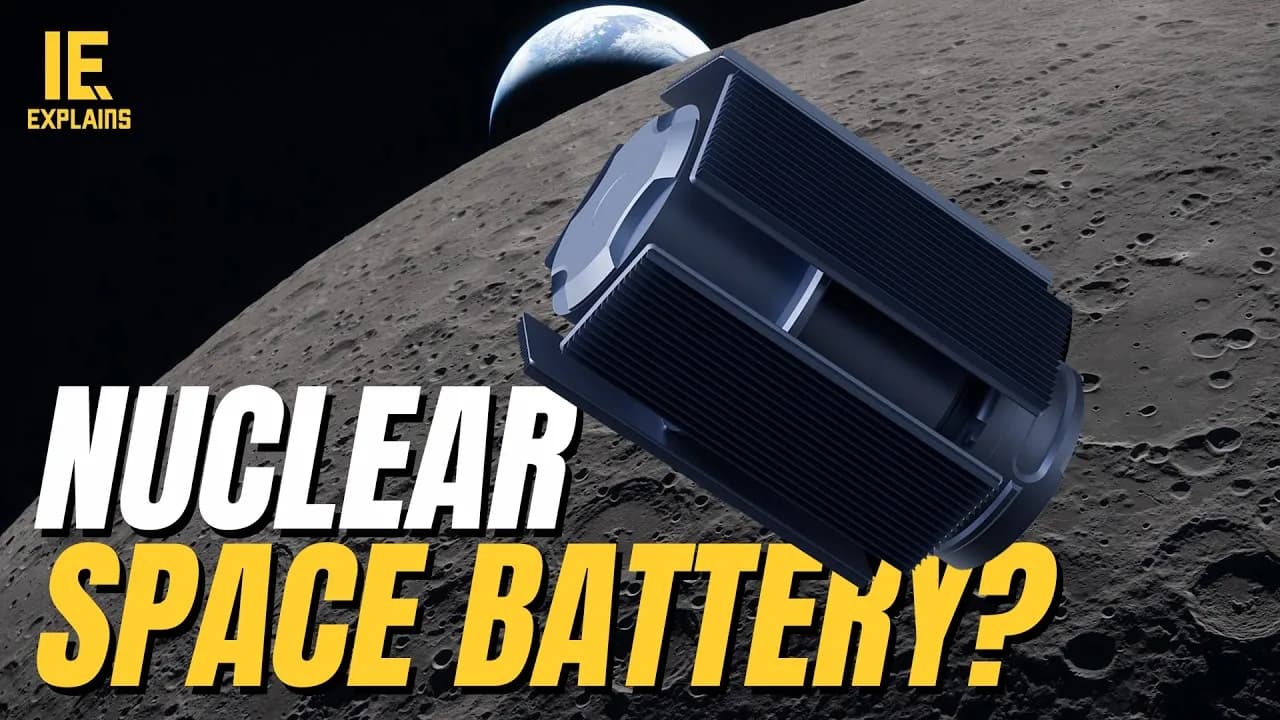
A US technology company has just unveiled a new nuclear diamond battery that could power remote sensors for years and support over 150 million connected devices across the world.
Nevada-based Nuclear Diamond Batteries, Inc. (NDBI) and its subsidiary AtomiQ published a white paper that pairs its nuclear battery technology with low-power wireless sensors. The proposed perpetual sensors
The proposed perpetual sensors are meant for places where changing regular batteries is difficult, expensive, or dangerous. They could be used in pipelines, bridges, mines, farms, defense sites, and remote monitoring stations.
The concept could have a huge potential market. More than 150 million devices worldwide already use LoRaWAN, which is a wireless network that allows devices to communicate over long distances while using very little power. However, NDBI has yet to test the technology in the lab, which is planned as the next step.
From radioactive decay to power
In contrast to regular batteries, which store a limited amount of chemical energy, betavoltaic ones generate electricity from radioactive decay. NDBI’s new concept would use this process to continuously produce a small amount of energy. That power would then charge an intermediate storage device, such as a capacitor or supercapacitor.
Greg Rubin, AtomiQ CEO elaborated that once enough energy has accumulated, the stored electricity could provide the short burst of power needed for a sensor to take a measurement, process the information, and transmit the data wirelessly.
“The concept is straightforward: continuously generate a small amount of energy, accumulate it, and periodically use that stored energy to sense, process and transmit data,” Rubin explained. “LoRaWAN is particularly interesting because it was designed around low-power, long-range communications and already has a very large global ecosystem.”
The technology could work well for sensors that stay in low-power mode until they need to collect and send data. It is also intended for sensors that are difficult or expensive to maintain.
NDBI identified 19 potential application sectors, including utilities, agriculture, mining, structural monitoring, oil and gas infrastructure, environmental science, defense, and satellite-connected sensors.
Testing the concept
According to NDBI, more than 150 million devices across the world were already connected through LoRaWAN as of September 2026. These include smart meters, agricultural equipment, industrial sensors, safety systems, as well as asset-tracking devices.
The firm already holds a US patent for a technology that relies on diamond-based materials to turn radioactive decay into electricity. It also has intellectual property covering electrodes and carbon-based materials.
The next step is to find out whether the perpetual sensor concept actually works in practice. Lab tests will measure how much power it can continuously produce, how efficiently that energy can be stored, and how much power a sensor needs to collect and send data.
If those tests prove successful, NDBI plans to build a working prototype before moving to field testing. Later versions could be made for tougher environments and even satellite-connected applications
“We are not trying to replace conventional batteries everywhere,” Rubin stated in a press release. “We are focused on applications where replacing a battery can become more expensive, difficult or mission-critical than the sensor itself, buried infrastructure, pipelines, bridges, mines, remote environmental stations, defense installations and other hard-to-access assets.”
Related articles

Mapped: Where U.S. Jobs Are Most Exposed to AI
See which U.S. states have the highest share of AI-exposed jobs, led by Washington, Virginia, and Washington, D.C.

Can VR glasses save VR?
I'm pretty sure I won't be buying the $1,299 Meta VR Glasses. That's too rich for my blood in today's economy, and my feelings about Meta are… conflicted.

Sony brings AI graphics upscaling to the regular PS5
Sony is launching a new AI upscaling technology specifically for the regular PS5.

Blackbird awakens? NASA quietly eyes resurrecting historic SR-71A aircraft after 27 years
NASA may be quietly working to return one of its historic SR-71 Blackbird aircraft to...

Chicago Metra’s new battery-electric train charges through regenerative braking
Chicago’s commuter rail system is preparing for a major shift away from diesel power. Metra...