S-400 vs S-500: What is the difference between Russia’s air-defense systems?
Russia’s S-400 and S-500 are both mobile, ground-based air-defense systems designed to intercept threats at...
This story was prepared automatically by software.
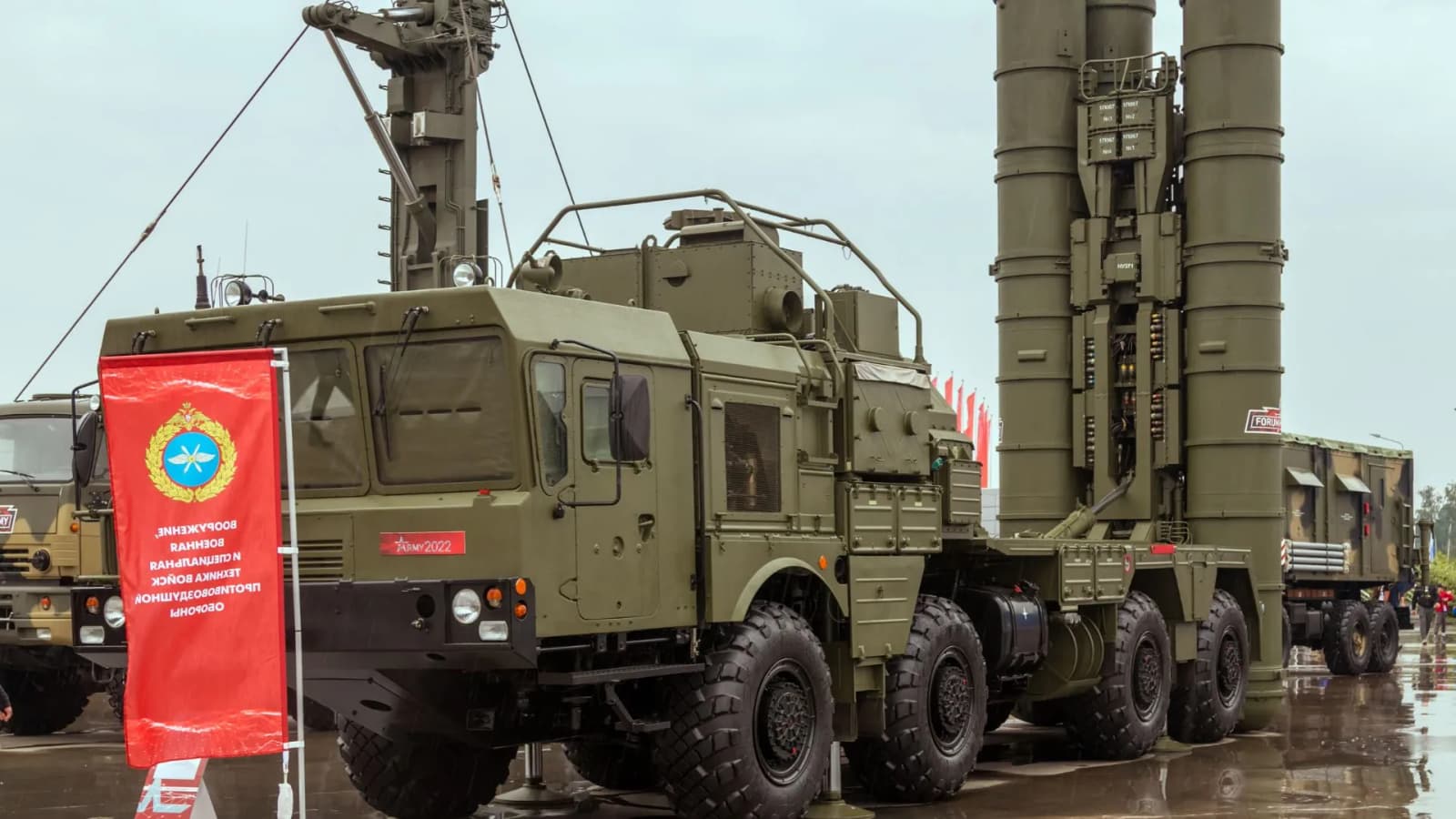
Russia’s S-400 and S-500 are both mobile, ground-based air-defense systems designed to intercept threats at long distances. But they are intended to do different jobs within Russia’s broader air- and missile-defense network. The S-400 is a mature system built primarily to engage aircraft, cruise missiles, and some ballistic-missile threats. The newer S-500 is designed to extend those capabilities, with a stronger emphasis on intercepting advanced ballistic missiles and potentially targets operating near the edge of space.
The biggest distinction is not simply range. It is the type of threat each system is designed to counter, the interceptors and radars it uses, and how much of its advertised capability can be independently verified.
S-400: Russia’s established long-range air defense
The S-400 Triumf, known by NATO as the SA-21 Growler, entered service in 2007. It is designed to engage a range of aerial threats, including aircraft, drones, and cruise missiles, while also providing a limited capability against ballistic missiles. The system uses different interceptor missiles for different targets, rather than relying on one missile for every engagement.
The S-400’s advertised maximum engagement range depends on the missile used. The 40N6 family is associated with ranges of up to 400 kilometers (about 249 miles), while other interceptors have shorter ranges and different engagement envelopes. That figure should not be confused with the distance at which the system can reliably detect or engage every target: radar coverage, target altitude, and the target’s characteristics all matter.
The S-400’s main role is therefore broad-area air defense. It can threaten aircraft and other aerial targets across a large area, while offering a more limited layer of protection against ballistic missiles. It is not, however, a dedicated substitute for every specialized strategic missile-defense system.
S-500: A higher layer for missile defense
The S-500 Prometheus is intended to add a more specialized layer to Russia’s defenses. Its planned capabilities include intercepting ballistic missiles and, according to Russian claims, certain hypersonic weapons and targets in low Earth orbit. The system is associated with the 77N6 interceptor family for ballistic-missile defense and the 40N6M for aircraft and cruise-missile targets. The latter reflects some overlap with the S-400, rather than a completely separate set of capabilities.
Open-source estimates put the S-500’s maximum interceptor range at roughly 500-600 kilometers (310-373 miles), but these figures are not equivalent to a verified engagement range against every type of target. Its radar suite also combines general air surveillance with specialized tracking and engagement of ballistic threats.
Claims that the S-500 can intercept hypersonic weapons or satellites deserve particular caution. Publicly available information does not independently establish the full performance of these capabilities, and details about the system’s most specialized interceptors remain limited.
How do the two systems differ in practice?
The S-400 is the more established and widely deployed system, designed to serve a major part of Russia’s long-range air-defense network. The S-500 is a more specialized addition, intended to strengthen defenses against demanding ballistic-missile threats and potentially targets at near-space altitudes.
Their roles overlap, but the S-500 is not simply an S-400 with a longer-range missile. It uses a different combination of radars and interceptors to address threats that require more specialized tracking and interception. In principle, the two systems can complement each other: the S-400 handles a broad range of aerial threats, while the S-500 adds a higher layer of missile defense.
Russia announced in December 2025 that its first S-500-equipped regiment had entered combat duty. However, officials disclosed few operational details, and public information about the system’s numbers, deployment configuration, and demonstrated performance remains limited.
Related articles