Scientists turn desert sand into ‘living sand’ that drains water six times slower
Bacteria that spin fine cellulose fibers can bind loose desert sand into a firmer material...
This story was prepared automatically by software.
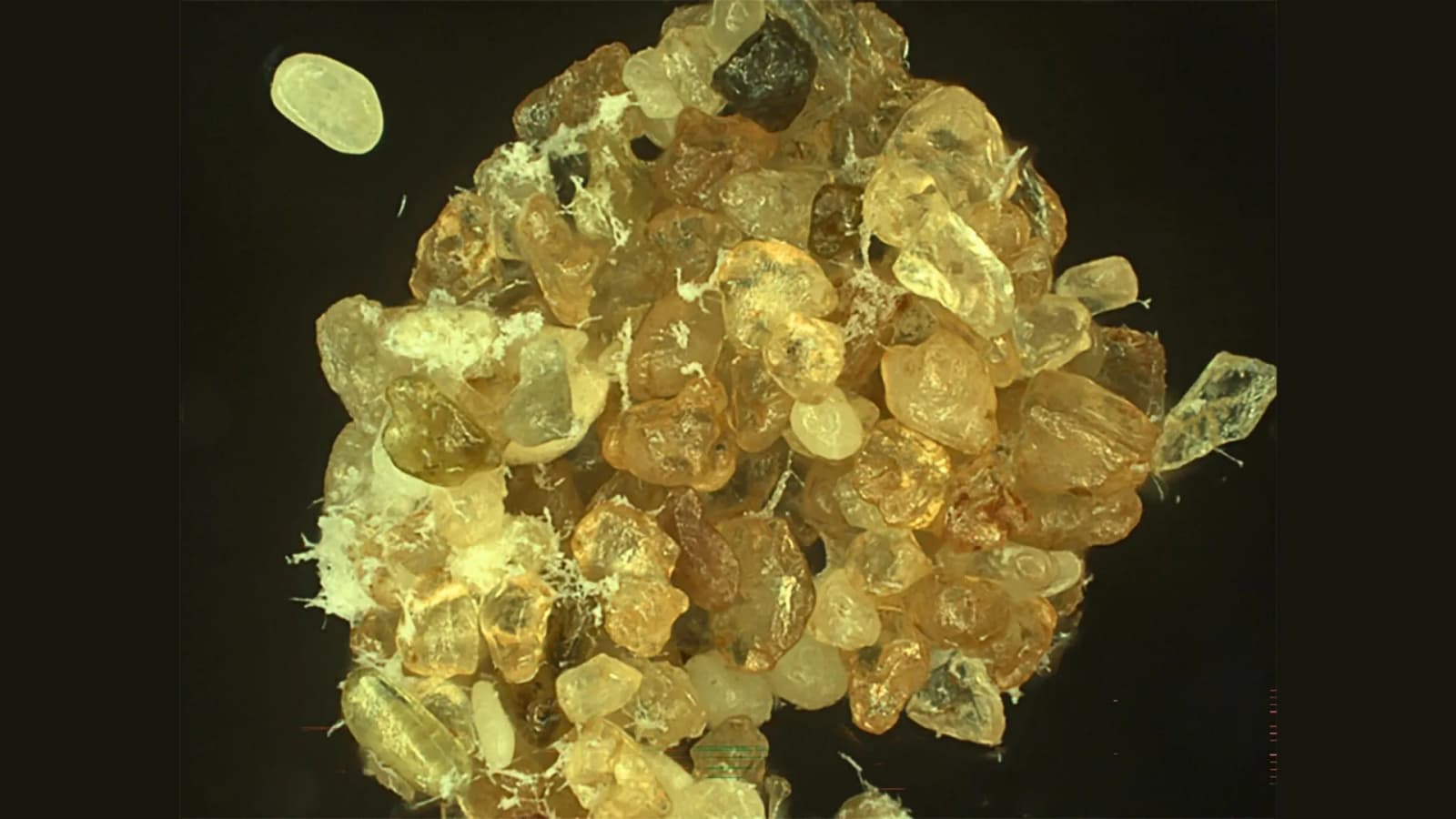
Bacteria that spin fine cellulose fibers can bind loose desert sand into a firmer material that drains water far more slowly, though the work so far is confined to the lab.
Scientists at Khalifa University in the United Arab Emirates, Switzerland’s Empa and ETH Zurich tested whether microbial fibers could do for sand what roots, fungal threads and microbial secretions do in soil: hold grains together and change how water moves through them.
Two ways to build ‘living sand’
In the first approach, the team grew microbes directly in the sand, creating what it calls “living sand.” This cut permeability about six-fold in drainage tests. In the second, it grew thin sheets of bacterial cellulose separately and sandwiched them between sand layers. That cut permeability to roughly one twenty-eighth of untreated sand’s value.
The researchers used the cellulose-producing bacterium Komagataeibacter medellinensis and two strains of the fungus Schizophyllum commune. The sand came from dunes near Al Ain in the UAE, plus standardized laboratory sand for some strength tests. They sterilized it before adding microbes and nutrient solutions. Microscope images showed cellulose clinging to grain surfaces and linking neighboring grains.
Gustav Nyström, who heads Empa’s Cellulose and Wood Materials laboratory, called the result “a kind of natural composite material.”
Bacteria beat fungi
Bacteria produced the stronger samples. Within seven days, a sand column about 6 centimeters (2.4 inches) tall held together well enough to be removed from its mold and cut into pieces, which stayed intact in water. Fungal samples also bound grains but were more fragile, and some broke during removal from the molds or after drying and cutting.
The cellulose sheets worked like reinforcing fabric, spreading applied force. In a demonstration with a 10-kilogram (22-pound) load, an untreated sand cube collapsed far more than one with cellulose sheets, and sheets grown longer generally gave tougher samples. The sheets also delivered the biggest cut in water permeability.
What it could mean
The team suggests microbial fibers could offer biodegradable alternatives to some synthetic materials used to stabilize soil, and stronger grain connections might help limit wind erosion. The experiments did not measure dust emissions. Nyström said the approach lets researchers bring organic matter and water into sand and stabilize it somewhat.
For sand with fibers grown among the grains, water-holding capacity rose from about 20.2% to 25.5%, an increase the scientists call slight. Three of the researchers disclosed a pending patent application.
Limits
The work remains a laboratory study. The microbes received water and nutrients under controlled conditions, and their growth needed oxygen. Growth was uneven along the bacterial sand column, with the top section much weaker than the bottom. The experiments did not test crop growth or establish how long the material would survive desert conditions.
The research was published in Carbohydrate Polymers.
Source: https://interestingengineering.com/science/living-sand-bacterial-cellulose-desert-water-permeability
Related articles