Unitree unveils new system to choreograph groups of humanoid robots from one place
Unitree Robotics has introduced UniUni, a control system the simplifies coordinating multiple robots during performances....
This story was prepared automatically by software.
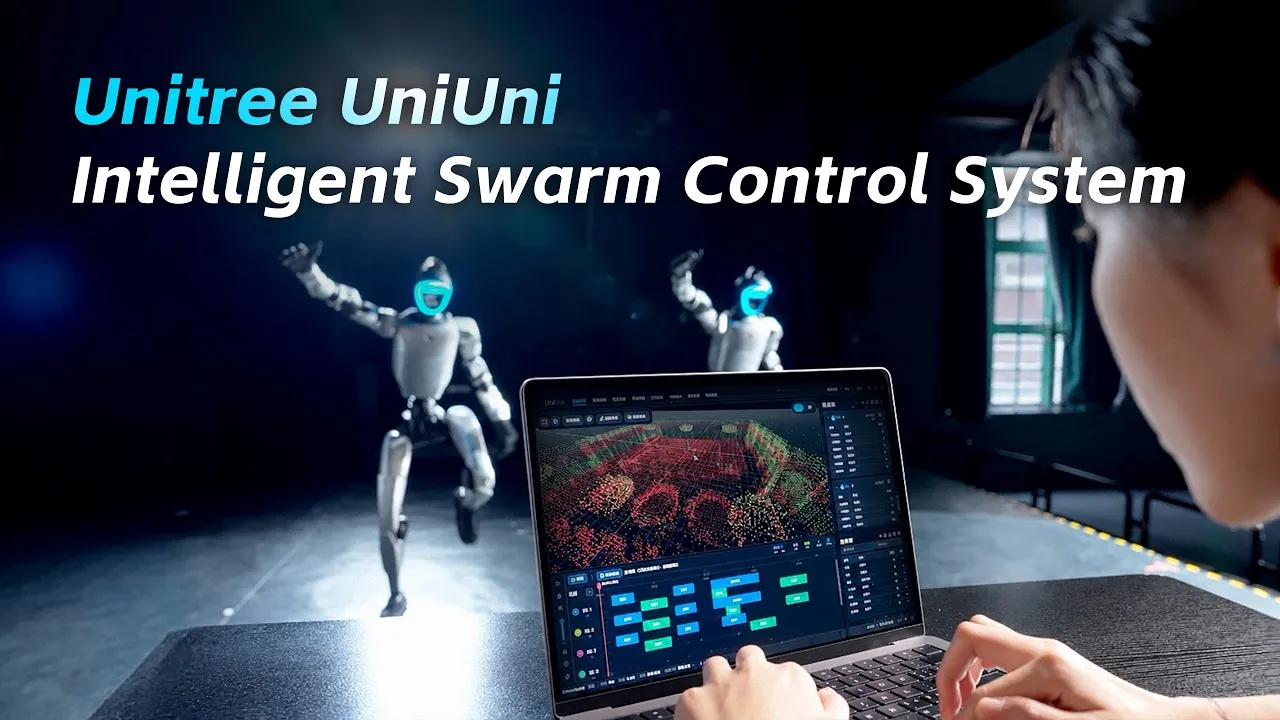
Unitree Robotics has introduced UniUni, a control system the simplifies coordinating multiple robots during performances. The system allows operators to manage robot teams and make choreography changes using natural-language instructions.
It also provides tools for monitoring robot status and managing coordinated movements through a centralized interface. The launch highlights the company’s efforts to make multi-robot control more accessible, combining choreography management with real-time monitoring and safety features for synchronized robotic performances.
Simplifies robot choreography
UniUni is an intelligent swarm control system that coordinates robot performances through stage mapping, motion programming, natural-language instructions, and real-time hardware monitoring.
The system combines choreography tools and device management into a single interface, allowing operators to arrange robot movements, modify formations, and monitor individual machines during a performance. Unitree’s demonstration also shows an AI choreography feature that lets users request changes through text prompts, potentially simplifying the process of adjusting complex routines.
In its announcement, the company highlights rapid choreography editing, live device monitoring, and emergency-stop controls as key features of the system.
UniUni includes a stage-mapping interface that displays a LiDAR-generated point-cloud representation of the performance area. Unitree advertises centimeter-level scene construction, providing a spatial representation that operators can use to plan robot positions and movements.
The interface also features a choreography editor with a separate timeline track for each robot. An integrated action library provides predefined dance movements that operators can arrange into routines, giving them a visual way to manage multiple performers and coordinate their actions.
This timeline-based approach allows individual robot movements to be organized within a shared performance sequence. By combining spatial mapping with motion editing, UniUni provides tools for plan formation and adjusting choreography without treating each robot as a separate programming task.
Natural-language robot control
One of the system’s prominent features is its natural-language interface for modifying performances. In the promotional video, an operator enters requests to change movements, add paths, and adjust the arrangement of the robots.
Unitree presents this capability as AI choreography, offering an alternative to manually editing every movement through the timeline interface. A robot-position grid appears alongside the prompt window, connecting the requested changes with the spatial arrangement of the performers.
Natural-language control could make choreography tools easier to operate by allowing users to describe desired changes rather than construct every adjustment manually. However, Unitree has not identified the underlying AI model or explained how text instructions are translated into executable robot motions.
UniUni combines choreography management with a monitoring interface that displays individual robots’ battery levels and temperatures. The screen also provides emergency-stop buttons, giving operators a direct way to halt machines when intervention is needed.
In the demonstration, a low-battery warning prompts the team to stop and replace a performer. The sequence illustrates how equipment monitoring can be incorporated into performance management rather than handled through a separate interface. These features are relevant to coordinated robot deployments, where maintaining synchronization depends not only on programmed movements but also on the operational status of each machine.
According to experts, Unitree’s UniUni focuses on centralized control of choreographed robot performances, with no evidence yet of decentralized coordination or broader industrial applications. The company has not disclosed pricing, availability, supported robot models, or maximum fleet size.
For now, its demonstration highlights LiDAR-based mapping, timeline-based motion editing, natural-language choreography, and real-time monitoring, but provides no independent performance data on setup time, reliability, or coordination accuracy.
Source: https://interestingengineering.com/ai-robotics/unitrees-model-lets-operators-choreograph-robot-teams
Related articles