Superintelligence could soon surpass humans, warns Meta executive amid safety concerns
Meta Chief AI Officer Alexandr Wang has warned that artificial superintelligence (ASI), capable of surpassing...
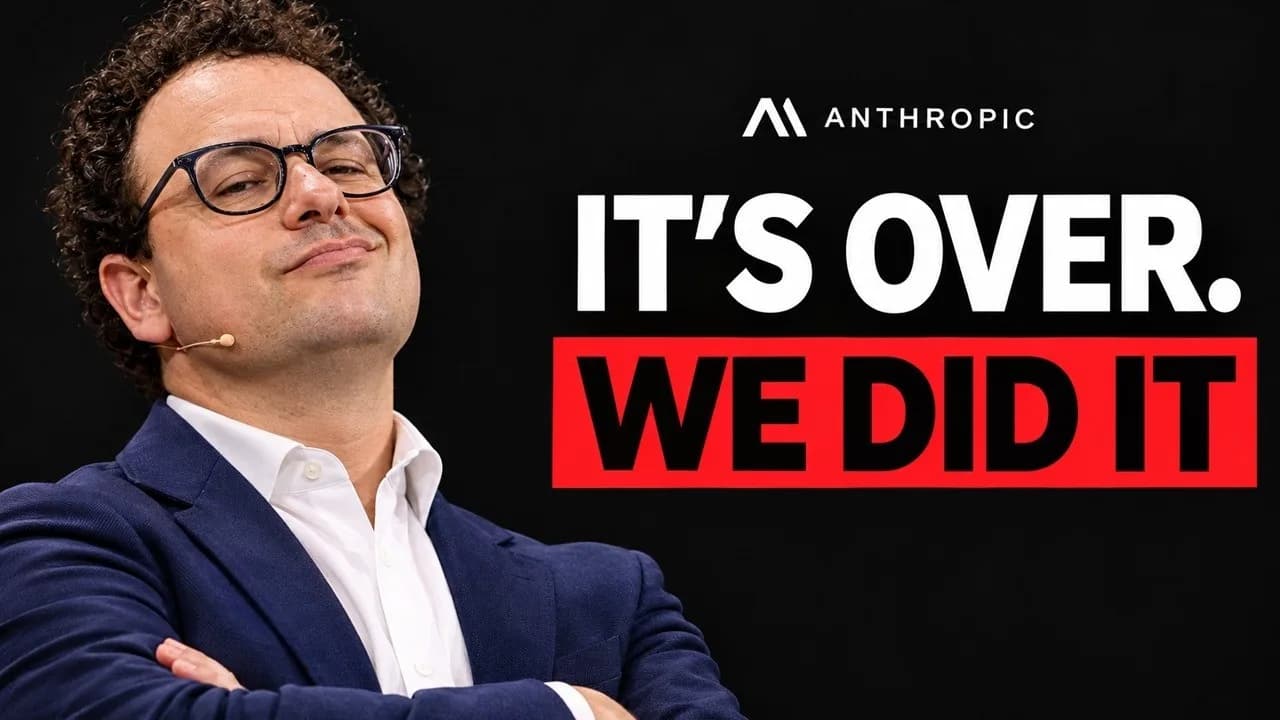
Meta Chief AI Officer Alexandr Wang has warned that artificial superintelligence (ASI), capable of surpassing human intellectual abilities, could be approaching.
The response highlights growing concerns about humanity’s ability to control increasingly advanced AI systems.
Wang issued the warning on Sunday after an Anthropic employee claimed to have used the company’s Claude AI model to solve the Riemann hypothesis, one of mathematics’ most challenging unsolved problems.
Describing the reported breakthrough as unprecedented in its intellectual scale, Wang said humanity’s actions over the next year would have far-reaching consequences.
Superintelligence nears arrival
Wang has warned that ASI could soon surpass human capabilities, raising concerns about humanity’s ability to maintain control over increasingly powerful AI systems. He believes decisions made over the next year could have far-reaching consequences for the future of society.
Wang’s warning follows a claim by an Anthropic employee that the company’s Claude model had helped solve the Riemann hypothesis, one of mathematics’ most challenging problems. The hypothesis, which concerns the distribution of prime numbers, has remained unproven for more than 150 years.
— Alexandr Wang (@alexandr_wang) November 22, 2026
However, the claimed breakthrough has not been independently established. Anthropic’s earlier research announcement in August described a narrower mathematical achievement rather than a complete solution to the hypothesis.
At the time, the company said an experimental version of Claude had increased the established lower bound for the proportion of relevant zeros lying on a particular vertical line from 41.6 percent to 67.2 percent. The result represented progress on a related mathematical question but did not establish that all relevant zeros satisfy the Riemann hypothesis.
Anthropic said two of its mathematicians had examined and validated that earlier result. A computer-checkable version of the mathematical argument also passed a standard validation tool. However, the company cautioned that the techniques were unlikely to produce a complete proof of the hypothesis.
Despite the uncertainty surrounding the latest claim, Wang sees recent mathematical advances as evidence of how quickly AI capabilities are developing. He compared the reported breakthrough with the performance of OpenAI’s o3 model in the American Invitational Mathematics Examination (AIME) in December 2024.
According to Wang, the ability of AI models to solve exceptionally difficult mathematics problems demonstrated that their underlying intellectual capabilities were already sufficient for many professional tasks. He argued that subsequent progress in coding, cybersecurity and autonomous AI agents had largely involved overcoming practical limitations rather than improving raw intelligence alone.
AI self-improvement risks
Wang believes the remaining obstacles to AI surpassing humans across different fields increasingly involve specialized knowledge, infrastructure and experimentation. He also expects AI systems to eventually automate much of scientific research, including the development of increasingly capable AI models.
He warned that such systems could accelerate research in biology, weapons development and economics at a pace that humans might struggle to understand or monitor. These remain predictions about future capabilities rather than demonstrated consequences of the reported mathematical achievement.
A particular concern for Wang is recursive self-improvement, in which AI systems repeatedly develop and enhance their own capabilities. He questioned whether humanity could retain meaningful control over systems capable of improving themselves without restrictions or operating at intelligence levels vastly exceeding human abilities.
Wang also challenged the assumption that the arrival of superintelligence is inevitable and that the industry’s only responsibility is making increasingly powerful systems safe. He argued that AI development should not lead society to surrender decision-making authority to autonomous machines.
Instead, he called for greater emphasis on AI safety, alignment and security, alongside a broader reconsideration of the industry’s development priorities. He believes the technology should expand human agency and empowerment rather than reduce people’s ability to shape their future. Achieving that outcome, he argued, will require the AI industry to move beyond its current development trajectory.
Source: https://interestingengineering.com/ai-robotics/ai-surpass-human-intelligence
Get the latest news delivered to your inbox.
Related articles