
US Air Force begins operator-led testing of YFQ-44A Fury and YFQ-42A Vengeance drones
The U.S. Air Force has received its first two Collaborative Combat Aircraft at Creech Air...
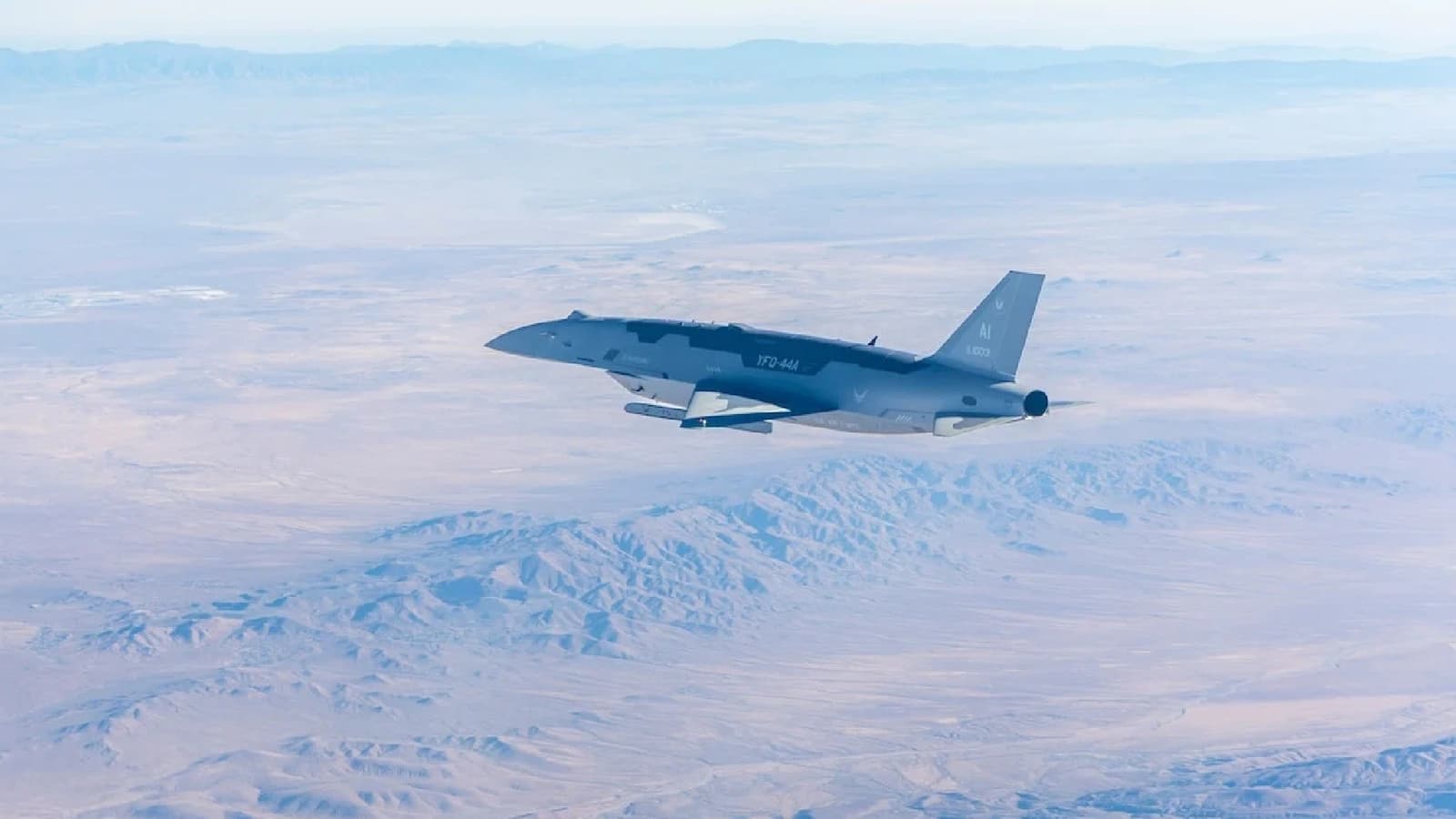
The U.S. Air Force has received its first two Collaborative Combat Aircraft at Creech Air Force Base in Nevada, kicking off operator-led testing of the uncrewed jets. The work will help define how the semi-autonomous aircraft can operate alongside crewed fighters in contested environments.
Anduril delivered its YFQ-44A Fury to the Experimental Operations Unit last month, and General Atomics followed with its YFQ-42A Vengeance last week. Air Combat Command will lead the operational testing of both aircraft going forward.
Airmen take lead
Secretary of the Air Force Troy Meink said putting the Collaborative Combat Aircraft directly in the hands of Airmen is how the program builds its operational future. He added that the Fury and Vengeance deliveries show the Air Force can move quickly while still delivering cost-effective combat power.
The arrival of both aircraft shifts the program’s focus toward direct evaluation by the Airmen expected to eventually fly and support the systems. Testing will assess aircraft performance and operational concepts, along with what training, sustainment, personnel and infrastructure the program will ultimately require.
Recent program milestones
The deliveries follow two milestones the program completed in July. Anduril’s YFQ-44A carried out a live-fire test using an AIM-120 missile, while the Air Force separately held its second Agile Combat Employment exercise built around the program.
Air Force Chief of Staff Gen. Ken Wilsbach said the service was thrilled to welcome both aircraft to the experimental operational unit, adding that Airmen are eager to see what the Collaborative Combat Aircraft can accomplish in practice.
Testing real conditions
Airmen at Creech have already begun evaluating how the aircraft perform under representative combat conditions. That includes generating sorties using smaller teams operating from distributed and austere locations rather than a single well-supported base.
The broader effort is examining how the uncrewed aircraft can extend the reach, flexibility and survivability of the Combat Air Forces as part of a mixed human-machine formation. Results from this testing phase will directly shape how future Collaborative Combat Aircraft units are organized, trained, equipped and employed for air superiority and other combat missions.
The program forms part of a wider Department of the Air Force push to field affordable, adaptable and combat-ready capabilities at a faster pace than traditional fighter development typically allows.
Source: https://interestingengineering.com/military/us-air-force-fury-vengeance-cca-testing-creech
Related articles

Can Apple Home’s AI camera features outsmart Amazon’s and Google’s? I put them to the test
A few years back, I was at a beachside Easter egg hunt, watching my kids dash through sand dunes searching for sweet treats. My phone buzzed in my pocket; I ignored it.
8,157-ton nuclear powered submarine leaves UK shipyard for first sea trials
HMS Agamemnon, the Royal Navy’s newest nuclear-powered attack submarine, has left BAE Systems’ Barrow-in-Furness shipyard...

With 33 18-MW-class turbines, China’s largest wind farm promises 6.6 billion kWh yearly
China’s first large-scale offshore wind power project built around 18-megawatt ultra-large turbines reached full-capacity operation...
California based plant to produce 500 tonnes of rare earth metal annually
Solcoa Industries has raised $75 million to build a commercial rare earth metalmaking plant in...

Google’s Project Suncatcher moonshot to send AI chips into space for first time
Google plans to send a prototype satellite carrying four of its AI chips into low...
New vertical quantum sensor works in magnetic fields 20,000 times stronger than Earth
Researchers at the University of Twente in the Netherlands have built a vertical quantum sensor...