
US firms join hands to turn 565,000 tons of food waste into renewable natural gas
Vanguard Renewables is set to acquire Generate Upcycle’s North American operations in a deal that...
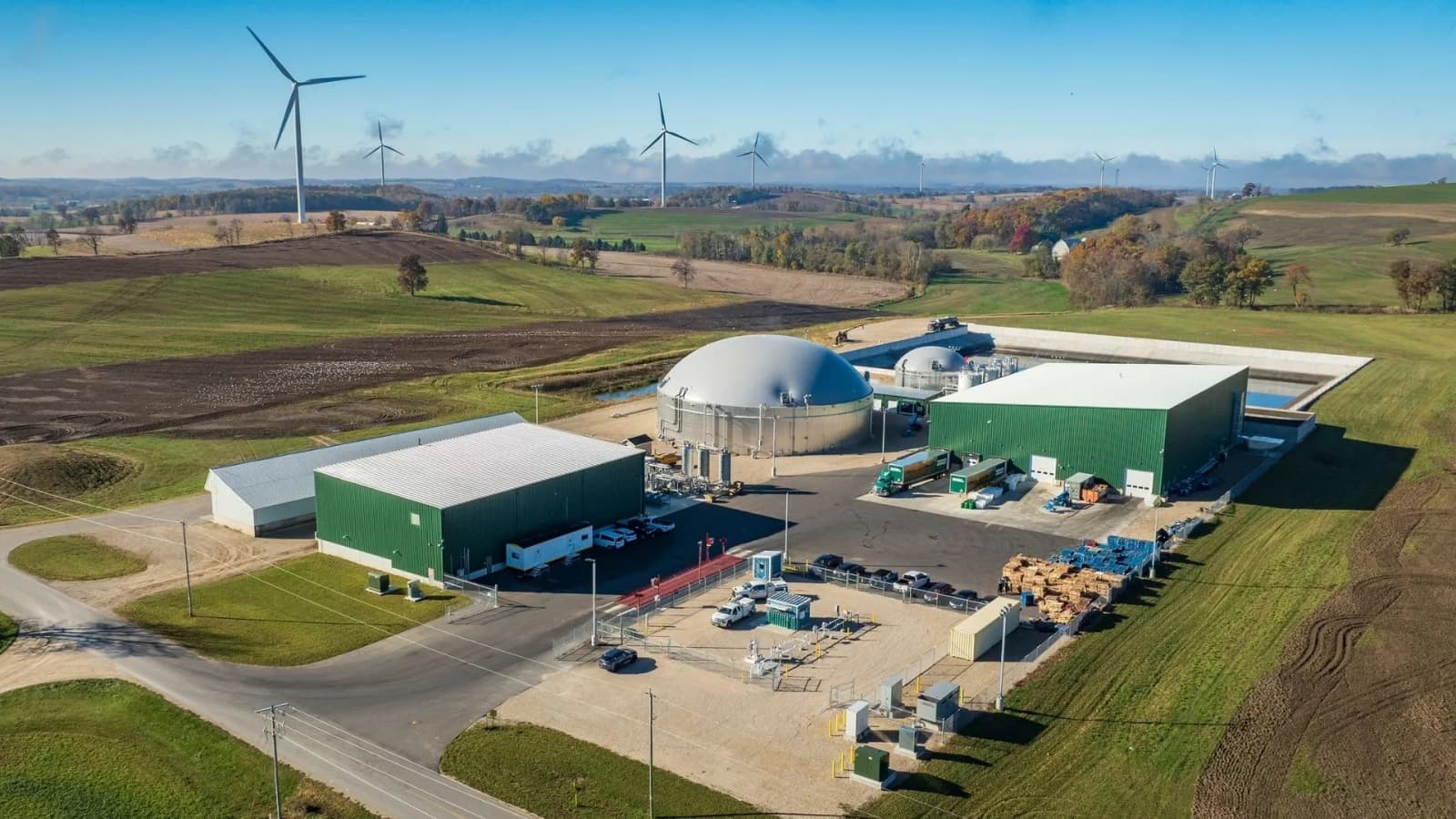
Vanguard Renewables is set to acquire Generate Upcycle’s North American operations in a deal that will create one of the largest food waste-to-renewable natural gas platforms in North America.
The transaction, expected to close on October 1, 2026, will bring Generate Upcycle’s anaerobic digestion and advanced depackaging facilities in upstate New York and Ontario into Vanguard’s existing network. The combined company is expected to operate 19 facilities across the U.S. and Canada.
The deal comes as landfill capacity constraints, corporate sustainability commitments and organics diversion policies drive greater demand for alternatives to sending food waste to landfills.
Turning food waste into renewable gas
The combined platform is expected to add approximately 565,000 tons of annual food waste processing capacity and 1.1 billion cubic feet of renewable natural gas (RNG) production to Vanguard Renewables’ operations.
The acquisition will nearly double Vanguard’s current operating capacity, according to the company. The core technology behind much of this process is anaerobic digestion, in which microorganisms break down organic material in an oxygen-free environment. The process can produce biogas that can subsequently be processed into renewable natural gas, while also creating other potentially useful resources from organic waste.
Generate Upcycle brings operating experience in food waste recycling and renewable energy production, while Vanguard says its own model combines feedstock sourcing, transportation, processing and commercialization.
The companies expect those complementary capabilities to help the combined operation handle larger volumes of organic material and expand its geographic reach.
Expanding into Canada
Generate Upcycle’s operations in Ontario will also give Vanguard a presence in Canada’s Clean Fuel Regulations market. The Canadian operations are expected to provide additional pathways for recovering organic material while expanding the company’s footprint beyond the United States.
The combined network will span strategic markets in the Northeast and Canada, Vanguard said. Its facilities will process food waste that would otherwise be disposed of, while the resulting renewable natural gas can be supplied to markets seeking lower-carbon fuel sources.
The companies say the transaction is intended to address a growing resource-recovery opportunity. The US generates more than 70 million tons of food waste annually, according to the figures cited by Vanguard.
Food waste sent to landfills can contribute to methane emissions as it decomposes. Anaerobic digestion instead captures the energy contained in organic material and converts it into biogas, creating a pathway to recover both energy and other resources.
Building a larger organics recovery network
For Vanguard, the acquisition is also about securing the infrastructure and feedstock needed to scale its business. “Landfill diversion represents one of the largest opportunities in the resource recovery market,” said Mike O’Laughlin, CEO of Vanguard Renewables. He said the combination would expand the company’s recovery pathways, geographic presence, and ability to provide long-term organic material diversion solutions.
Generate Upcycle President Bill Caesar said the combination would give the company’s food-waste-based anaerobic digestion operations additional operational and financial support. The acquisition remains subject to customary closing conditions, with completion currently expected on October 1, 2026.
If completed, the deal will bring two established food-waste recovery networks under one platform, increasing the amount of organic material that can be processed and expanding the infrastructure available to turn that waste into renewable natural gas.
Related articles

‘Trump TV’ is just reruns of the president on YouTube
The White House is now airing reruns of President Donald Trump's speeches, bill signings, and other moments on a YouTube livestream that it's calling "Trump TV," as reported earlier by Time.

Xbox is barely Xbox anymore
Xbox has become a shell of its former self - and things are only getting worse.

US Army orders $1.2B precision strike missile upgrade that can hunt moving targets
Lockheed Martin has secured a U.S. Army contract worth up to $1.2 billion to produce...

The Beats 360 are what I’d bring to the gym if I hated earbuds
Everyone has seen someone at the gym or running around their neighborhood wearing headphones that were never designed for workouts. Quite often those headphones are Beats.

Activision is taking over Halo as part of a massive Xbox shake-up
Microsoft is announcing a massive restructuring of its Xbox studios today, months after laying off 1,600 Xbox employees and selling off studios.

Microsoft is laying off 268 Xbox staffers and Ninja Theory may close
Microsoft is laying off around 260 Xbox employees today, as part of an ongoing "reset" of its gaming business.