
Wind turbines reduce radar coverage by 7% and increase blind spots by 15%, study finds
A new Chinese study has found that offshore wind turbines can confuse shore-based radar systems....
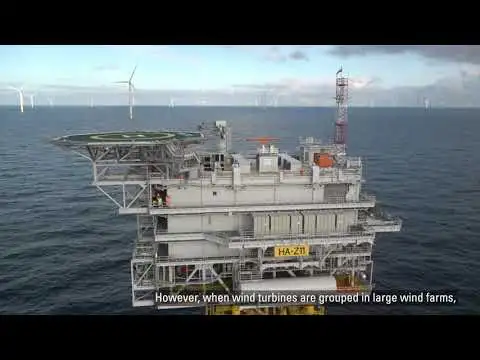
A new Chinese study has found that offshore wind turbines can confuse shore-based radar systems. This, the researchers found, can create blind spots and make potential threats, like ships, harder to detect.
Specifically, the team discovered that at ranges of around 3 miles (5 km), effective radar coverage can fall as much as 6.9 percent. They also found that blind spots tend to increase by around 14.9 percent.
This is potentially a big issue as coastal radar systems are typically used to see and track vessels near the coast, especially where traffic is dense or visibility is poor. This includes both military traffic and, arguably more importantly, civilian shipping.
For the latter, this is vital to enable the safe passage of ships through shipping lanes, into and out of ports, all the while preventing collisions and aiding activities like search and rescue. They’re particularly useful at night, in fog, or when other tracking data is missing or unreliable.
Wind turbines can confuse radar
Such systems can also help authorities monitor things like illegal fishing, smuggling, unidentified small craft, oil spills, or vessels behaving unusually. Military coastal-surveillance radars perform a similar tracking job but with a stronger defence/security role.
When you think about it, this shouldn’t really come as much of a surprise. “A wind turbine is itself a huge metal object, so it will inevitably interfere with radar signals,” an unnamed military expert told the South China Morning Post (SCMP).
According to the study published last month in the peer-reviewed Chinese journal Radio Engineering, the issue isn’t really about the turbines acting like a sort of radar-blocking wall.
Rather, the issue is a combination of shadowing (physically blocking radar signal paths), clutter, multipath reflections, and moving turbine blades that makes the radar picture messy.
Another issue they found is something called “ghosting.” This is a phenomenon whereby radar energy can bounce between ships, turbine structures, and the sea surface. When radar energy returns to the receiver, this can make an object appear at the wrong position or create apparent return signals that aren’t real.
The rotating blades of the turbines can also produce Doppler signatures that complicate discrimination between stationary infrastructure and moving objects. Interestingly, this finding isn’t actually a groundbreaking discovery.
A known issue
Many other nations have also noticed the same issue and have been attempting to deal with wind turbine/radar interference for years. “Foreign countries have faced the same problem,” the expert said.
In fact, according to the unnamed expert, countries like the US and UK have known about it since around 2004. They have been working on ways to correct for these issues, including intelligent radar siting and shipping exclusion zones.
Other mitigating measures can include improved signal processing, infill radars, turbine layout optimization, and potentially turbine/blade design changes. But even so, large offshore arrays inevitably make the electromagnetic environment harder.
As interesting as the new research is, what makes the Chinese study particularly important is the marine-navigation angle. As offshore wind farms become increasingly larger and more dense, this moves beyond the familiar military/air-traffic-radar debate and into whether coastal vessel-tracking systems can reliably see small craft moving among turbines.
Related articles
What Northrop Grumman’s F/A-XX concept reveals about the Navy’s future carrier fighter
An aircraft carrier gives a fighter a moving runway, but it also limits the space...

Tesla close to making 1,000 Optimus humanoids a week, but robots struggle with tasks
Tesla has reported that it is now in a position to produce hundreds of its...

These Data Centers Could Use More Power Than Major Cities
Meta is building a data center in Louisiana which at full power could consume nearly as much energy as New York City.

Ranked: Countries Importing the Most Military Drones
Ukraine and Russia received more than 91% of the 16,822 large military drones traded internationally from 2022 to 2025.

Can an ‘eSUV’ e-bike really go from trail to town?
Have you ever wanted an electric bike that easily transitions from the drudgery of urban asphalt to adventures in gravel and dirt?

Commercially viable fusion energy that delivers limitless clean power could be closer to reality
A British company has demonstrated the key fuel compression principle underpinning FLARE, its proprietary approach...