World’s first 300 MW artificial-cavern energy storage plant connects to China’s grid
China has connected a 300-megawatt compressed air energy storage plant to the power grid, using...
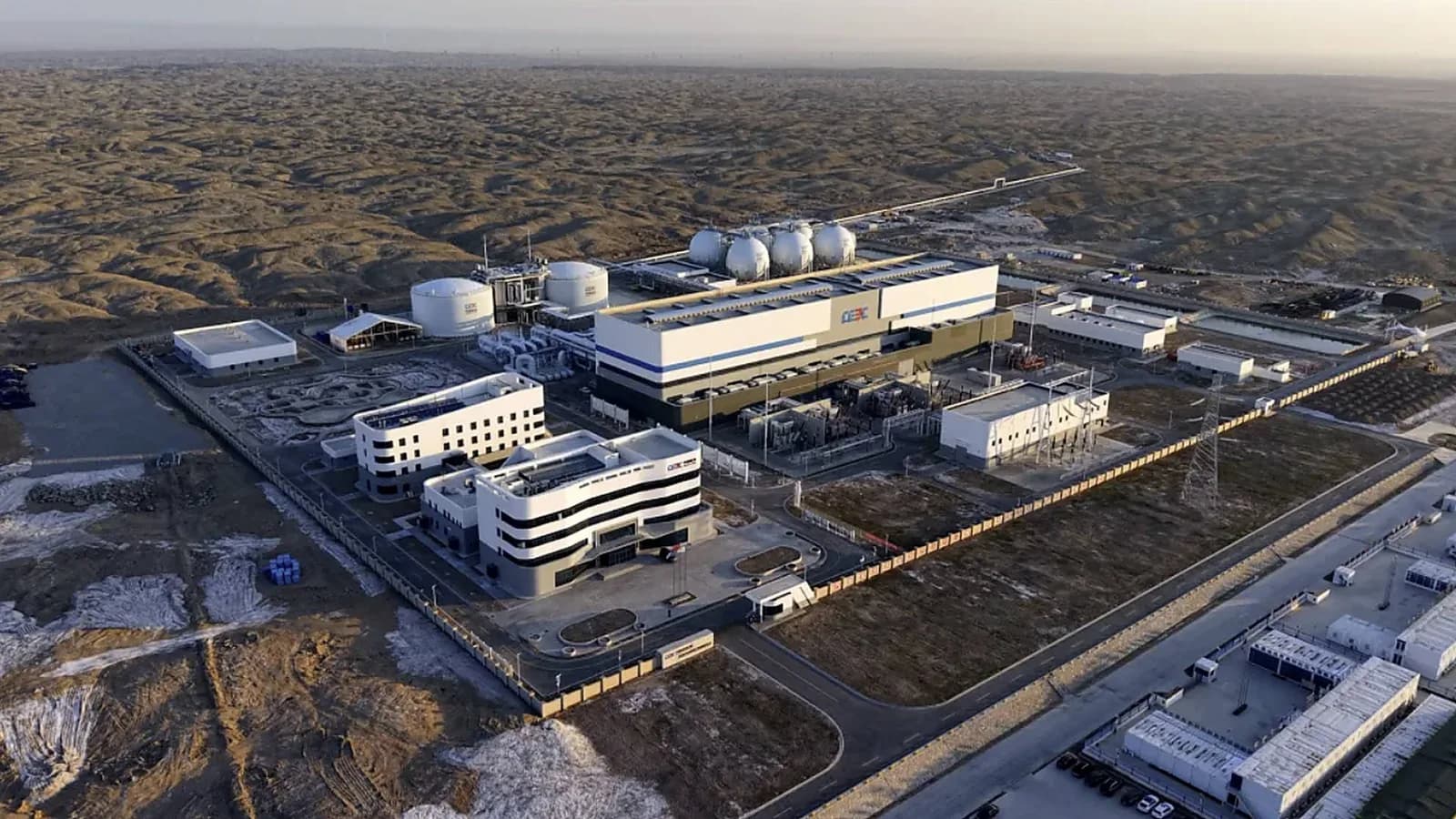
China has connected a 300-megawatt compressed air energy storage plant to the power grid, using four underground chambers excavated in hard rock rather than natural salt caverns. The Yuanchu No. 1 facility in Gansu province is designed to store 1.8 gigawatt-hours of electricity, offering another option for large-scale storage in regions without suitable salt formations.
The plant achieved its first grid connection on Nov. 16, according to China Energy Engineering Corporation, the project developer. The company describes it as the world’s first grid-connected compressed air energy storage (CAES) facility to use purpose-built underground rock caverns, a claim CGTN reported.
China Energy Digital Technology Group, a subsidiary of China Energy Engineering Corporation, developed Yuanchu No. 1. The project cost about $374 million (2.5 billion yuan) and is expected to generate 600 gigawatt-hours annually. Its 300-MW generating unit can discharge stored energy for six hours per cycle.
Rock caverns store pressurized air underground
The facility’s storage system consists of four interconnected chambers excavated about 361 feet (110 meters) below ground. Together, they provide roughly 7.1 million cubic feet (200,000 cubic meters) of storage volume and are designed for pressures of up to 18 megapascals.
CAES uses electricity to run compressors that force air into a storage space. When electricity is needed, the compressed air is released and expanded through turbines to generate power. The process allows energy produced at one time to be stored and used later, helping balance fluctuations in supply and demand.
Yuanchu No. 1 uses an adiabatic, non-combustion design. Instead of burning natural gas to heat the air before it reaches the turbines, the plant captures heat generated during compression and stores it. During discharge, that heat is returned to the compressed air before it expands through the turbines.
The thermal system combines pressurized hot water with molten salt to store heat at different temperatures, according to the project report. Water stores lower- and medium-temperature heat, while molten salt stores higher-temperature heat. Both release heat in stages during power generation.
An alternative to salt-cavern storage
Many underground CAES systems rely on natural salt caverns, which can provide suitable storage but are available only in certain geological settings. Excavating chambers in hard rock could make the technology viable in more locations, although geology and the cost of excavation and sealing remain important constraints.
That flexibility could matter in Yumen, which sits in the Hexi Corridor, a major wind and solar development area in northwest China. The plant is intended to absorb surplus renewable electricity when supply is high and return power to the grid when demand increases.
China Energy Engineering Corporation says the station has an electricity-to-electricity conversion efficiency of 72%. However, long-term operating data will be needed to establish how efficiently the plant performs in routine service.
The project is part of China’s wider expansion of compressed air storage. An October 2026 industry report cited by PV Magazine said 13 CAES projects, totaling 4.95 GW and 23.95 GWh, were under construction. Wider deployment will depend on whether projects can demonstrate reliable cavern performance, competitive construction costs, and sustained efficiency.
Source: https://interestingengineering.com/energy/china-caes-plant-grid-world-first
Get the latest news delivered to your inbox.
Related articles