World’s first plant to produce battery-grade graphite from natural gas begins operations
A US startup has begun operating what it describes as the world’s first plant to...
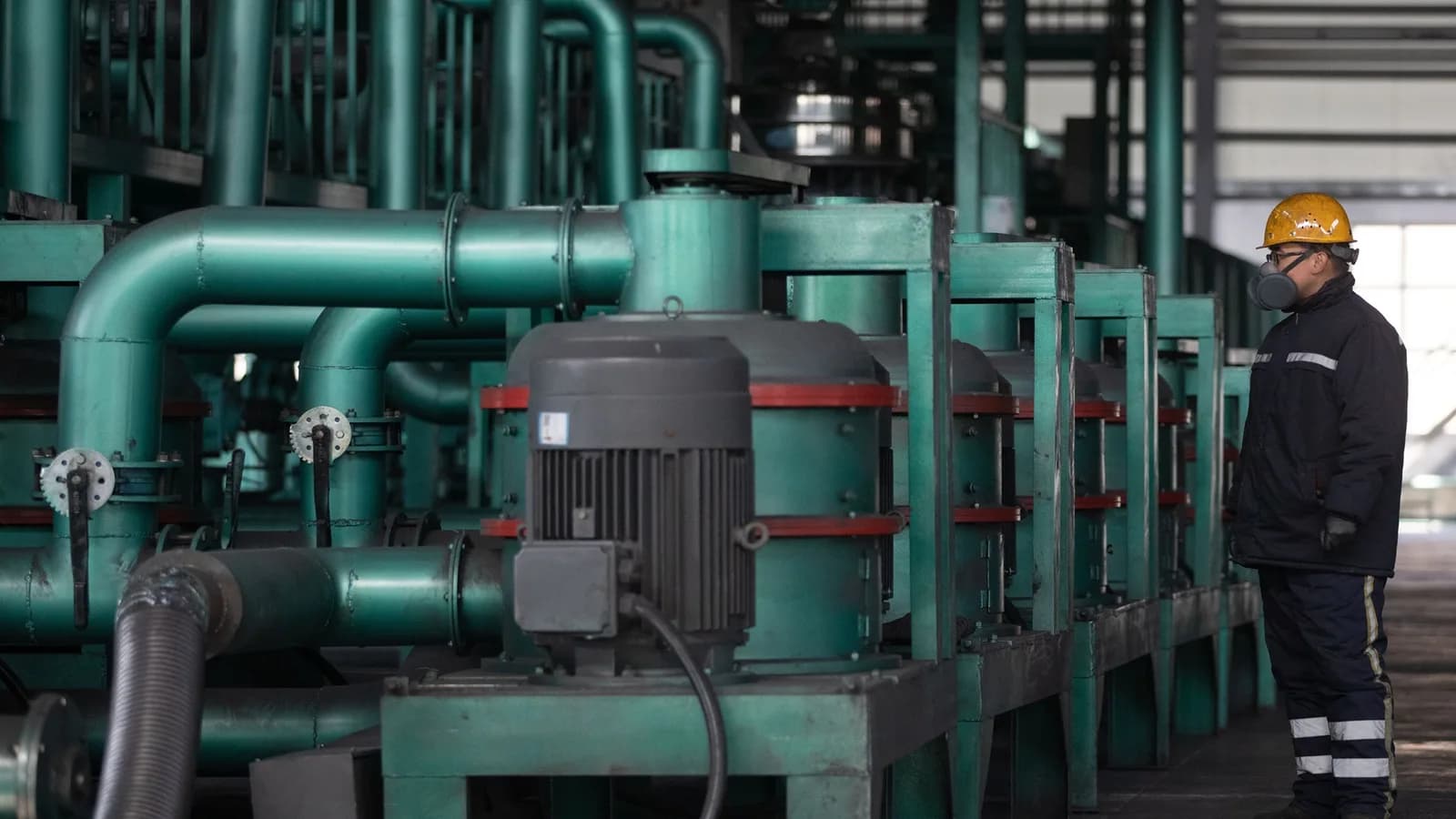
A US startup has begun operating what it describes as the world’s first plant to produce battery-grade graphite from natural gas, opening a new route to manufacturing a critical material used in electric vehicle batteries.
Molten Industries commissioned its demonstration facility in Oakland, California, on November 18. The plant uses methane pyrolysis to convert natural gas into graphite and hydrogen, potentially creating a domestic alternative to conventional graphite production.
The facility has an annual production capacity of 300 metric tons of graphite anode material. It uses a single modular reactor, with the company reporting natural gas-to-graphite yields above 95 percent.
Graphite is a key component of lithium-ion batteries, forming the anode that stores and releases electrical charge. It is widely used in electric vehicles, grid storage systems, and consumer electronics.
The US remains heavily dependent on overseas suppliers for battery-grade graphite. China controls around 75 percent of the global graphite anode supply chain and 97 percent of synthetic graphite anode production, according to Benchmark Mineral Intelligence figures cited by TechCrunch.
Splitting methane into materials
Molten’s process uses methane, the main component of natural gas, as its feedstock. Instead of burning the gas, the technology heats it without oxygen, separating its carbon and hydrogen components.
The carbon is processed into graphite suitable for battery anodes, while the hydrogen can be used in industrial applications such as fertilizer production, petroleum refining, methanol manufacturing, and steelmaking.
The company says its process uses four times cheaper feedstock and three times less electricity than conventional synthetic graphite production. It also claims the technology eliminates the need for a graphitization furnace, which is used to convert carbon materials into highly crystalline graphite.
Molten uses electrical resistive heating to drive the reaction. The company says the process produces no direct process emissions because methane is split without combustion.
However, this does not mean the entire production chain is emissions-free. Emissions associated with natural gas extraction, transportation, and electricity generation would still need to be considered when assessing its overall environmental footprint.
Scaling domestic graphite supply
The Oakland plant is intended to demonstrate that the technology can operate continuously and provide a modular blueprint for larger facilities.
According to TechCrunch, the plant’s annual output could supply enough graphite for around 300 megawatt-hours of batteries, equivalent to approximately 4,300 electric vehicles. Most of its production will go to undisclosed customers testing the material in battery cells.
That customer validation will be important in determining whether the graphite can meet manufacturers’ requirements for battery performance and consistency.
Molten also plans to make samples of its MG Series battery-anode graphite available from December 1, 2026. The company has not announced details of its next production facility, although it says future plants will build on the Oakland reactor design.
The technology builds on more than a century of research into methane decomposition. Splitting natural gas into carbon and hydrogen was patented in the late 19th century, but producing high-quality graphite through the process has remained a challenge.
Molten’s demonstration plant marks a step toward commercializing that approach. Whether it can compete with established graphite producers will depend on scaling production, proving material quality, and demonstrating competitive costs.
Source: https://interestingengineering.com/energy/world-first-battery-graphite-natural-gas-plant
Get the latest news delivered to your inbox.
Related articles