1 MW: World’s largest floating wave energy converter gets green light for sea trials
A one-megawatt (MW) floating wave energy converter, considered the world’s most powerful of its kind,...
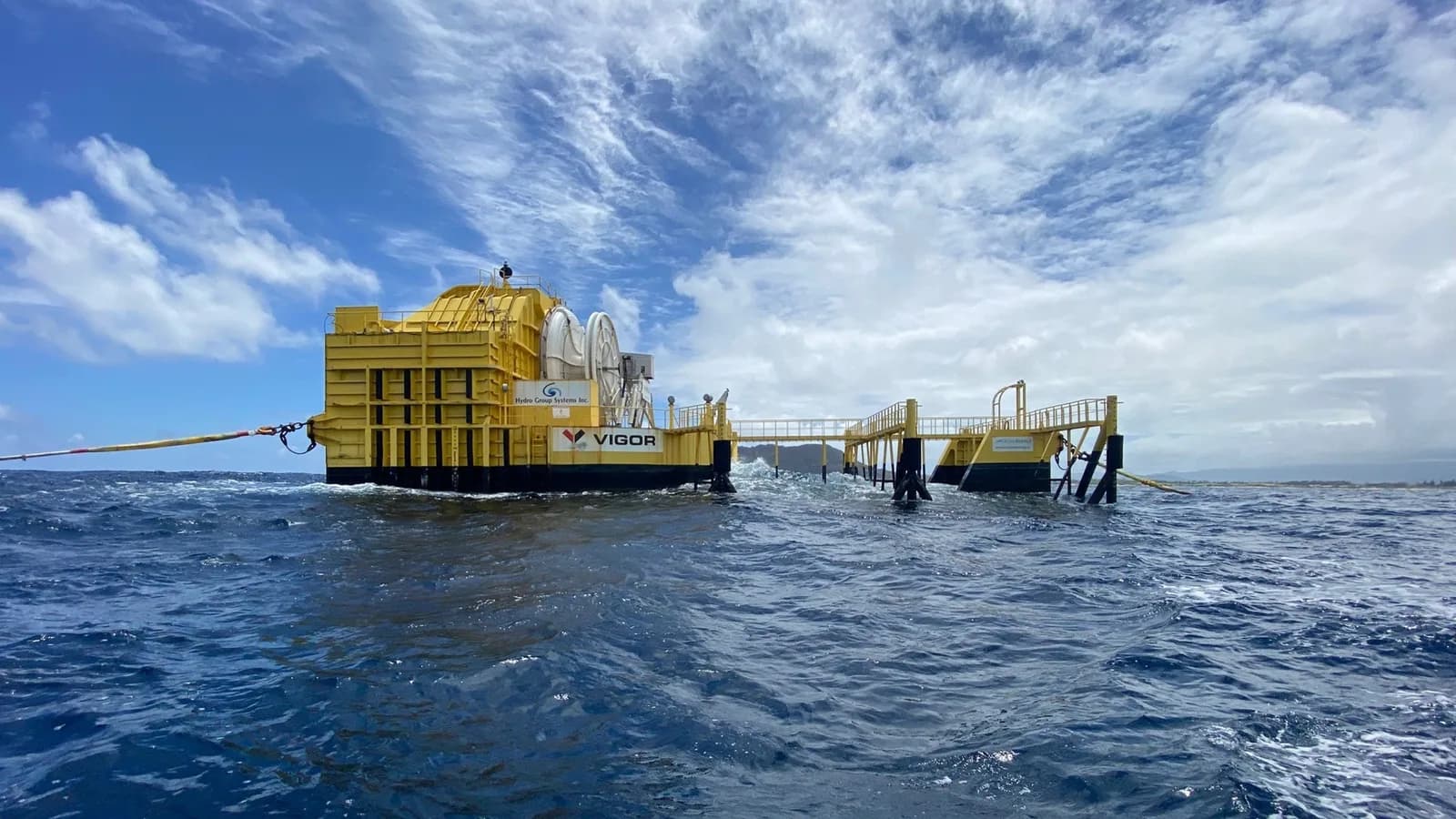
A one-megawatt (MW) floating wave energy converter, considered the world’s most powerful of its kind, has recently received the green light to proceed with preparations for sea trials off the coast of Scotland.
The 826-ton wave energy device, known as OE35, was designed by Irish company OceanEnergy. It will now be tested at the European Marine Energy Center (EMEC) in Orkney as part of the EU-backed WEDUSEA project.
The energy converter has a potential rated power output of 1.25 MW. It measures 125 feet long and 59 feet wide, with a draft of over 30 feet. It will undergo a two-year demonstration in Atlantic waters to assess its technical performance and environmental impact.
The project brings together 14 partners from the UK, Ireland, France, Germany, and Spain. It is backed by the EU’s Horizon Europe program and Innovate UK. It received approval to move to its next phase after independent experts reviewed its technical designs, budgets, and plans.
Power from ocean waves
The OE35 converter generates electricity using the movement of the ocean waves. It floats on the ocean’s surface, with its lower section open to the water below. As the waves pass through the submerged opening, they cause the water inside the structure to rise and fall.
This movement compresses and decompresses trapped air and forces it through a turbine that drives electricity generation. The entire process relies on the natural movement of seawater rather than burning fossil fuels.
The OE35 is the world’s largest capacity floating wave energy device. Credit: OceanEnergy
During the demonstration, electricity generated by the one MW converter will be exported to the UK grid through EMEC’s existing subsea cables. The project aims to prove the technology’s performance under real-world Atlantic wave conditions.
It will also assess whether the system can support future commercial wave energy installations. Tony Lewis, PhD, OceanEnergy’s Chief Technical Office (CTO) stressed the significance of wave energy.
“Wave energy is the world’s most valuable renewable resource with around 30 TWh of potential annual production waiting to be harnessed,” Lewis said. “That’s almost ten times Europe’s annual electricity consumption. However, this potential has yet to be fully realized.”
Sea trials ahead
The WEDUSEA project has three phases. The first involves designing and building a wave energy converter that can operate in the conditions at EMEC’s Billia Croo test site. During the second phase, the device will undergo two years of testing in the Atlantic Ocean. The researchers will assess it performance and its impact on the environment.
The last phase will focus on bringing the technology to the market and using the test results to develop larger wave energy projects. Lewis shared that it could cut wave energy costs and pave the way for larger commercial projects. “We predict that the natural energy of the world’s oceans will one day supply much of the grid,” he added.
Meanwhile, Lars Johanning, PhD, a researcher at the University of Plymouth, said the partnership had worked to ensure that the project’s designs and plans were robust. “Now we have received the green light from the EU; it’s all systems go,” he said in a press release.
The approval brings the project closer to testing whether the device can reliably generate electricity from ocean waves. “WEDUSEA is set to be a major catalyst for the wave energy industry, unlocking the full potential of this exciting renewable technology,” Matthijs Soede from the European Commission concluded.
Source: https://interestingengineering.com/energy/worlds-largest-floating-wave-energy-converter
Get the latest news delivered to your inbox.
Related articles