
10x stronger super ice created, rivals concrete in strength, absorbs 70x more energy before breaking
Scientists have developed a new type of ice piece, which is about 10 times stronger...
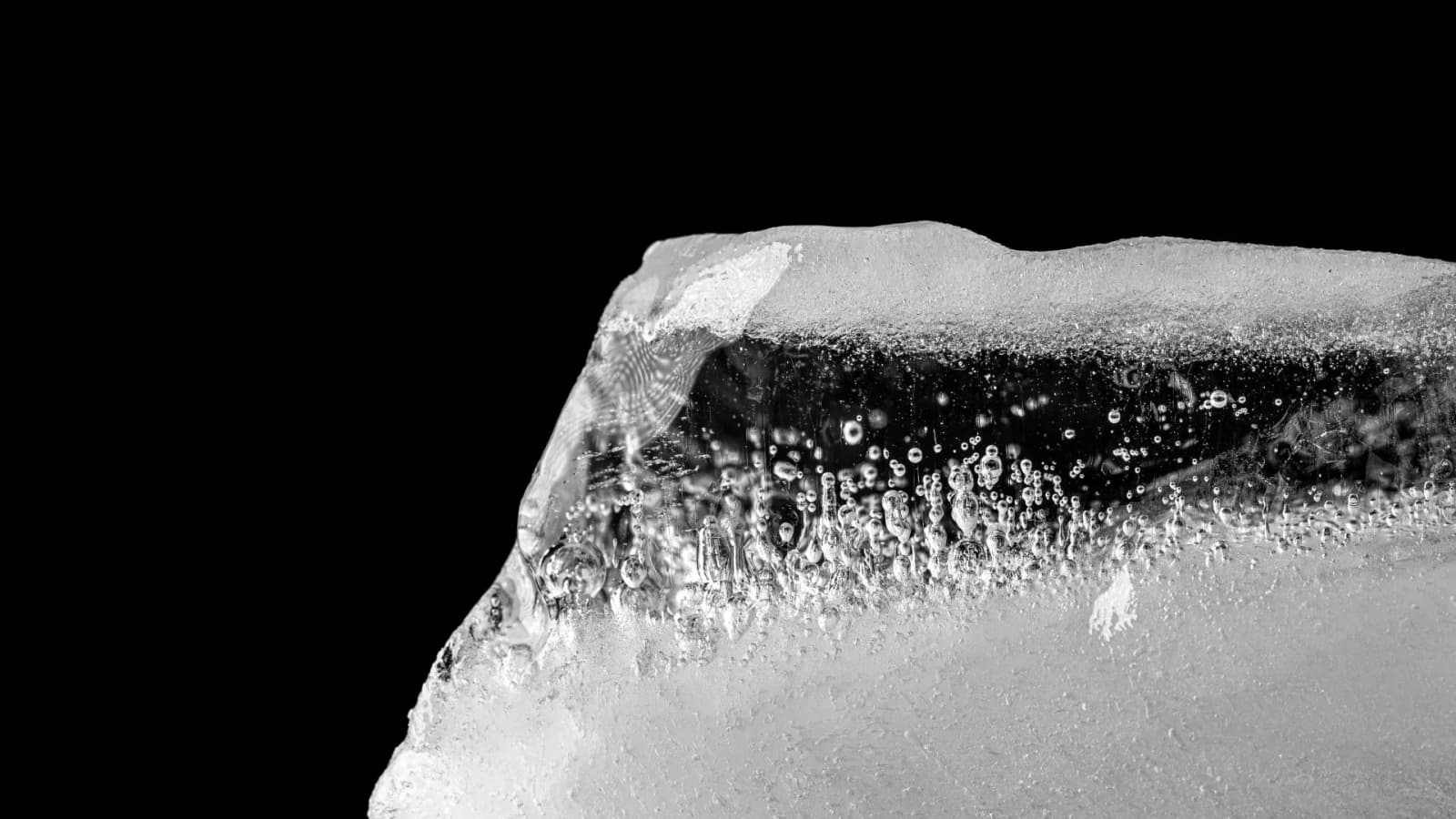
Scientists have developed a new type of ice piece, which is about 10 times stronger than ordinary ice. Called BioPykrete, the reinforced ice is about 10 times stronger than ordinary ice.
Developed by scientists from Hebrew University of Jerusalem, the ice rivals concrete in strength. Rather than shattering suddenly, it bends and breaks more gradually, a quality that could one day make it useful as a building material in some of the coldest places on Earth.
Reinforcing ice with tiny plant-based crystals
By reinforcing ice with tiny plant-based crystals and a specially designed protein, researchers created a material that rivals concrete in strength and absorbs 70 times more energy before breaking.
“We wanted to go beyond simply mixing fibers into ice and instead control how the different materials connect at the molecular level,” Prof. Ido Braslavsky of Hebrew University’s Robert H. Smith Faculty of Agriculture, Food and Environment.
“The result changes not only how strong the ice is, but also how it breaks. Instead of suddenly shattering, it can absorb much more energy and deform gradually.”
The idea of reinforcing ice is not new. During World War II, researchers experimented with Pykrete, a mixture of ice and wood pulp that was stronger and slower to melt than ordinary ice.
Researchers mixed ice with cellulose nanocrystals
The team took that idea down to the molecular level. They mixed ice with cellulose nanocrystals, extremely small, stiff particles made from cellulose, the natural material that gives plants their structure. As the mixture froze, the particles formed a three-dimensional network around microscopic sections of ice. The scientists then designed a protein that could attach to both materials. One part of the protein binds to ice, while the other binds to cellulose. Acting like a molecular glue, the protein helps hold the entire structure together, according to a press release.
Laboratory tests found that BioPykrete was about 10 times stronger under compression than pure ice, reaching strength levels similar to conventional concrete. It also absorbed around 70 times more energy before failing. The engineered protein played an important role: adding it doubled both the strength and the energy the material could absorb compared with a similar ice-and-cellulose mixture that did not contain the molecular bridge, according to researchers.
The researchers imagine BioPykrete being used mainly in Arctic and Antarctic regions, where transporting concrete, steel and other construction materials can be expensive and difficult.
Because the material is made mostly from ice and plant-based cellulose, it could potentially provide a biodegradable, lower-carbon footprint alternative for certain structures in extreme cold conditions.
But no one will be building homes from BioPykrete just yet. The material is still a proof of concept and must undergo further testing. Scientists need to learn how it performs over long periods, how it responds to repeated freezing and thawing, and whether it slowly changes shape under constant pressure, as per the release.
Source: https://interestingengineering.com/innovation/super-ice-created-rivals-concrete-in-strength
Related articles

Does universe’s oldest light carry hidden twist? Scientists build clever new way to find out
The cosmic microwave background is the oldest light in the universe, leftover radiation from roughly...
Engineers use tiny light beam to rewrite magnetic memory at high speed
For decades, magnetic data storage has depended on the general idea of using a magnetic...
Scientists build a palladium membrane to keep water out of green ammonia reactors
For years, scientists have tried to make ammonia without relying on fossil-fuel-derived hydrogen, but they...

18-detector neutrino system probes rare particle interactions near nuclear reactor
MIT researchers working on an international neutrino experiment have expanded its detector setup from two...

Hafnium oxide stays stable at 1,562°F, boosting future capacitors, memory and cooling
Researchers at the University of Nebraska–Lincoln have found evidence that could change how engineers view...

US scientists take real-time look at spacecraft heat shields that withstand 1,652 °F temperature
Researchers in the United States have got real-time look inside spacecraft heat shields during extreme...