
16-foot Pegasus drone flies over 46 miles on a single lithium-sulfur battery pack
A five-meter (16-foot) wingspan drone has stayed aloft for nearly two hours in the Queensland...
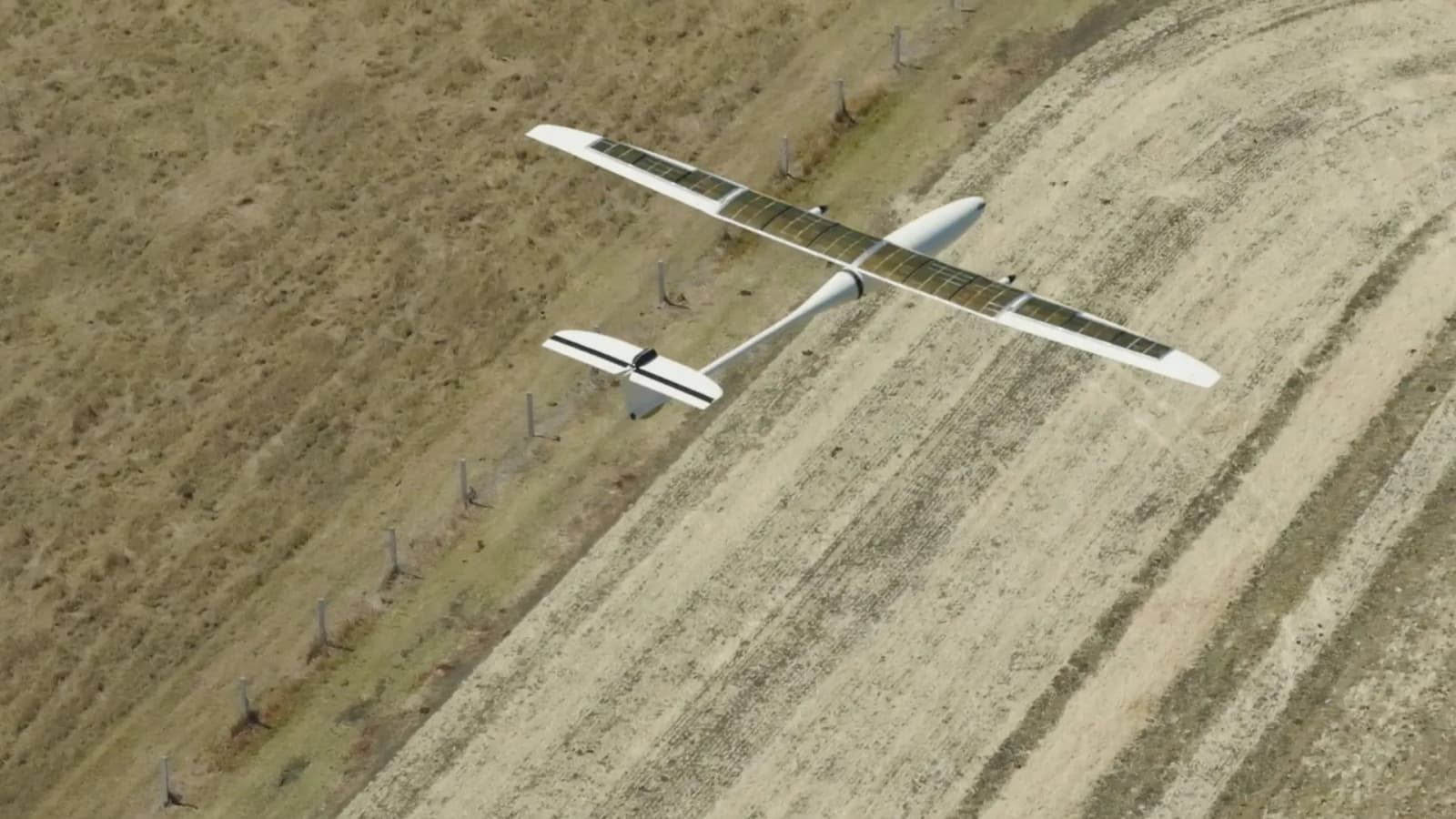
A five-meter (16-foot) wingspan drone has stayed aloft for nearly two hours in the Queensland skies, powered primarily by a single lithium-sulfur battery pack.
The uncrewed aircraft, named Pegasus, traveled more than 75 kilometers ( around 47 miles) during its trial run. It completed the mission with power reserves still left in the tank. The milestone brings alternative battery chemistries one step closer to routine commercial aviation.
“Our airframe and power systems performed faultlessly throughout the flight, and pairing them with Li-S Energy’s new lightweight pouch cell battery system gives the platform an endurance advantage operators will immediately recognize,” said Mark Xavier, Managing Director and Chief Executive Officer of V-TOL Aerospace.
Lithium-sulfur batteries have long promised higher theoretical energy density than traditional lithium-ion cells. However, engineering challenges such as thermal management and structural lifespan have historically kept them grounded.
The successful Queensland sortie suggests that these practical hurdles are beginning to yield to engineering solutions. Li-S Energy developed the 382 watt-hour pack alongside a specialized battery management system designed specifically for the stresses of flight.
Engineering collaboration
Pegasus is not a converted off-the-shelf model. It was conceived and built from the drawing board as a collaborative testbed by three domestic companies.
V-TOL Aerospace designed the high-aspect-ratio airframe and the overall electrical distribution system. Halocell Energy integrated an array of perovskite solar cells directly across the aircraft’s skin.
The challenge lay in orchestrating these systems simultaneously. During flight, onboard electronics had to feed power continuously to twin electric motors while balancing the fluctuating harvest coming in from the solar array.
The trial marks the final phase of a project backed by the Australian Commonwealth Government under its Emerging Aviation Technology Partnership initiative. Announced in June 2024, the scheme provided over 1.35 million Australian dollars in matched funding to establish sovereign aerospace capability.
With initial flight tests complete, engineers have begun analyzing onboard telemetry to gauge the craft’s commercial limits.
Targeting practical industrial tasks
The initial flights used only one battery pack, but the internal bay can hold two. The team calculates that doubling the battery capacity and deploying next-generation solar coatings could transform the drone’s operational footprint. Future models are expected to fly for five to eight hours, covering distances up to 250 kilometers (155 miles) on a single deployment.
That kind of range opens up practical industrial tasks. Most current electric drones operate under strict time limits, forcing operators to swap batteries frequently. A craft that can linger for half a workday can patrol remote livestock stations, inspect cross-country power lines, or monitor forest borders for bushfires.
Defense and surveillance sectors are also watching closely. Long-endurance uncrewed flight currently relies either on combustion engines or heavy battery assemblies that compromise payload capacity. A lighter, domestic battery chain offers both operational range and supply-chain security.
To protect the underlying engineering, Li-S Energy has filed two patent applications covering the battery pack structure and its digital management system. The partners now intend to use the trial data to turn their aerial testbed into a commercially viable family of utility aircraft.
Source: https://interestingengineering.com/innovation/pegasus-drone-flies-on-lithium-sulfur-battery
Related articles

The Halide camera app now offers full control of the iPhone 18 Pro’s aperture
A new update to Lux Optics' anti-algorithm Halide camera app for the iPhone and iPad adds two new photography looks and support for the variable aperture on the new iPhone 18 Pro's main camera.

‘Xbox is not for sale’ says Microsoft’s gaming chief
Xbox CEO Asha Sharma has denied reports that Microsoft is considering selling off its Xbox business.

Asus won’t say how it escaped the US router ban
This spring, the United States banned all future foreign-made consumer routers - effectively all future routers - unless their makers could 1) convince the US government that they weren't a national…

Homing beacon gets US support to direct solar power beams from orbit to Earth
A solar power startup has received backing from US authorities to design, build, and test...

All the latest news on Meta’s cute, creepy Muse AI agent
Meta launched a new Muse AI agent it claims can help you with everything from firing off emails to buying stuff online.
US’ counter-drone missiles to become deadlier, get extended range with ramjet propulsion
A Virginia-based company is set to develop next-generation air-breathing propulsion for the U.S. Army. With...