
172 GW of US small reactor capacity could be unlocked by bypassing electric grid: Study
Small nuclear reactors cannot compete on the open electricity grid against cheap renewables and giant...
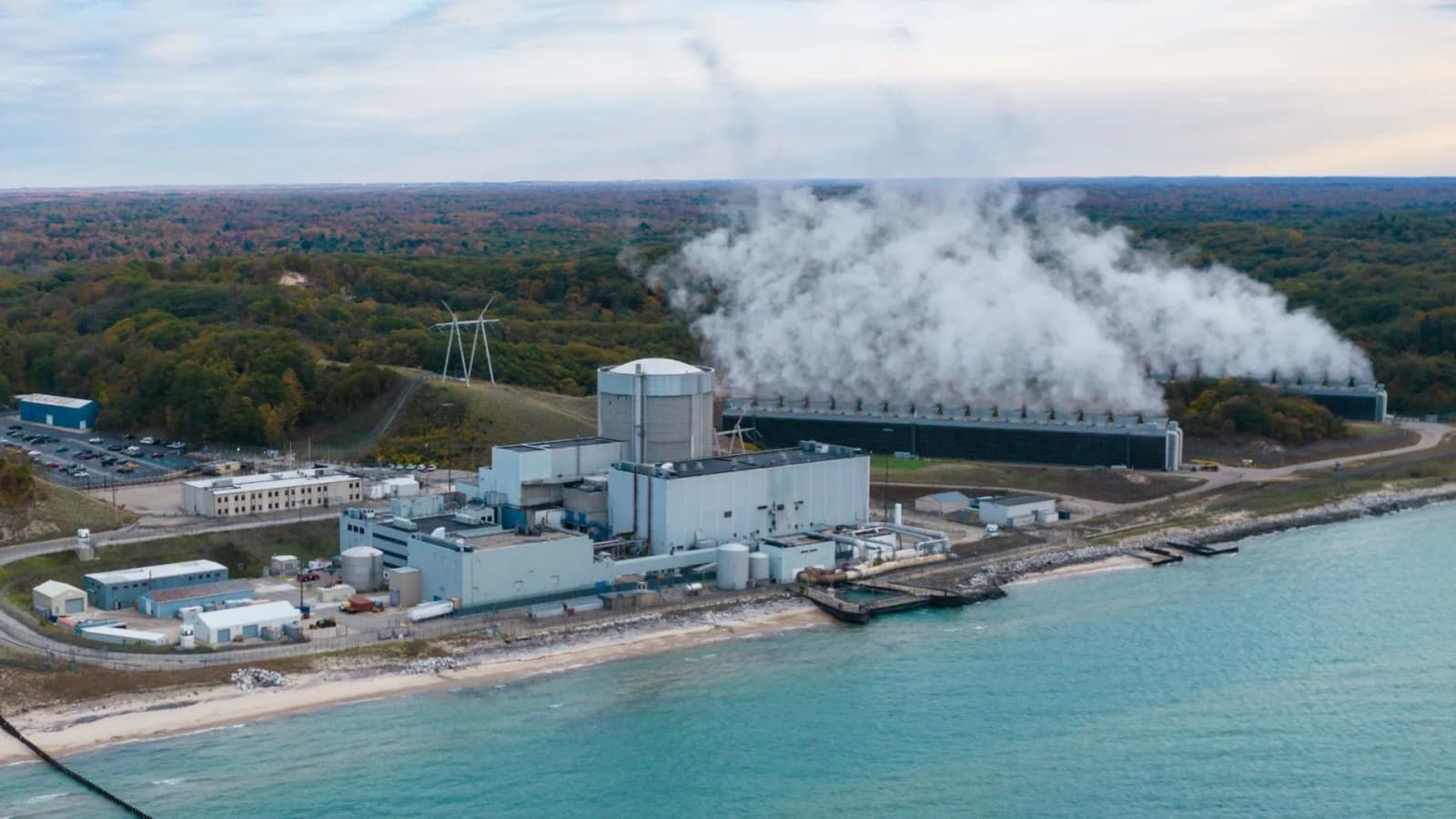
Small nuclear reactors cannot compete on the open electricity grid against cheap renewables and giant conventional power plants. Instead, their financial survival in the United States depends on powering heavy manufacturing hubs and producing clean hydrogen.
That is the result of a new analysis published in Nature Communications. Researchers from the University of Michigan examined the business case for small modular reactors, or SMRs. Their goal was to map where these compact systems can actually turn a profit without being crushed by ballooning construction costs.
“There’s a lot of momentum around increased deployment of nuclear energy and small modular reactors, but this study provides the first comprehensive analysis of where it actually makes business sense to build and operate them,” said Brendan Kochunas, an associate professor of nuclear engineering and radiological sciences at U-M and co-author of the study.
An assembly-line approach
Conventional nuclear plants require massive, bespoke civil engineering works constructed entirely on site. SMRs take an assembly-line approach. These compact units could be manufactured in centralized factories, transported via rail or barge, and installed in clusters. Therefore, SMRs allow operators to scale energy generation up or down depending on site-specific needs.
A primary operational advantage of these systems is their ability to drive water-splitting chemistry. By producing steady, simultaneous streams of high-temperature heat and electricity, SMRs can run thermal and electrochemical processes that strip hydrogen atoms from water molecules. This clean hydrogen can replace fossil gas in several hard-to-abate industrial operations.
Researchers from the University of Michigan and the Idaho National Laboratory evaluated how this thermal integration would perform across the American industrial footprint. The team modeled energy demand profiles for 34 ammonia synthesis plants, nine steel mills, 47 oil refineries, and nearly 1,000 manufacturing sites using process heat.
Viable operational environment for SMRs
The results showed that hydrogen-intensive manufacturing provides the most viable operational environment for SMRs. Ammonia manufacturing and petroleum refining require continuous, high-volume hydrogen feedstocks alongside steady heat.
SMRs can plug directly into these facilities as co-located power and thermal units, eliminating the need to move volatile hydrogen across long pipeline networks.
When backed by the federal Hydrogen Production Tax Credit, which pays up to $3 per kilogram of clean fuel, these factory installations become viable immediately. In an initial deployment phase, the models show SMRs could deliver 91 gigawatt-electric of capacity.
A controlled testing ground
As mass fabrication improves and construction techniques mature, a secondary wave could install 171.9 gigawatt-electric—nearly double the current operational nuclear capacity of the United States.
This mechanical shift could transform industrial decarbonization. In 2020, American industrial facilities produced 1,360 million metric tons of carbon dioxide. Supplying those operations with nuclear-derived heat and hydrogen would cut those emissions by up to 14 percent across two production cycles.
Dozens of SMR designs are under development worldwide, but none have entered commercial operation in the United States. Heavy industrial plants offer a controlled testing ground where these modular designs can prove their thermal reliability.
Once factory manufacturing lines are established and production costs drop, engineers can begin adapting the technology for the broader electrical grid.
Related articles


Xbox’s Mythic achievements sound like PlayStation’s Platinum trophy
Xbox appears to be ready to launch its own version of PlayStation's platinum trophies.

Logitech’s new haptics-based gaming mouse is a little better and $20 more
The G Pro Superstrike mouse is one of Logitech's most interesting products.

Logitech’s new Blue Yeti 2 mic adjusts itself to where you are
The original Blue Yeti has been one of the most recognizable go-to USB microphones for content creators since it launched in 2009, and now it finally has a successor.
Energy firms advance US nuclear reactor technology for heavy industry operations
An alliance between US-based reactor developer Terrestrial Energy and British energy firm Viaro Energy has...
Ukraine builds 258-mph drone killer to down jet-powered Russian unmanned aircraft
Ukraine’s Vluchnyk has completed internal testing of the Zorelit v5, a high-speed interceptor drone designed...